Host a screening of the documentary film, The Little Things That Run The World
Organizing a film screening can be a fun and effective way to support pollinator conservation and promote your Bee City and Bee Campus work to a broader audience. In this documentary, the filmmakers Doug Hawes-Davis and Dru Carr interviewed some of the leading voices in pollinator conservation and insect decline, including Xerces Society’s own Scott Black.
This film does a great job explaining the “Why” of pollinator protection — and your Bee City or Bee Campus can be the “How” of pollinator conservation action.
How To Screen The Film
There are two options for ticketing in 2026 when you Register through Kinema:
- If you want to sell tickets and get a percent of sales. You set the ticket cost in Kinema’s system ($5 to $15/ticket). There are no other costs.
- If you want to buy a license to screen (virtual or in-person). If you chose to charge, you would keep all ticket sales. License price varies depending on audience size. For example, below are prices for a nonprofit doing a public screening:
- 1-25 attendees: $50
- 26-50 attendees: $75
- 51-100 attendees: $100
- 101-250 attendees: $250
Guest speakers may be available for Q&A through Kinema (remote or in-person, depending on availability). Register to request a speaker.
View list of upcoming & past screenings of the film on High Plains Films
About The Film
Runtime: 105 minutes
Released: 2025
Directors: Doug Hawes-Davis, Dru Carr
Producer: Doug Hawes-Davis
Crew: Damon Ristau, Ken Furrow
Trailers (when downloading, select the 2160/4k version):
1 minute trailer: https://vimeo.com/1053888585 (when downloading, select the 2160/4k version)
40 second trailer: https://vimeo.com/1053843087 (when downloading, select the 2160/4k version)
5 minute trailer: https://vimeo.com/839803456 (when downloading, select the 2160/4k version)
Film Synopsis (Longer)
The Little Things that Run the World introduces viewers to a diverse group of scientists, nature lovers, gardeners, farmers, and general bug enthusiasts in exploring the importance of flying insects amid rapid declines in their numbers. This most numerous group of animals on the planet by far – three quarters of all species – have also been called the “glue of life” on Earth. They literally hold ecosystems together. Insects were the first animals to evolve flight nearly 440 million years ago, and they survived all five of the known mass extinctions since then. But, there is evidence that the pace of decline among insects in parts of the world today is fast approaching the levels of previous catastrophes. What this means for the rest of life on Earth, including humans, is the focus of The Little Things that Run the World. The film documents the mysteries of the declines along side creative and heroic human efforts to change the course of evolutionary history. What is causing this extinction crisis? What can be done to reverse the trend? The Little Things that Run the World attempts to find answers to those questions and more.
Film Synopsis (Shorter)
Life on Earth is in the middle of a major re-alignment of species composition. The smallest of creatures – insects – hold the fabric of all life together. They are the most numerous of all animal groups on the planet. But insects are declining at an alarming rate throughout the world, threatening innumerable species, whole ecosystems, and even our food systems with collapse. This is story about untangling the mysteries as to why something so ubiquitous – and seemingly endless – could be on the cusp of disappearing entirely. It is also the story of heroic efforts to save these most vulnerable of creatures.
Logline
Insects throughout the world are declining at an alarming rate. Their safeguarding is in the hands of everyone who cares about the sustainability of life on Earth.
Quotes
“The Little Things that Run the World is a passionate and comprehensive deep dive into the ecological crisis facing flying insects and the ripple effects on global biodiversity.” Doc Screenings International Film Festival
“This year, we are incredibly excited to honor a film that championed a crucial environmental theme with artistic mastery, transforming what could be a purely academic subject into an accessible and deeply engaging cinematic experience. More importantly, it leaves us with a sense of wonder and a gentle, optimistic call to action, inspiring us to appreciate and protect the delicate balance of our natural world. It’s a mesmerizing exploration of the vital yet often overlooked role of insects in our global ecosystem. It is both scientifically rigorous and visually stunning, taking us on a journey into the intricate world of these tiny creatures, and reminding us how fundamental they are to life as we know it.” Lighthouse International Film Festival Jury
Promotional Resources
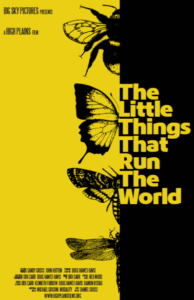
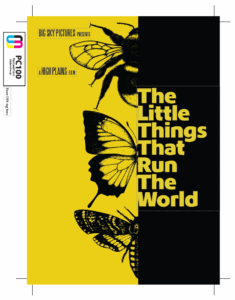
Postcard Front (PDF) with bleed for printing
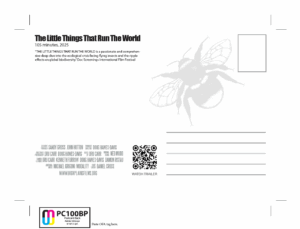
Postcard Back (PDF) with bleed for printing. With room to add screening details (location, date, time, hosts, etc.).
Social Media Images
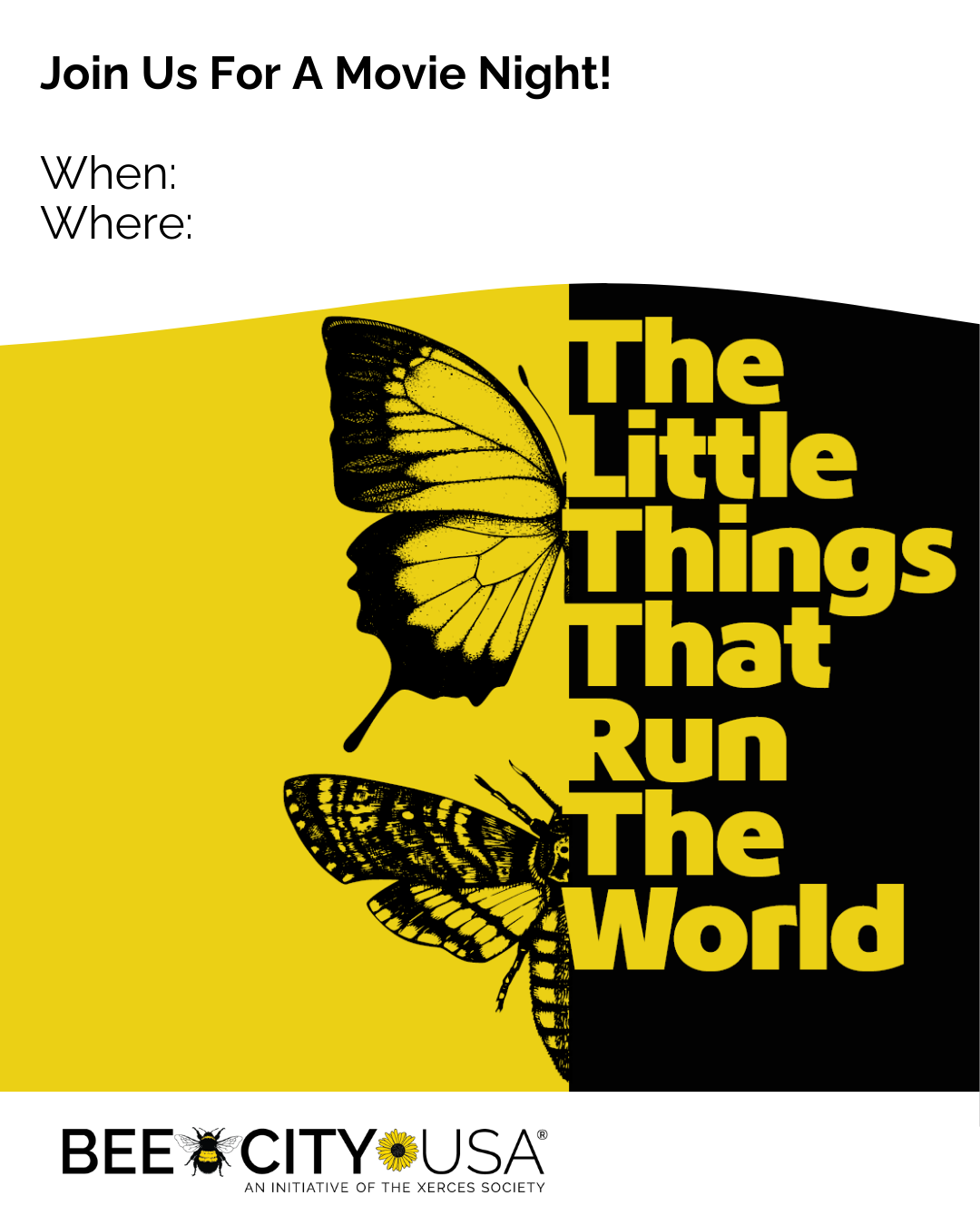
Bee City social media template. With room to add screening details (location, date, time, hosts, etc.) and additional logo. Font: Raleway, font size: 38.
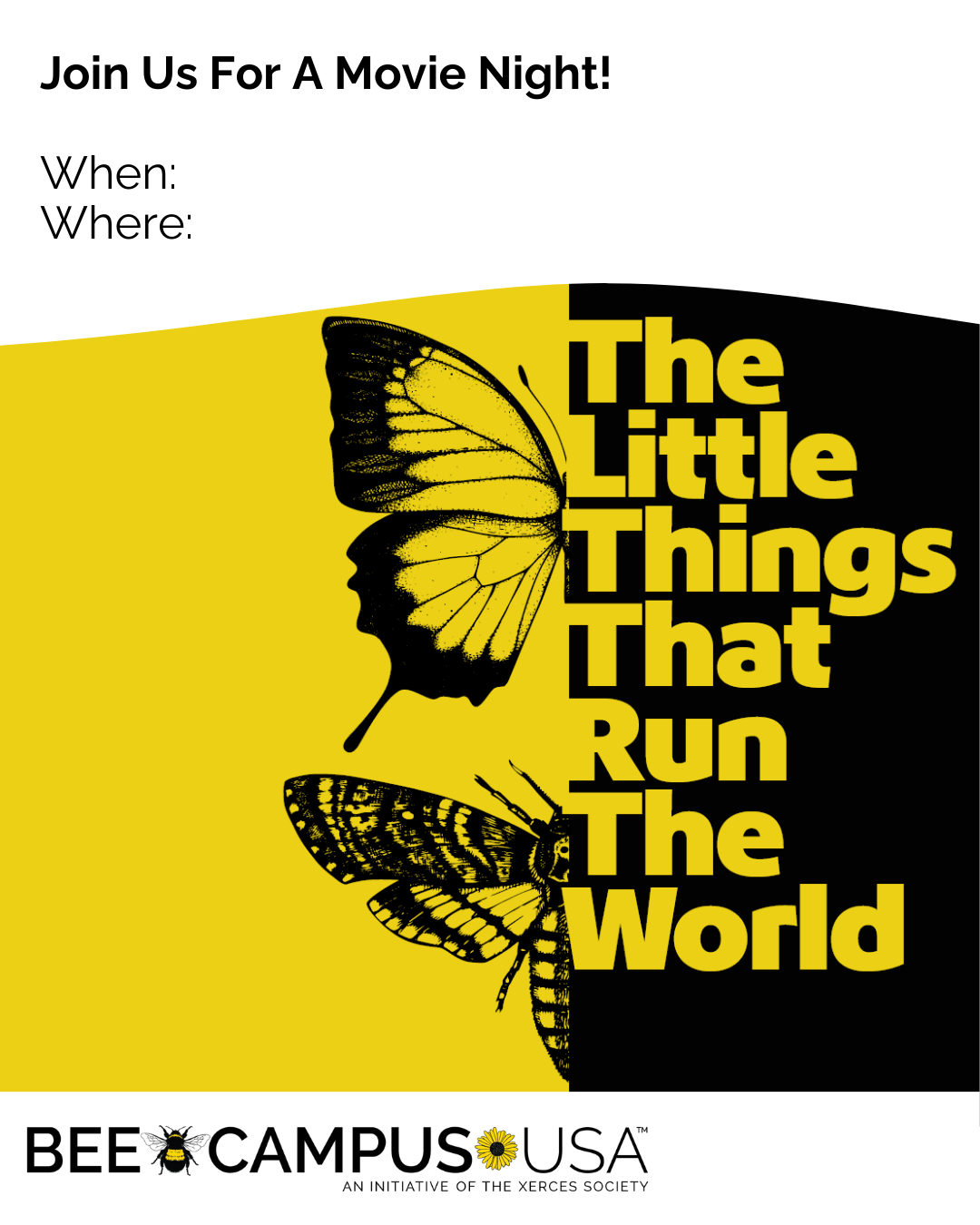
Bee Campus social media template. With room to add screening details (location, date, time, hosts, etc.) and additional logo. Font: Raleway, font size: 38.
Social Media Sample Text
Join us for a screening of the documentary, The Little Things That Run the World at [time] on [date] at [location]. Tickets are [free, $xx].
About the film: Life on Earth is in the middle of a major re-alignment of species composition. The smallest of creatures – insects – hold the fabric of all life together. But insects are declining at an alarming rate throughout the world, threatening innumerable species, whole ecosystems, and even our food systems with collapse. This is story about untangling the mysteries as to why something so ubiquitous – and seemingly endless – could be on the cusp of disappearing entirely. It is also the story of heroic efforts to save these most vulnerable of creatures.
We hope to see you there!
Social Media Tags
@thelittlethingsthatruntheworld
@beecityusa
Day of: Screening Resources
Talking Points on Pollinator Conservation
- Share success stories from your Bee City/Campus renewal reports:
- Square feet of habitat have you created.
- Your pesticide reduction strategies.
- Key community partners helping protect pollinators.
- Have a call-to-action:
- Activities you would like attendees to volunteer for.
- Share upcoming pollinator conservation events.
- Ask attendees to subscribe to sign up for emails, follow you on social media, and/or donate to your Bee City/Campus.
- We can all help pollinators by: creating pollinator habitat with native plants, avoiding pesticides, and spreading the word!
- There are 3,600+ species of native bees in the US:
- 90% of bee species are solitary-nesting (meaning they don’t nest in a hive)
- 70% of bee species nest underground.
- Pollinators are needed for the reproduction of over 85% of the world’s flowering plants, including more than two-thirds of the world’s crop species.
- The economic value of native pollinators is estimated at $3 billion per year in the U.S.
- Pollinators are keystone species in most terrestrial ecosystems. Fruits and seeds derived from insect pollination are a major part of the diet of approximately 25% of all birds, and of mammals ranging from red-backed voles to grizzly bears.
- Visit the Xerces Society’s Pollinator Conservation Resources Center (https://xerces.org/pollinator-resource-center) for regionally-specific recommended plant lists, habitat installation and monitoring guides and more.
Handouts to Print
Please reach out to [email protected] if you would like hard copies of any of the items listed below.