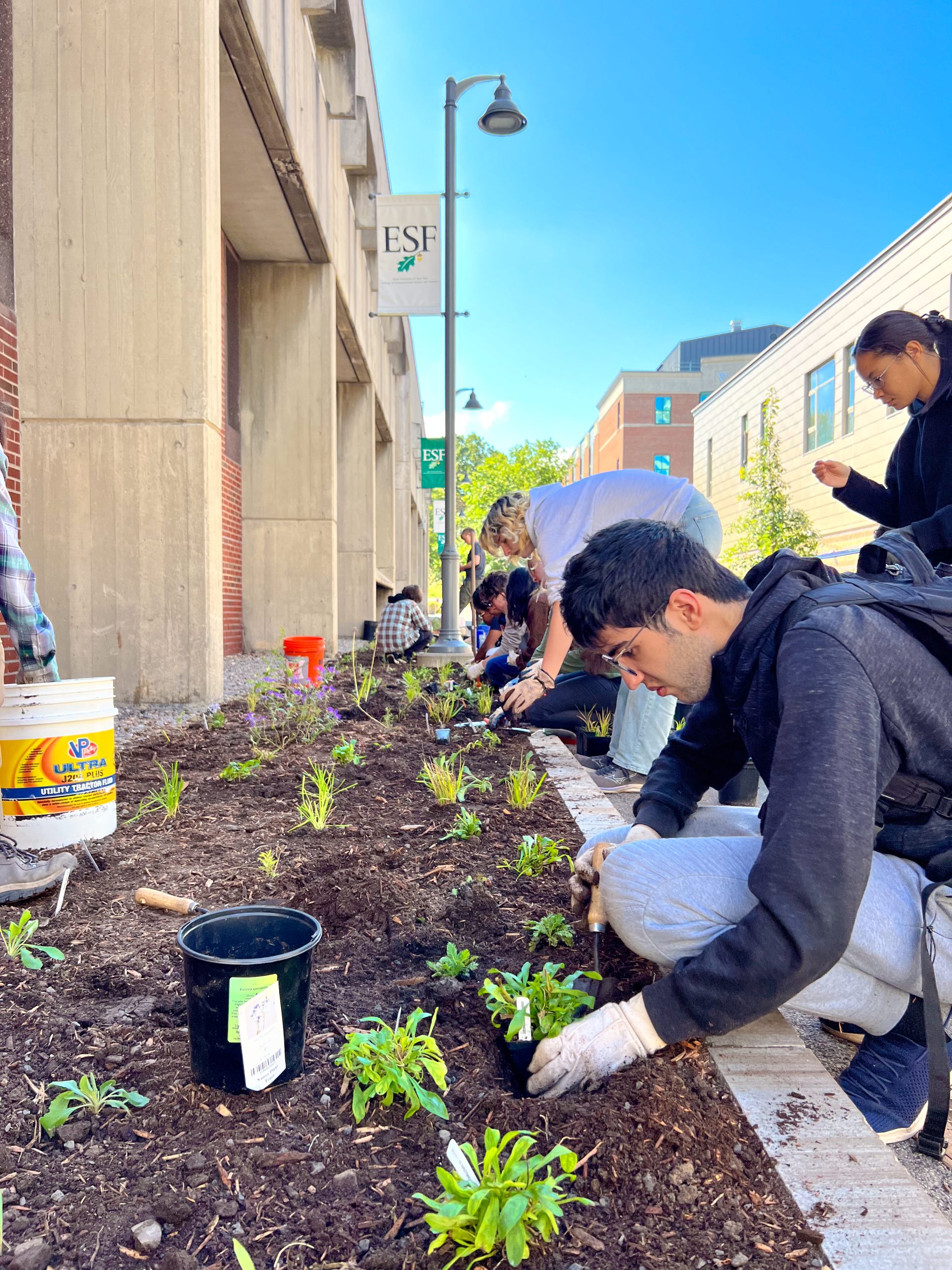
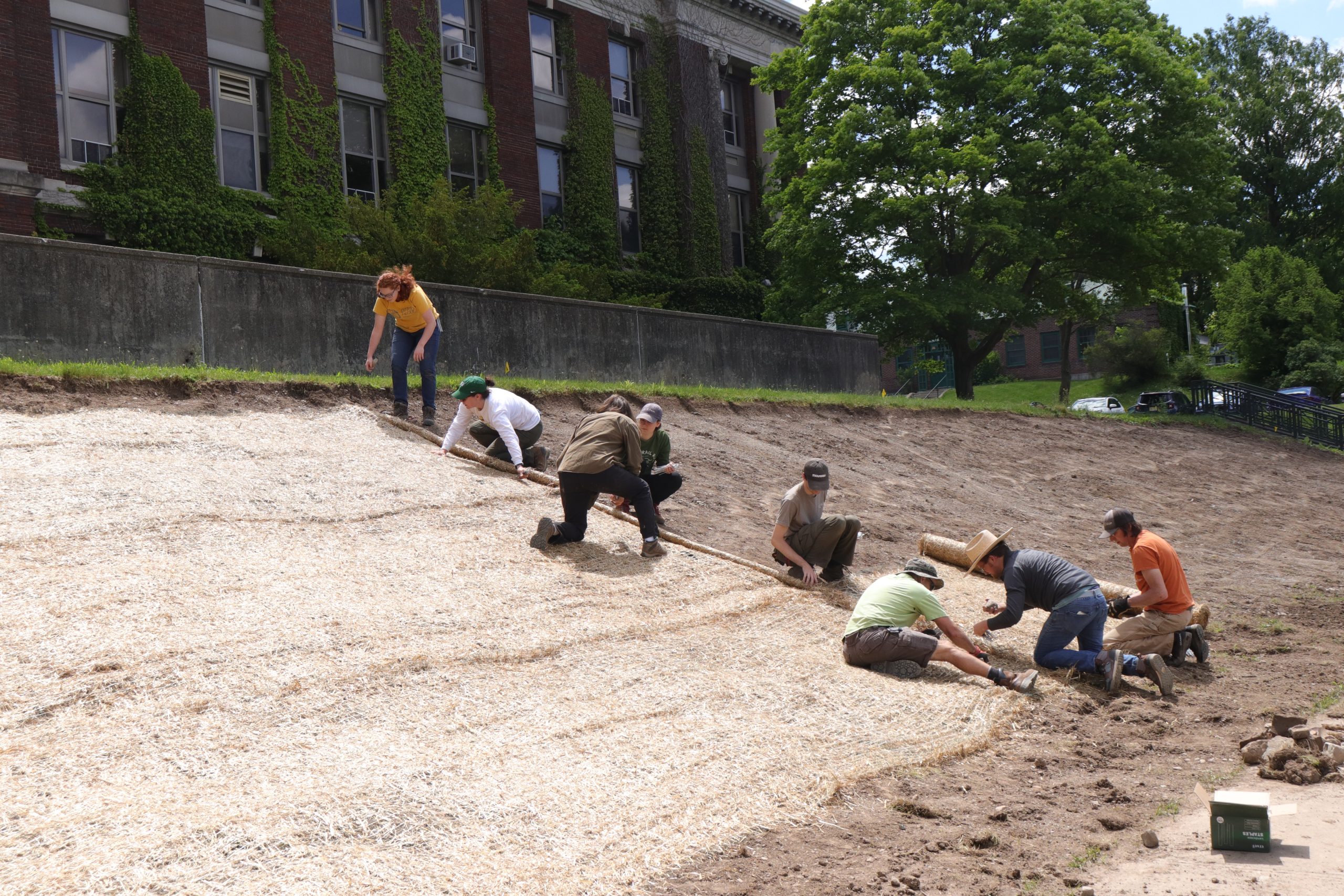
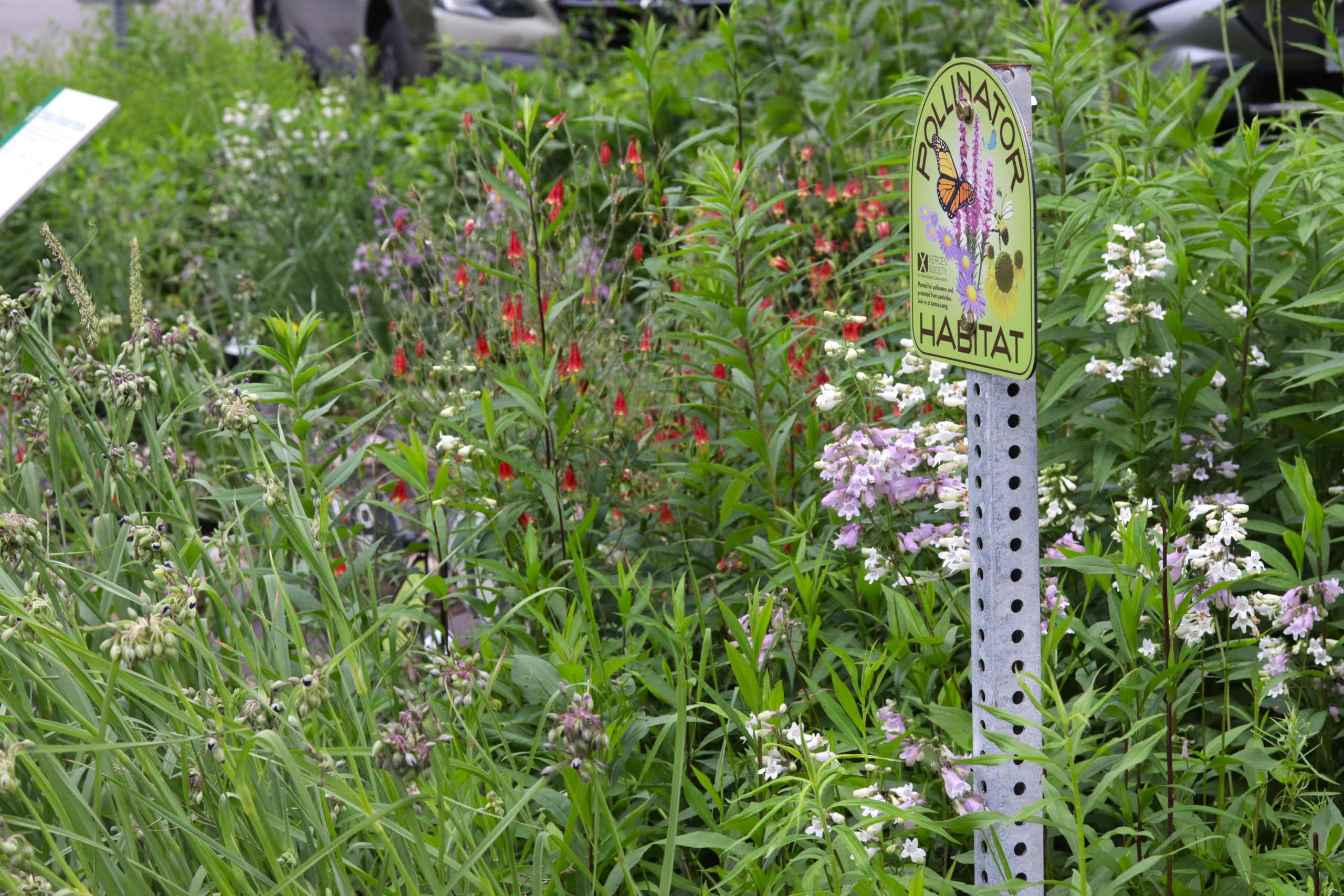
Creating native habitat is profoundly rewarding, especially when insects, birds, and wildlife start showing up—and often surprisingly soon after planting. Bee Campus USA – SUNY ESF (which is short for the State University of New York College of Environmental Science and Forestry, in Syracuse, NY) became an affiliate in 2022, since then we have installed around 25,000 sq. ft of native habitat on our small urban campus, from a seeded wildflower meadow in the center of campus to a massive tree and shrub hedgerow designed to benefit pollinators, birds, and the avid foraging culture among our students alike. We have also had the benefit of substantial native landscaping prior to Bee Campus USA, providing a framework to continue to integrate further plantings. Many of the plants we use are those we have grown ourselves from wild seed using the campus greenhouses, giving students the opportunity to learn plant propagation techniques and being a source for the community through annual plant sales.
But it’s one thing to plant a pollinator garden and hope it has done its work, and another to actually measure the positive impact the addition of habitat is having on local pollinators. Observing increased biodiversity, or rare or imperiled species, as a result of Bee Campus USA efforts can be a strong testament to the value of the actions we as affiliates take together to help our native pollinators. Even small patches of native, pesticide-free habitat can contribute to the health and connectivity of the landscape, and allow our cities and towns to support pollinators in need.
At SUNY ESF we are undertaking a long-term effort to conduct a thorough inventory of the bee species using the floral resources on our campus. Our motivations were twofold; there is much to be gained scientifically from bee surveys, especially in locations or habitats that have not been extensively surveyed before. The distributions, habitat needs, floral associations, and conservation status of many native bee species are poorly understood, and efforts to “fill in the map” can be fruitful—moreover, studying bee communities in urban areas can reveal much about which species can tolerate disturbance, and which may be lost without intervention. But secondly, a survey can have immediate applications for our Bee Campus. It can begin to connect the dots, showing us if our plantings are attracting pollinators and which flowers they favor. On the flip side, it can inform future efforts by telling us what gaps we may still have to fill, in terms of bloom turnover, taxonomic diversity, or specialist host plants. In that way, it can be a road map for us, and perhaps other campuses too.
As soon as we became a Bee Campus USA affiliate, we started an iNaturalist project to collect student observations. This project has now accumulated 575 “Research Grade” observations of over 100 pollinator species, including 30 bee species, and it has provided many excellent opportunities for student and public outreach, like workshops and bioblitzes. Since these observations have been heavily biased towards large, charismatic, and easily identified bees like honey bees, bumble bees, and carpenter bees, we wanted to employ formal collection methods too, to better capture a representative picture of the local bee community.
Beginning in 2024, we embarked on two years of intensive bee sampling using sweep-netting and hand-collection methods, capturing bees from flowers in our plantings, other campus landscaping, and weedy margins. Student technicians did much of this sampling, learning these survey techniques as well as how to process, pin, label, and curate collections of the many hundreds of specimens we gathered. Our lab members and other student volunteers from clubs also contributed. Species identifications were mainly done in-house by our pollinator ecologist Molly Jacobson, with the difficult metallic sweat bees sent off to experts Sam Droege at the USGS Bee Lab at the Eastern Ecological Science Center in Maryland and Michael Veit in Pepperell, Massachusetts.
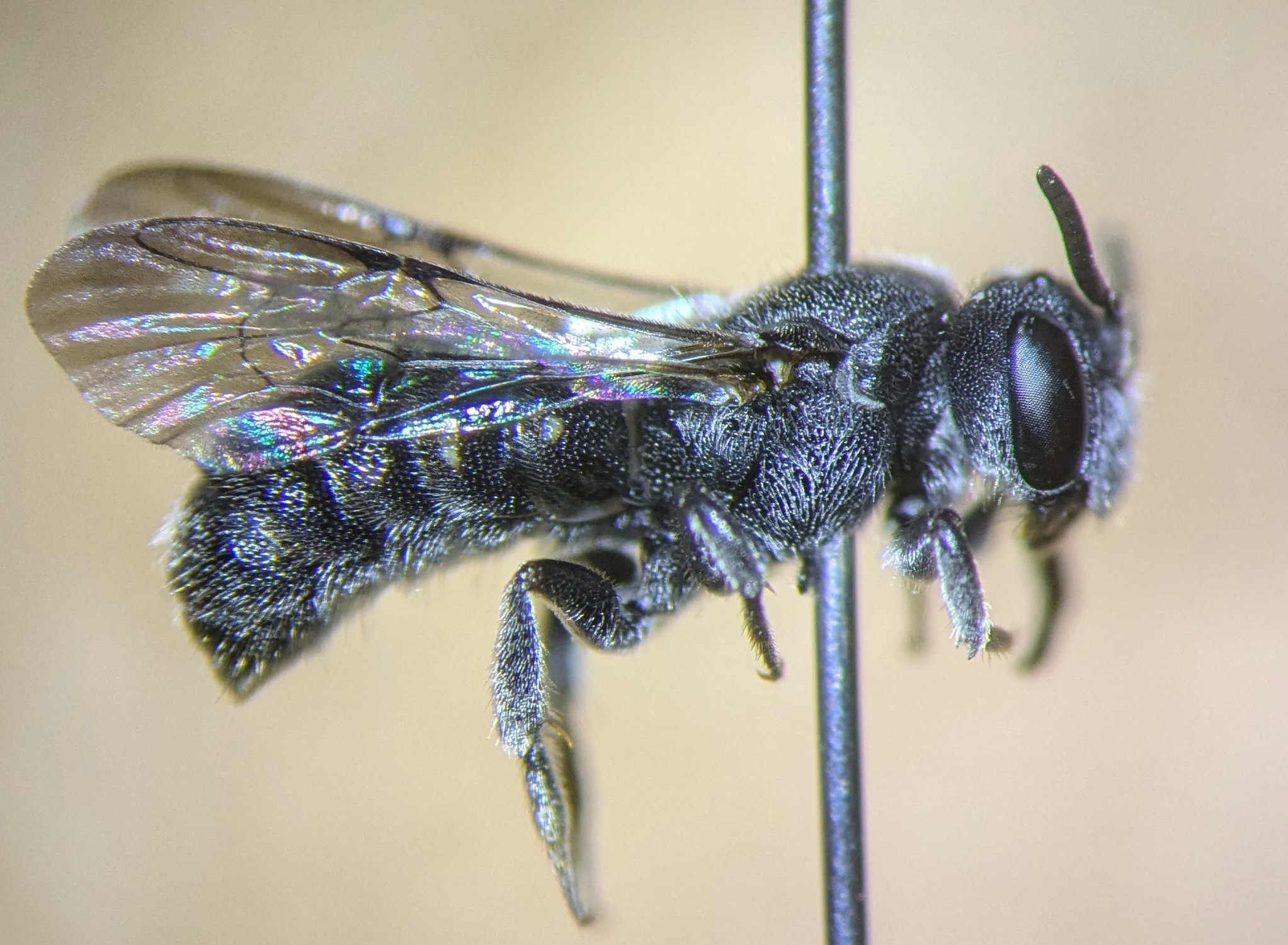
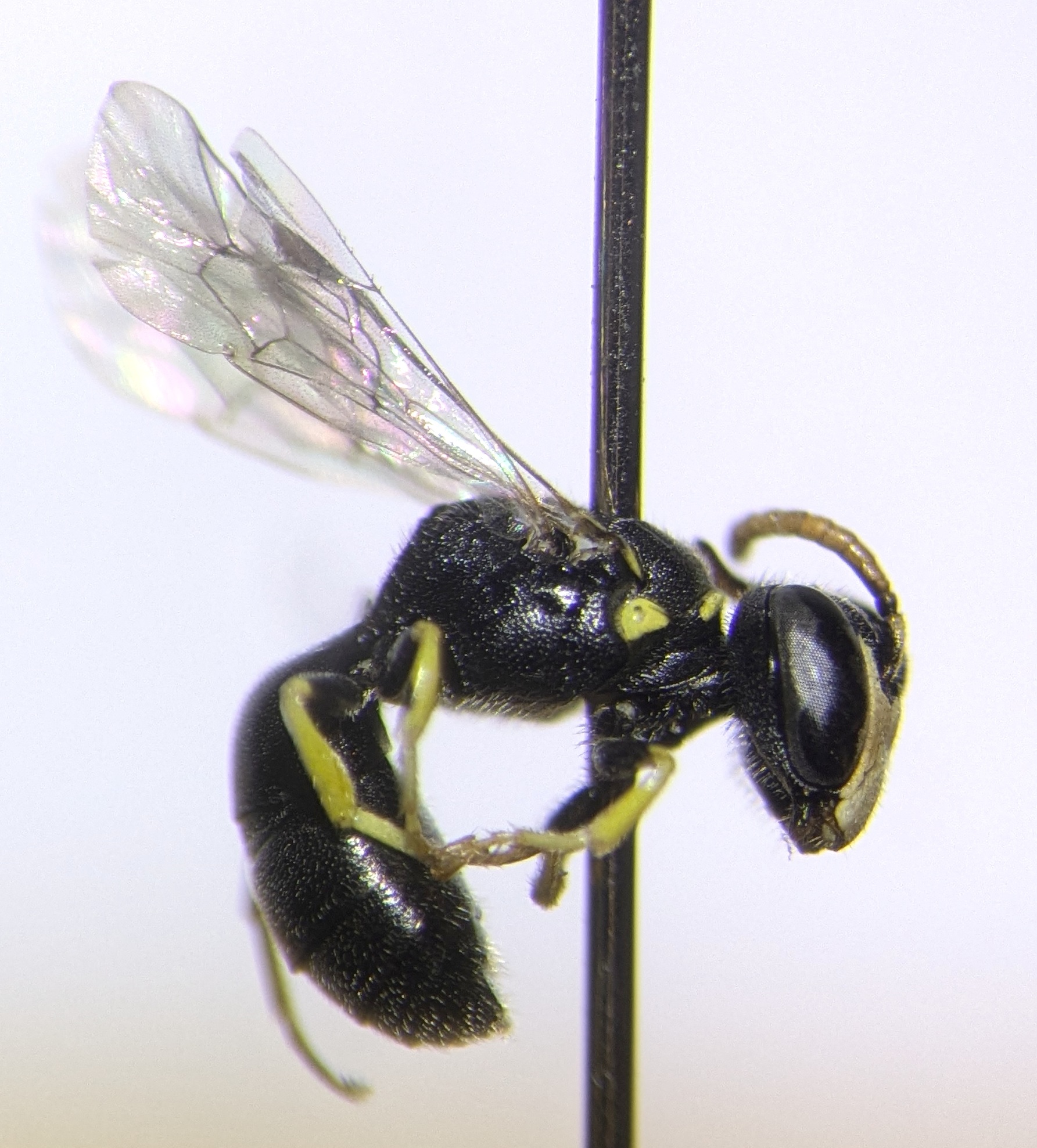
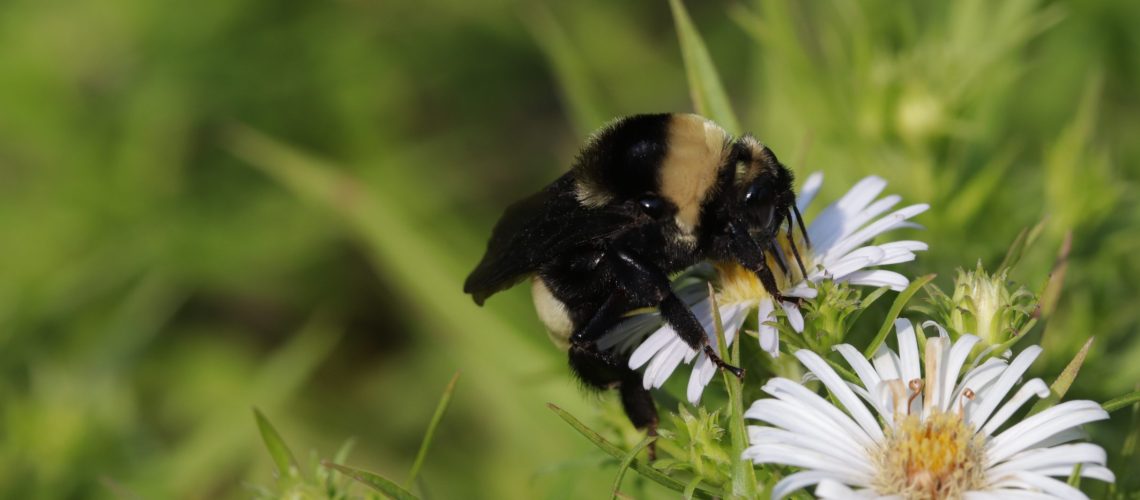
The result? Between our sampling and citizen science records, we have documented 104 species of bees using our campus so far. This represents nearly a quarter (~23%) of the total bee fauna in New York State – and the species we found surprised us in their diversity of life histories and floral preferences. Far from being a collection of the most regionally common and adaptable generalists, we documented rarities like the cuckoo bee Stelis coarctatus and Leavitt’s armored-resin bee (Heriades leavitti), species on the edge of their ranges like the black-and-gold bumble bee (Bombus auricomus) and cherry mining bee (Andrena pruni), and uncommon specialists like the mock-orange scissor bee (Chelostoma philadelphi) and bare dogwood mining bee (Andrena integra). Moreover, we found several recently introduced species that are undergoing range expansions and have not been well-documented in upstate New York, such as the European small-woolcarder (Pseudoanthidium nanum) and little masked bee (Hylaeus pictipes), giving us valuable data to track their spread across the northeast. The propensity of ground nesters (63.5%, including 24 Andrena species), bumble bees (8 species), and diet specialists (11.5%), which tend to be less diverse in highly developed urban areas, suggests that our urban habitat patches are succeeding at providing at least some of the landscape-level conditions a rich bee community needs to thrive.
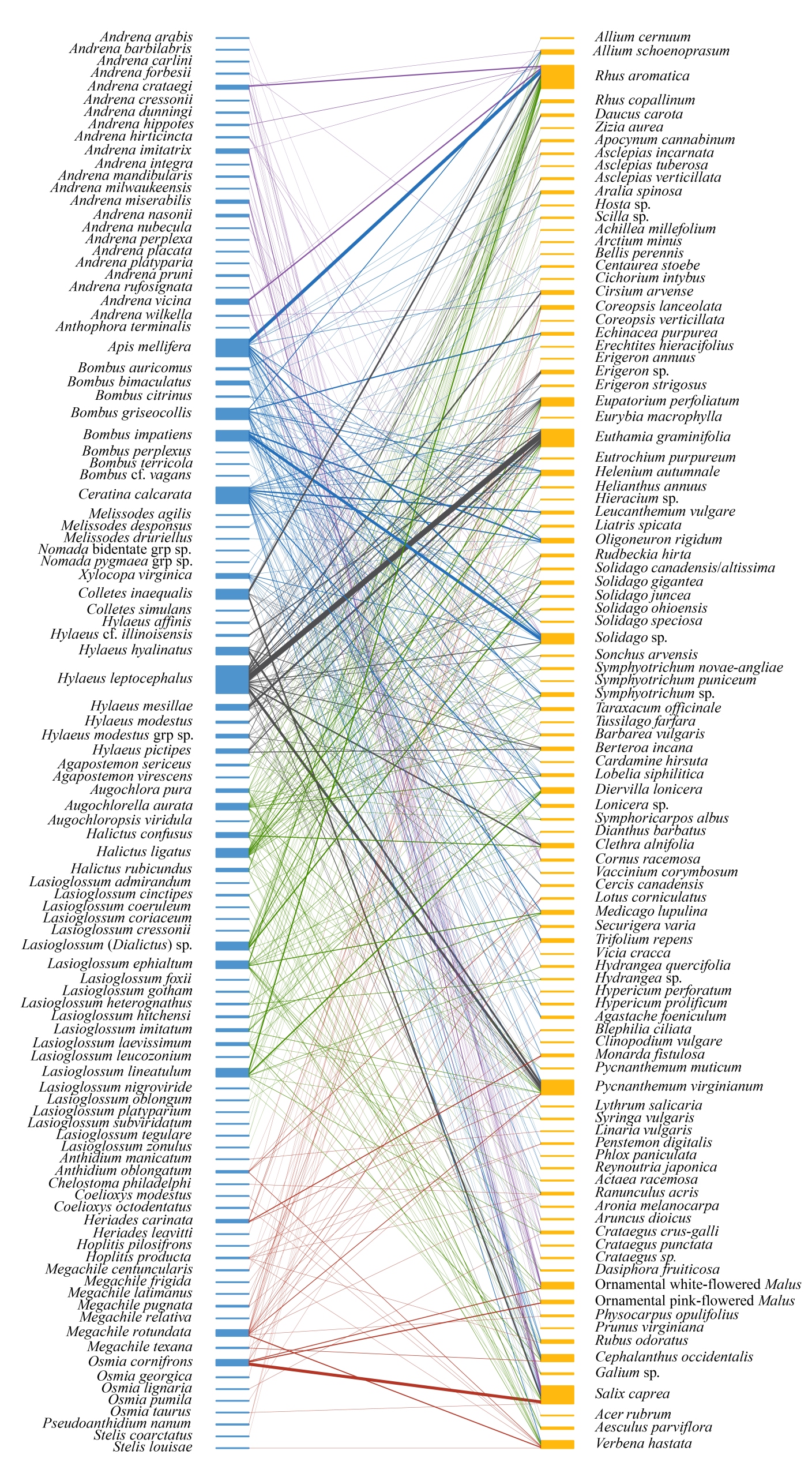
By collecting plant–pollinator interaction data with every specimen, we were able to build out a full interaction network that revealed which plants were supporting the bulk of our bee diversity. These “core” species included willows, fragrant sumac (Rhus aromatica), Virginia mountain mint (Pycnanthemum virginianum), boneset (Eupatorium perfoliatum), swamp vervain (Verbena hastata), and goldenrods (of which we have over a dozen species on campus). Our spring mining bees were relying heavily on early-flowering trees and shrubs in the rose family like crabapples, hawthorns, brambles, and chokeberries, plus willows, while leafcutter and mason bees gravitated towards lanceleaf coreopsis (Coreopsis lanceolata), the mint family, and the legume family. Bumble bees, not surprisingly, frequented the aster family, with long-tongued species also visiting penstemons and wild bergamot (Monarda fistulosa). Most of our diet specialists were also associated with late-blooming Asteraceae. The vast majority of the plants most heavily visited by bees were those planted either by Bee Campus SUNY ESF or general campus landscaping, especially our bioswale, with species like swamp vervain, boneset, flat-topped goldenrod (Euthamia graminifolia), great blue lobelia (Lobelia siphilitica), and sneezeweed (Helenium autumnale) that proved popular. However, non-native weedy plants like creeping thistle (Cirsium arvense), bird’s-foot trefoil (Lotus corniculatus), and buttercup (Ranunculus acris) did help support some unique bees, telling us that non-manicured corners do have a role, and that we should be mindful of wholesale eliminating exotic plants unless we have natives in place to fill a similar functional role.
Conducting a bee survey on your campus can be fun, rewarding, and a great way to raise awareness and engage students with Bee Campus USA efforts. Depending on your capabilities, it may be community science, or it may involve pan trapping and sweep netting; either way, the data have value, both for our understanding of North America’s native bees, and for the ways we as Bee Campus USA affiliates can most effectively protect them.
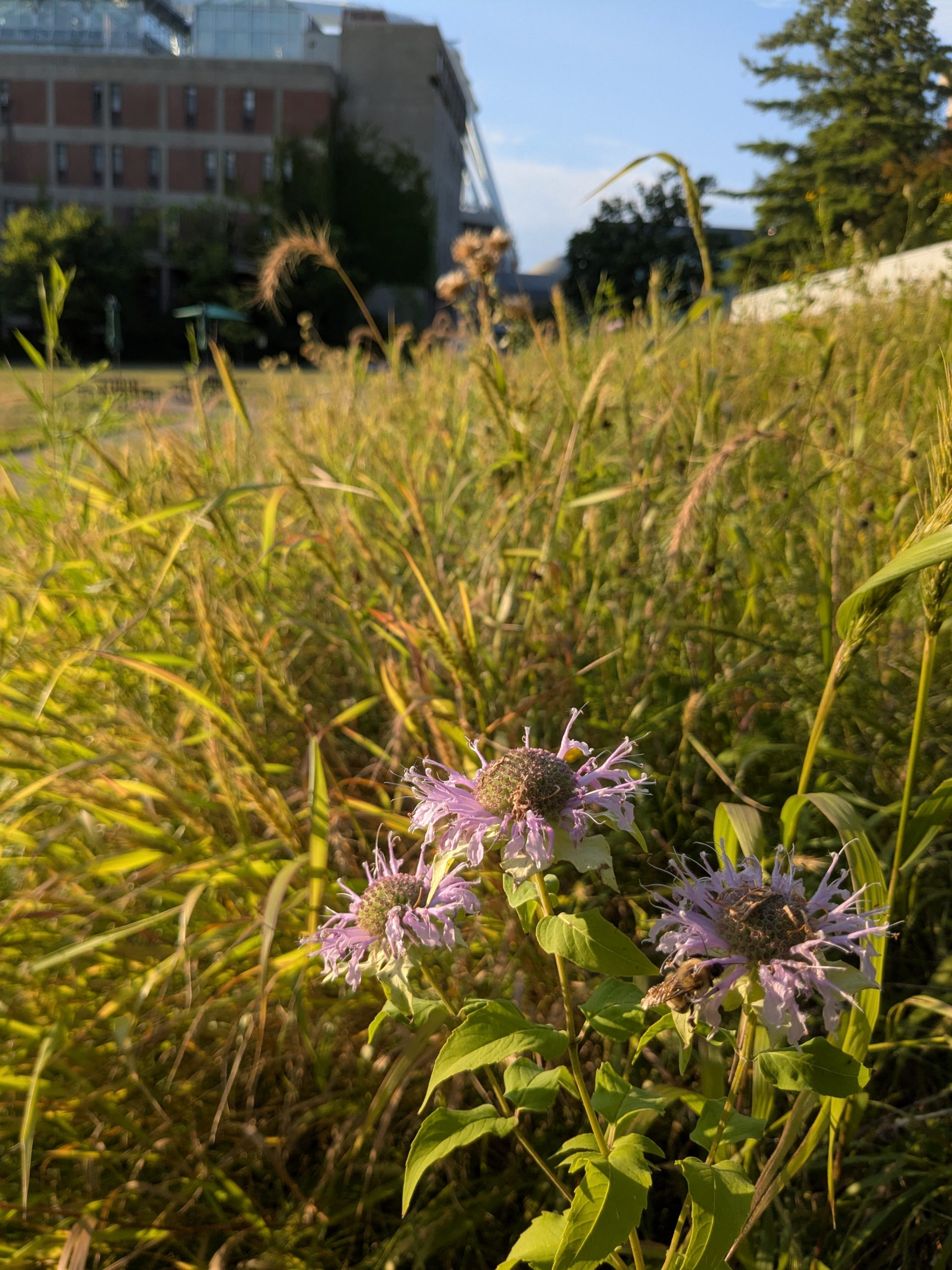
We have concluded our surveys for now, and hope to perform a follow-up in 5–10 years once our plantings have established and matured, giving more bee species a chance to find our habitat. This will allow us to compare results over time. While it is always difficult to untangle whether species are here solely because of our efforts, we have been able to firmly document just how many wild bees are making use of our Bee Campus plantings, and that the specific plants we choose have an impact on what will show up. From these results, we hope to plant more trees like maples, cherries, willows, and sumacs, expand woodland plantings to attract some missing diet specialists, and look for more low-lying areas to convert to wetland plantings, just to name a few. Many of our bees are likely coming to our gardens through habitat corridors between our campus and surrounding parks and neighborhoods, meaning that we are one part of an interconnected landscape, providing critical resources and shelter that bees need. We hope they will choose to stay!
You can read the full report on our inventory, including our final species list, on our website.
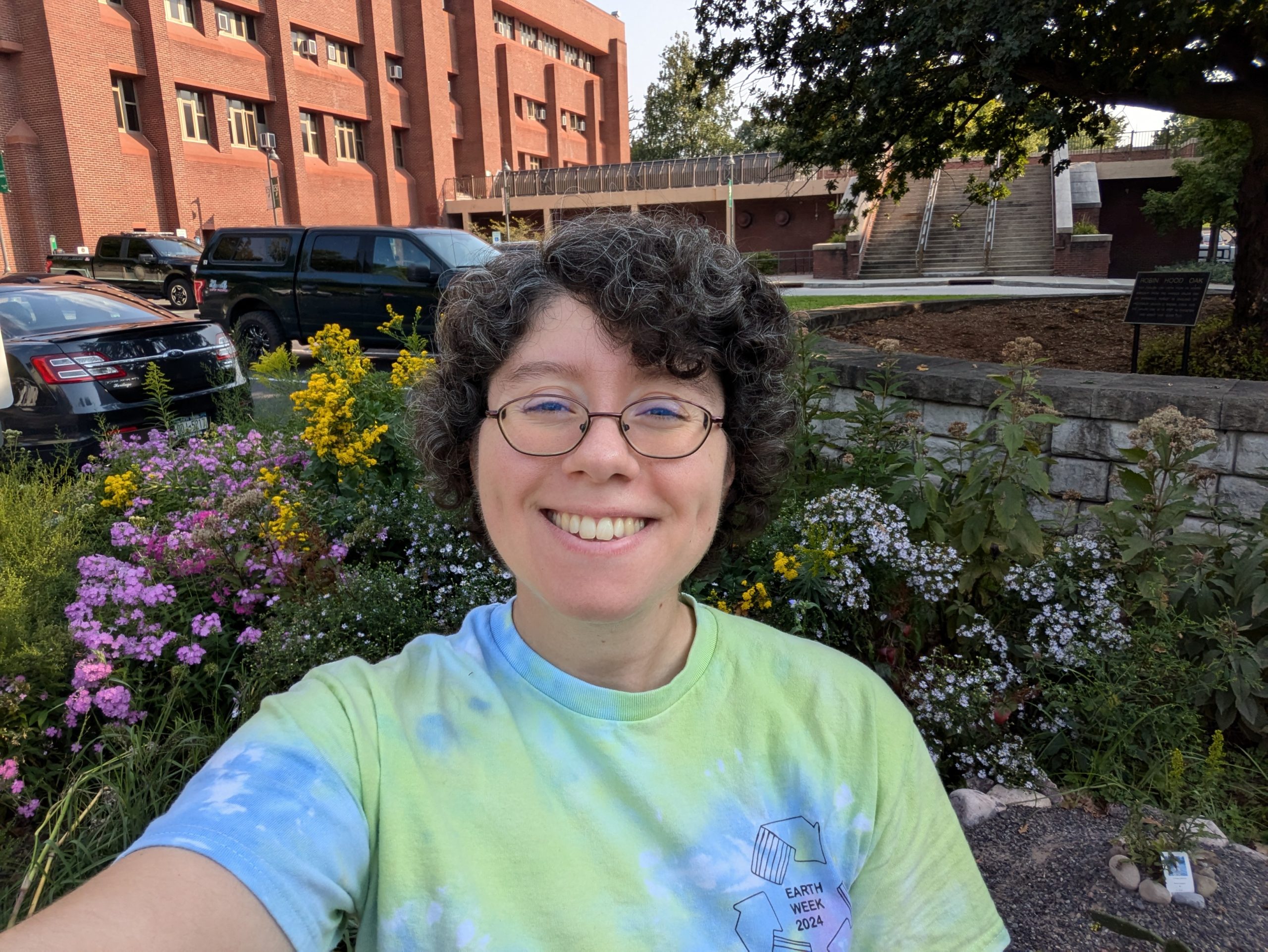
About Molly Jacobson
Molly Jacobson is a pollinator ecologist at SUNY ESF. She co-chairs the university’s Bee Campus USA committee and is part of the ESF Bee Lab, which performs research focused on rare bee species and understudied bee habitats in the northeastern US. Molly received her B.S. in Wildlife & Conservation Biology from the University of New Hampshire and her M.S. in Conservation Biology from SUNY ESF. She is interested in plant-pollinator associations and multitrophic interactions, and habitat management for pollinators and wildlife. She engages the public with pollinator conservation and connects people with nature through many forms of outreach, from brochures, articles, and signage to workshops, walks, and webinars. In particular, she seeks to use macrophotography to help tell the stories of underappreciated species and change public perception of insects. Apart from insects she has been a birder for over a decade, including seasonal positions working with birds, and enjoys habitat gardening.
Header photo: Black-and-gold bumblebee (Bombus auricomus) on swamp aster (Symphyotrichum puniceum) in the Bray Bioswale on campus. Credit: Molly Jacobson.