Author: Phyllis Stiles, Chair of Bee City USA-Asheville; Founder of Bee City USA and Bee Campus USA
Bee City USA: Asheville, NC
USDA Plant Zone: 7 A & 7 B
My top 5 native pollinator plants:
- Carolina bush pea (Thermopsis villosa)
- Purple flowering raspberry (Rubus odoratus)
- Carolina phlox (Phlox carolina)
- Carolina silverbell tree (Halesia carolina)
- American holly tree (Ilex opaca)
Does it seem like everybody is talking about pollinator gardening these days? It’s fantastic to see so many articles and presentations about pollinators and native plants. That was not the case in 2012 when we founded the Bee City USA organization in Asheville, North Carolina.
To capitalize on the interest and move our community to an even deeper understanding of pollinator conservation, Bee City USA-Asheville partnered with the Asheville Botanical Garden in January 2024 to offer the monthly “Certified Pollinator Advocate” (C.P.A.) class series.
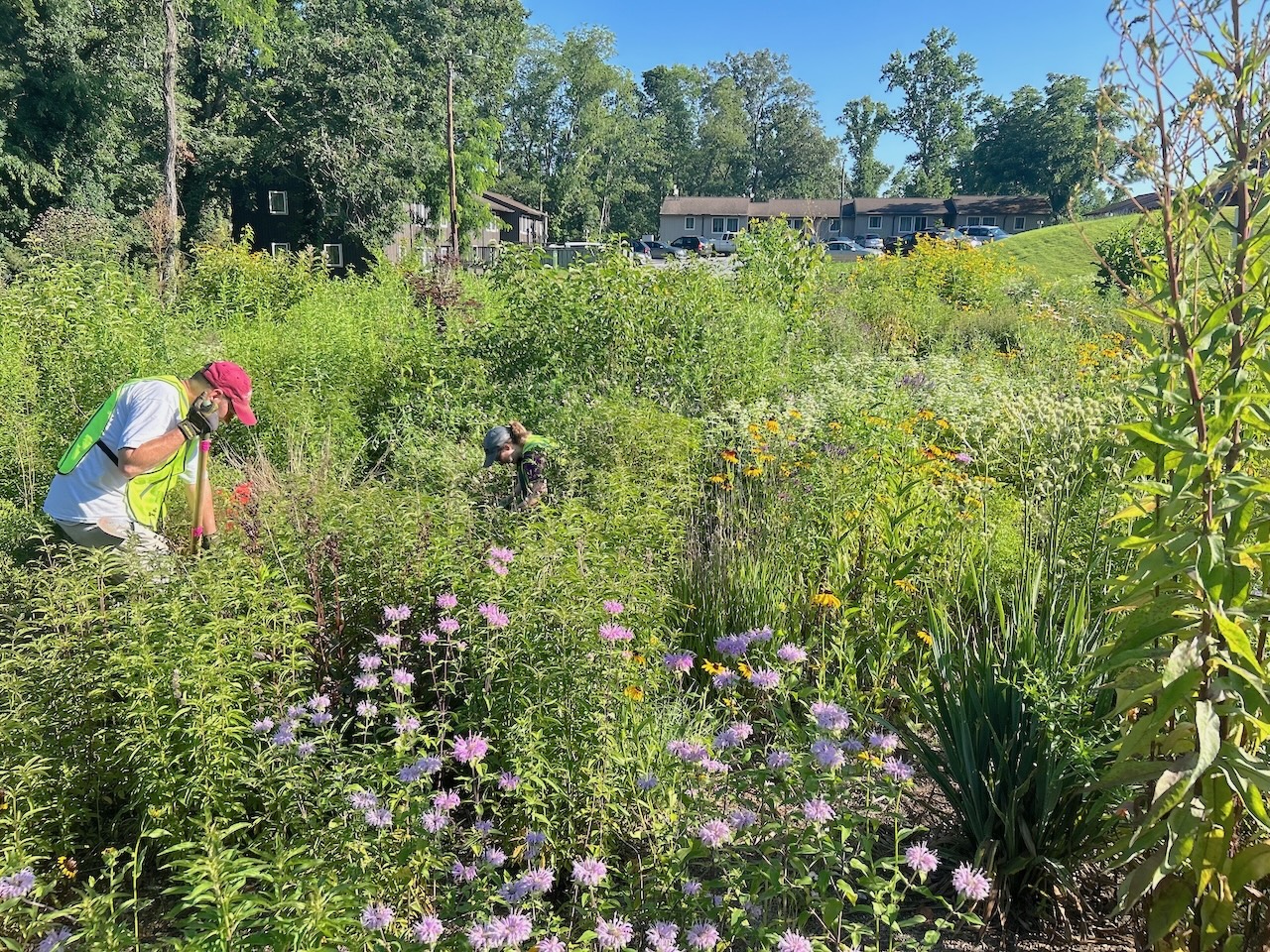
Anyone can attend C.P.A. classes, but to become “certified” one must attend all twelve. Additionally, to graduate one must “pollenteer” with Asheville’s Bee City USA program at an outreach and a habitat event.
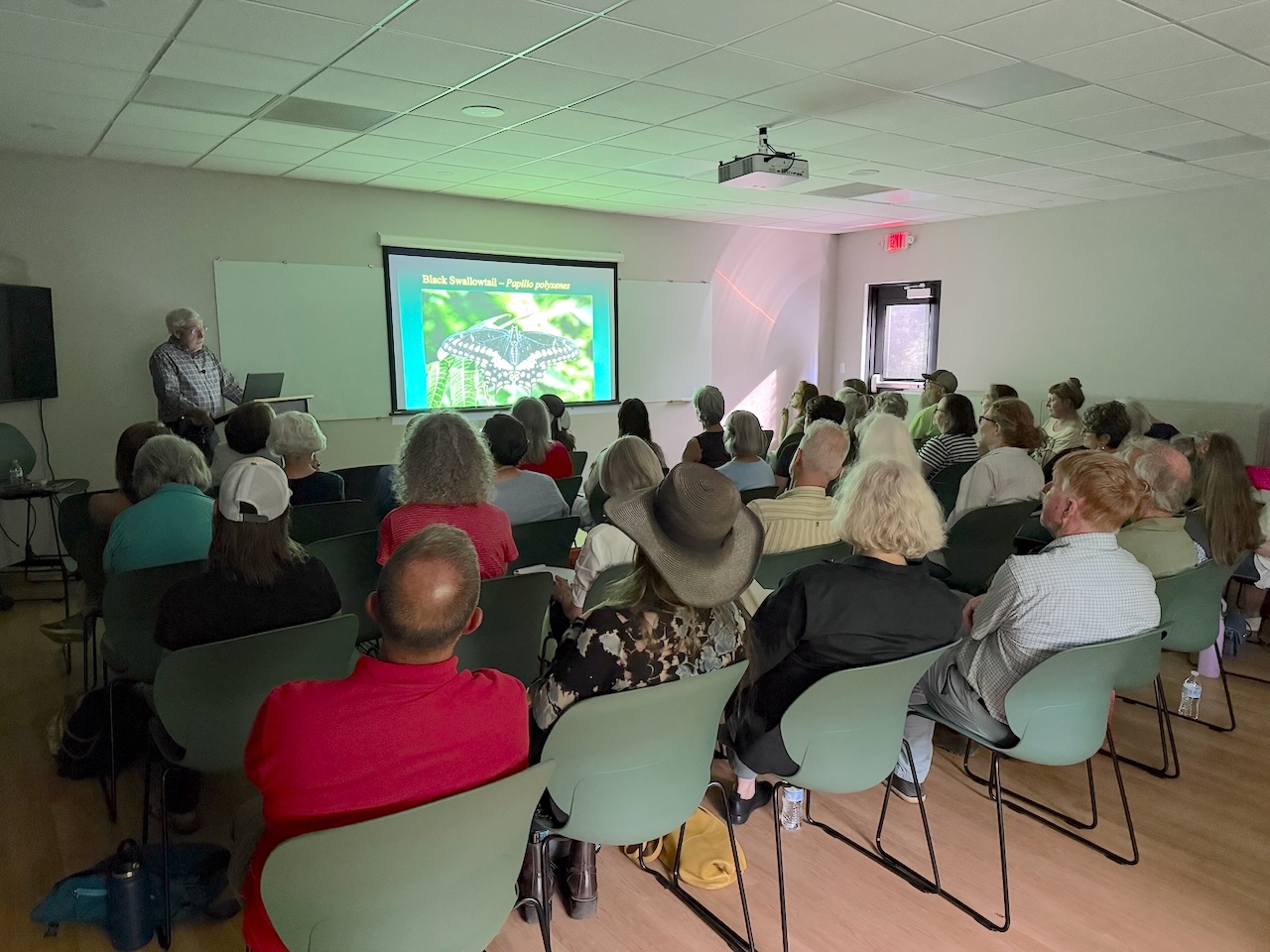
The Asheville Botanical Garden was accustomed to offering classes about native plants in their 45-seat classroom, but not so much about pollinators. The C.P.A. series is also the first time they offered night-time classes, to accommodate people who work during the day.
Bee City Asheville pollenteers organize the curriculum and speakers. Fortunately, there are willing and capable presenters who live nearby. The Botanical Garden provides meeting space, AV support, registration services, classroom hosts, and speaker honorariums. Each class lasts 1.5 hours and the registration fee is $25. Promoted through the Botanical Garden’s and the Bee City Asheville networks, nearly every class has sold out.
Starting in January with “Introduction to Plant-Pollinator Co-Evolution,” the curriculum is customized to our region’s flora and fauna and loosely tied to the seasons. To anticipate the growing season, February covers “Battle Plans Against Exotic Invasive Plants,” followed by “Gardens That Please Both People AND Pollinators” in March. Just as bees are starting to appear in April, the class is “All About Our Native Bees.”
In the humid Southeast, mosquitoes are a huge problem for us, causing many desperate residents to contract for mosquito barrier spray services. The “Preventing Mosquito Outbreaks to Protect Pollinators” class in May focuses on the mosquito life cycle and how to reduce their breeding opportunities without using chemicals that harm pollinators and other insects.
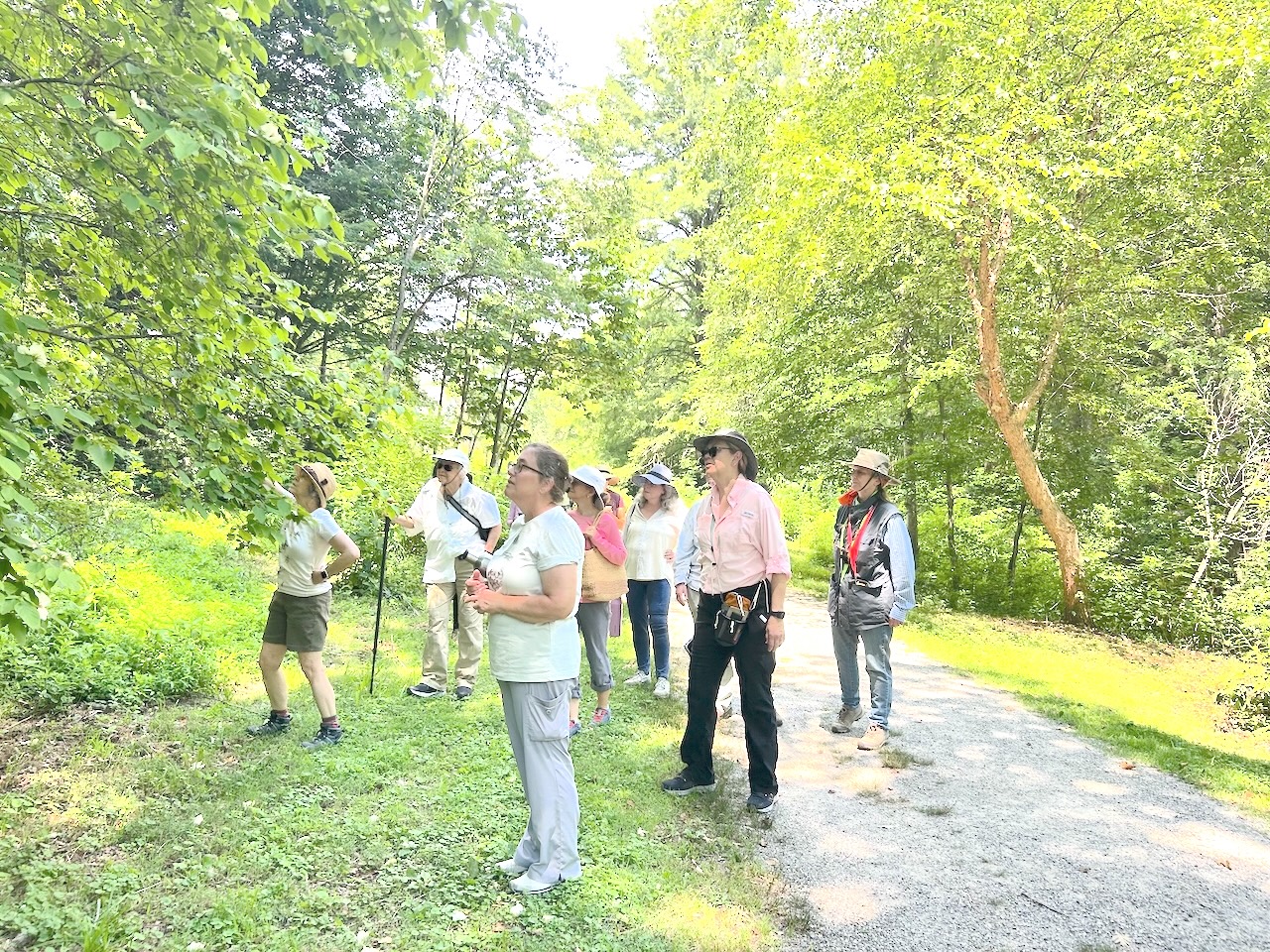
During our annual Pollination Celebration! month of June, we host a Pollinator Safari (along with a variety of other events). It begins inside with some hints for differentiating bees from flies and wasps, and pointers on which pollinators are likely to forage on which types of flowers. Then the class moves outside to observe those pollinators in action in the Botanical Garden.
In July and August, students learn “All About Butterflies & Moths” and “Pollinator-Friendly Pest Management.” Then, in September, just as the monarchs are about to migrate to Mexico for the winter, we cover “All About Monarchs & Their Migration.” When the flowers are starting to go to seed in October, we encourage class members to grow local ecotypes with the “Collect Native Seeds to Plant Next Year” class. November features the role of trees in pollinator conservation and encourages planting trees in the fall and winter. To close out the year in December, we teach “Pamper Your Pollinators This Winter,” a primer on pollinator overwintering strategies that stresses leaving leaves and stems in the landscape.
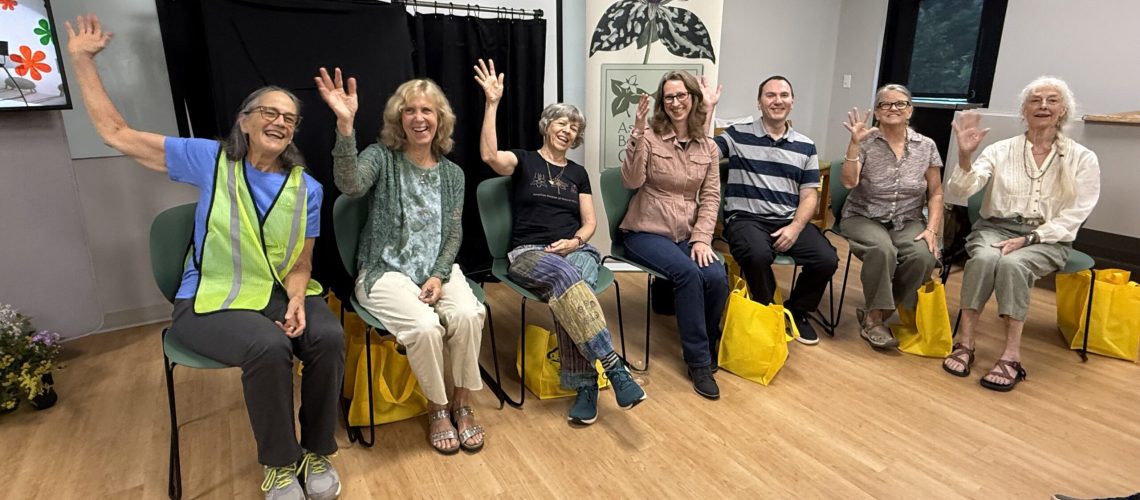
We are offering the series again in 2025 and in 2026, and to date, 215 individuals have taken one or more classes. The inaugural class of seven students graduated on September 8 with a ceremony that honored and celebrated their achievement. Many class members have already pollenteered with us because of the classes; many others are enhancing their pollinator habitat and encouraging their friends and neighbors to do the same.
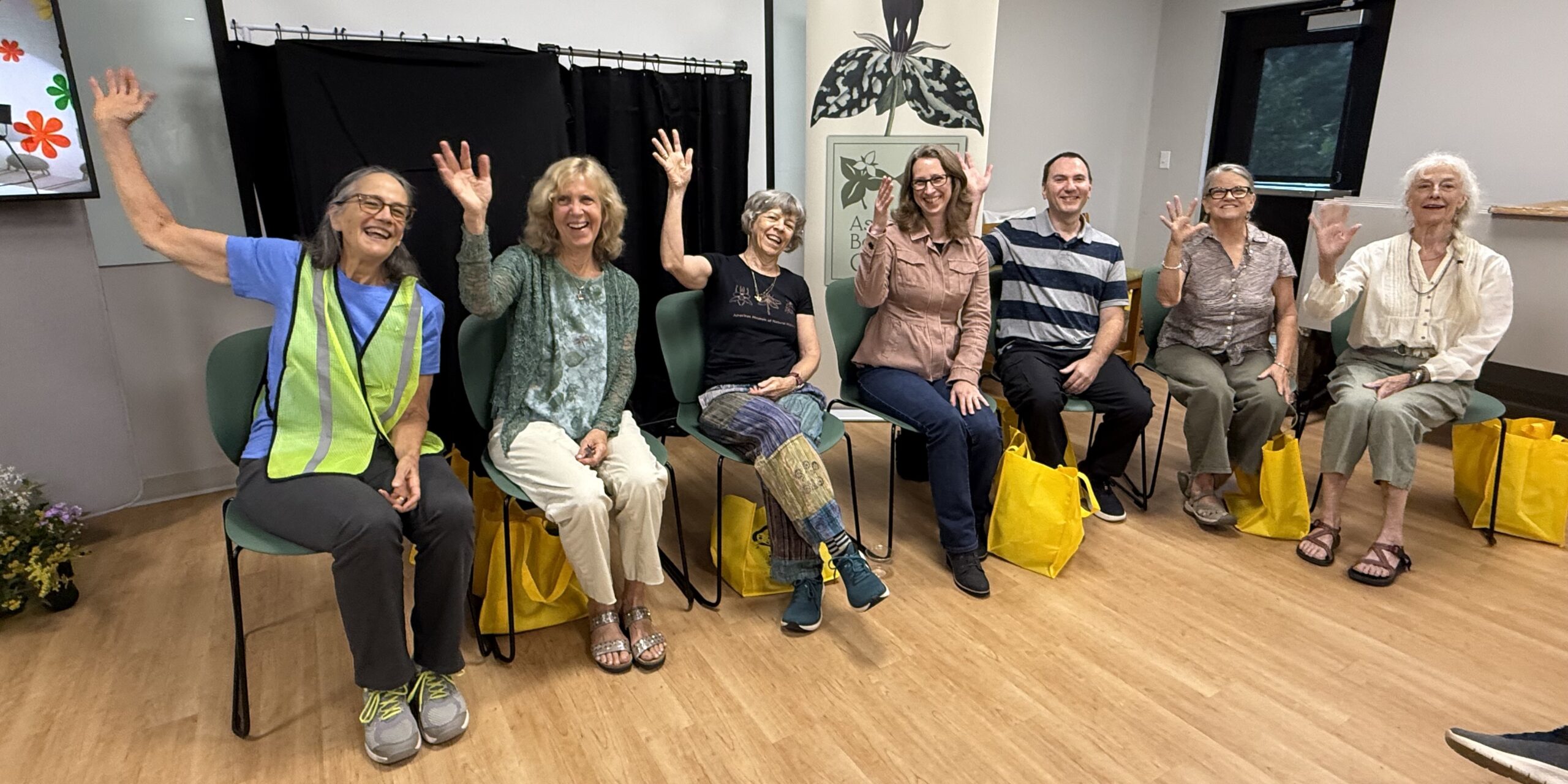
In a recent feedback questionnaire participants said:
- “I was amazed by how much there is to learn still about the vast field of pollinators! Every topic was like a world unto itself with its experts and specialists–kind of like medicine with all its sub-specialties! I love that I’ll be able to keep learning about this forever!”
- “I have been reading about pollinators, and observing in my garden, and this year I added at least 30 native plants that support pollinators. It has been so wonderful to see which plants are being visited and how the flowers are accessed. I’ve also been thrilled at all the plants that have been chewed up by caterpillars. I have more birds, and more caterpillars, and even a garden snake. I’ve gotten more interested in butterflies and can now identify skippers and know which plants they like in my garden. I quit using insecticides about 15 years ago, and now I’ve quit using herbicides as well.”
While some themes reoccur throughout the series, we try to make each session eye-opening with practical advice and the most current science available. Our ultimate goal is to create enough wonder and awe for the little things that run the world that class members will advocate for their conservation. As the Senegalese forestry engineer Baba Dioum said so well, “In the end, we will conserve only what we love; we will love only what we understand, and we will understand only what we are taught.”
Largely operating under a non-profit fiscal sponsor over the past 13 years, Bee City Asheville has been supported by small grants, habitat raffles, event fees, corporate sponsorships, and individual donations. We are guided by a volunteer committee that meets at 5:30 p.m., the first Wednesday of each month at the Asheville Botanical Garden. Some of our other ongoing programs include habitat certification, the Asheville Butterfly Trail, and the Great Buzz Gathering.