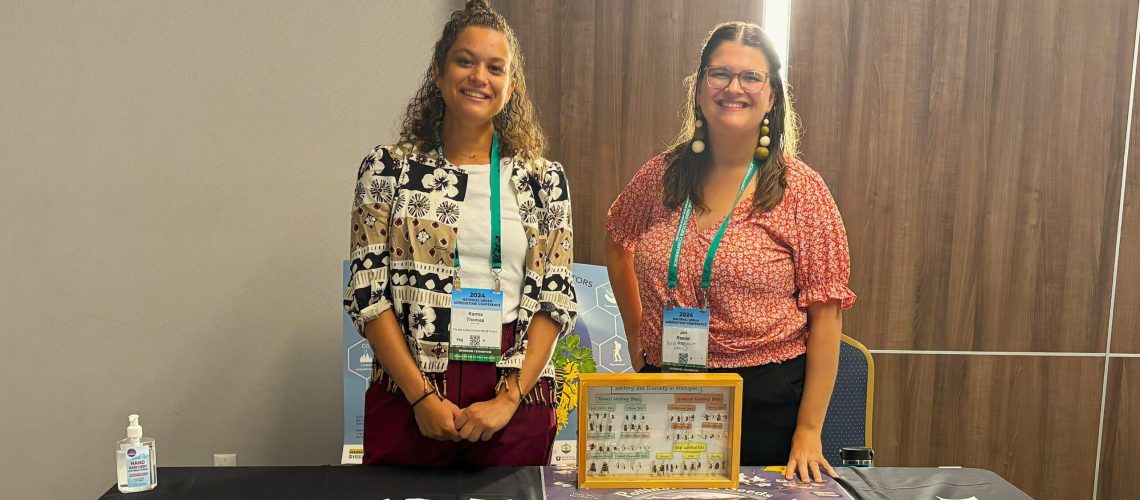
We’re doing a different kind of spotlight this month. Michigan State University does a remarkable amount of pollinator conservation research, but in this post we’re highlighting one particular project of the Vegetable Entomology Lab and encouraging you to help out.
If you are involved with urban farming anywhere in the US, please take (and share!) their Pollination Management Survey by February 1, 2025. Michigan residents who are at least 18 years old can be entered into a raffle to win a $100 gift card. See details below.
Link to survey (English) *** Link to survey (Español)
Authors:
Jen Roedel, PhD Candidate and Graduate Research Assistant, Department of Entomology, Michigan State University
Karma Thomas, Pollinator Research Assistant, Department of Entomology, Michigan State University
Bee Campus: Michigan State University
USDA Plant Zone: 6a
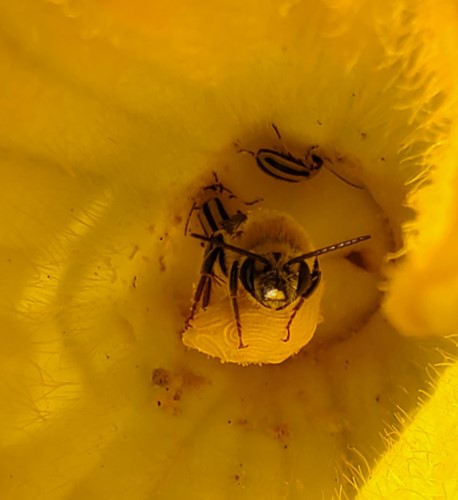
The Vegetable Entomology Lab at Michigan State University has been exploring how bee and plant communities are responding to urbanization on small squash farms. Jen Roedel, PhD Candidate, has been surveying these communities across an urban gradient in southeast and central Michigan since 2022. Preliminary results from her work demonstrate that abundant and diverse bee communities, which provide important ecosystem services like pollination, can be present on urban farms. In 2023, the lab received a USDA North Central Region Sustainable Agriculture Research and Education (SARE) grant to expand these research efforts, install additional pollinator habitat, and develop outreach efforts to expand farmer knowledge on pollinator habitat management in urban agriculture. Karma Thomas was then hired to help manage the project as a Pollinator Research Assistant. As a result, The Bee Urban Growers (BUG) Project was formed to fulfill the interests of urban farmers in Michigan looking to incorporate and maintain pollinator habitat while enhancing conservation and pollination services on their land.

The BUG Project is a North Central SARE funded research grant dedicated to both pollinator conservation and supporting small-scale, urban farmers. The BUG Project works with farms and community gardens in Detroit and Lansing growing cucurbits like squash and pumpkins. That’s because these crops are pollinator-dependent, making urban pollinators especially important to farmers who are growing them. Additionally, the pollen produced by them is required for the native, solitary hoary squash bee (Eucera (Peponapis) pruinosa) to complete its own life cycle. The larvae feed exclusively on the pollen grains as they develop, making the relationship between squash bees and cucurbits one of the few specialized crop-pollinator interactions in North America. Focusing the work on a crop-specialist native bee that depends on a popular crop commonly grown by urban farmers aligns strongly with the BUG Project’s goals.
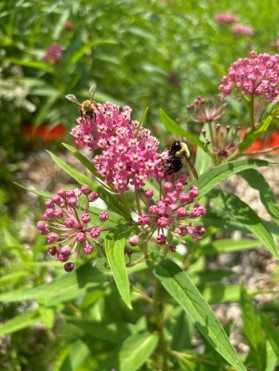
The BUG Project has two primary objectives:
- Improving pollinator habitat and pollination services in urban agricultural settings
- Providing farmers and community members with educational resources on accessible pollinator habitat management practices


Ongoing work to achieve these goals includes:
- Providing partnered urban farms with native plant strips, which offer food and habitat to pollinators
- Surveying native bee communities and evaluating pollination services by assessing cucurbit production
- Collaborating with farmers to determine their perceptions of various pollinator management practices
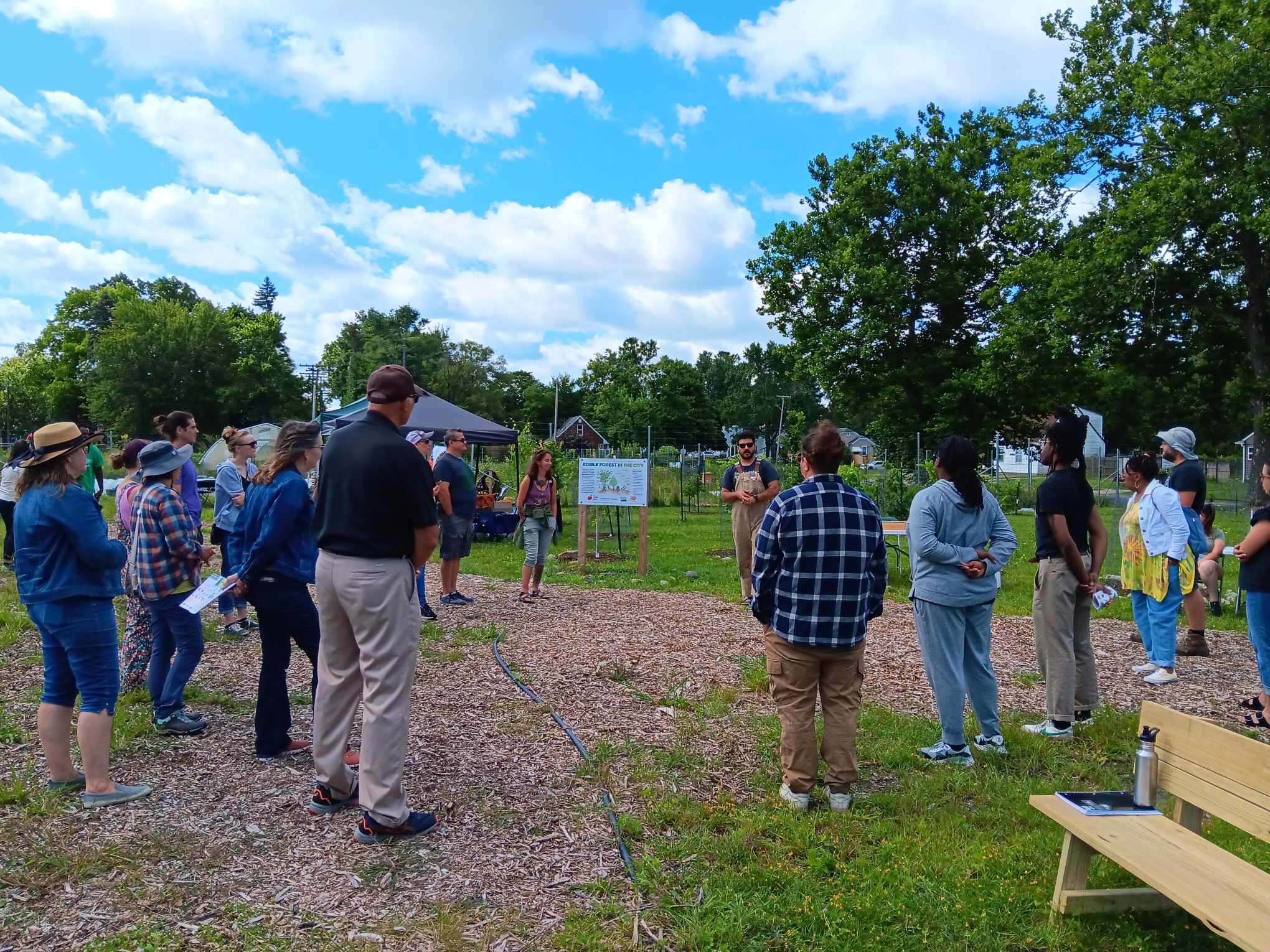
- Organizing educational outreach events and workshops, creating and distributing extension materials related to pollinators and their habitat management

Help the BUG Project by taking a 10-Minute Pollintation Managment Survey
By providing small-scale farmers and community members with educational resources related to pollinator management, the BUG Project hopes to improve pollinator habitat in urban agricultural systems while simultaneously boosting food security in underserved communities. To help understand how to best achieve this, the BUG Project is looking for urban farmers, growers, and producers over the age of 18 to complete their 10 minute 2024 Pollination Management Survey! Scan the QR code on the attached flier that matches your language preference (English or Spanish) or click the appropriate link to get more information and complete the anonymous survey.
Link to survey (English) *** Link to survey (Español)
Michigan residents: After completing the survey, you will receive a link and QR code to a Pollination Management Raffle. Provide your name, the name of your farm/garden, how you heard about the survey, and hit submit. The winner of the $100 gift card will be randomly selected from this raffle on February 1, 2025! The raffle is only open to residents of Michigan who are 18 years old or older.

Please feel free to reach out to Karma Thomas [email protected] and Jen Roedel [email protected] with any questions!
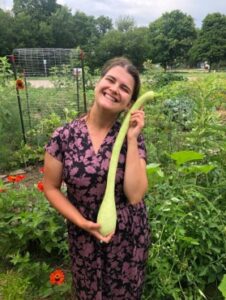
Jen Roedel is a PhD Candidate and Graduate Research Assistant in the Department of Entomology at Michigan State University. During her graduate work, she has surveyed bee and floral communities and investigated integrated pest management methods for key insect pests in vegetable production. She is interested in beneficial insect conservation, sustainable agriculture, local food systems and community health.
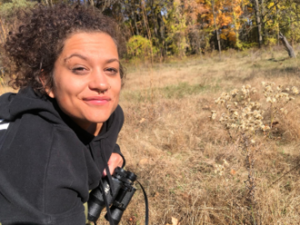
Karma Thomas is a Pollinator Research Assistant in the Department of Entomology at Michigan State University. She joined The BUG Project after working as an adjunct professor in the Biological Sciences Department at SUNY Cortland. Her graduate work focused on nocturnal moth pollination networks in an endemic habitat and her research background is in plant-pollinator coevolutionary ecology. Her interests are in pollination ecology, wildlife conservation, food security, and community outreach and education.
Stay up to date with The BUG Project by following them on social media @beeurbangrowers (Instagram) and Bee Urban Growers Project (Facebook).