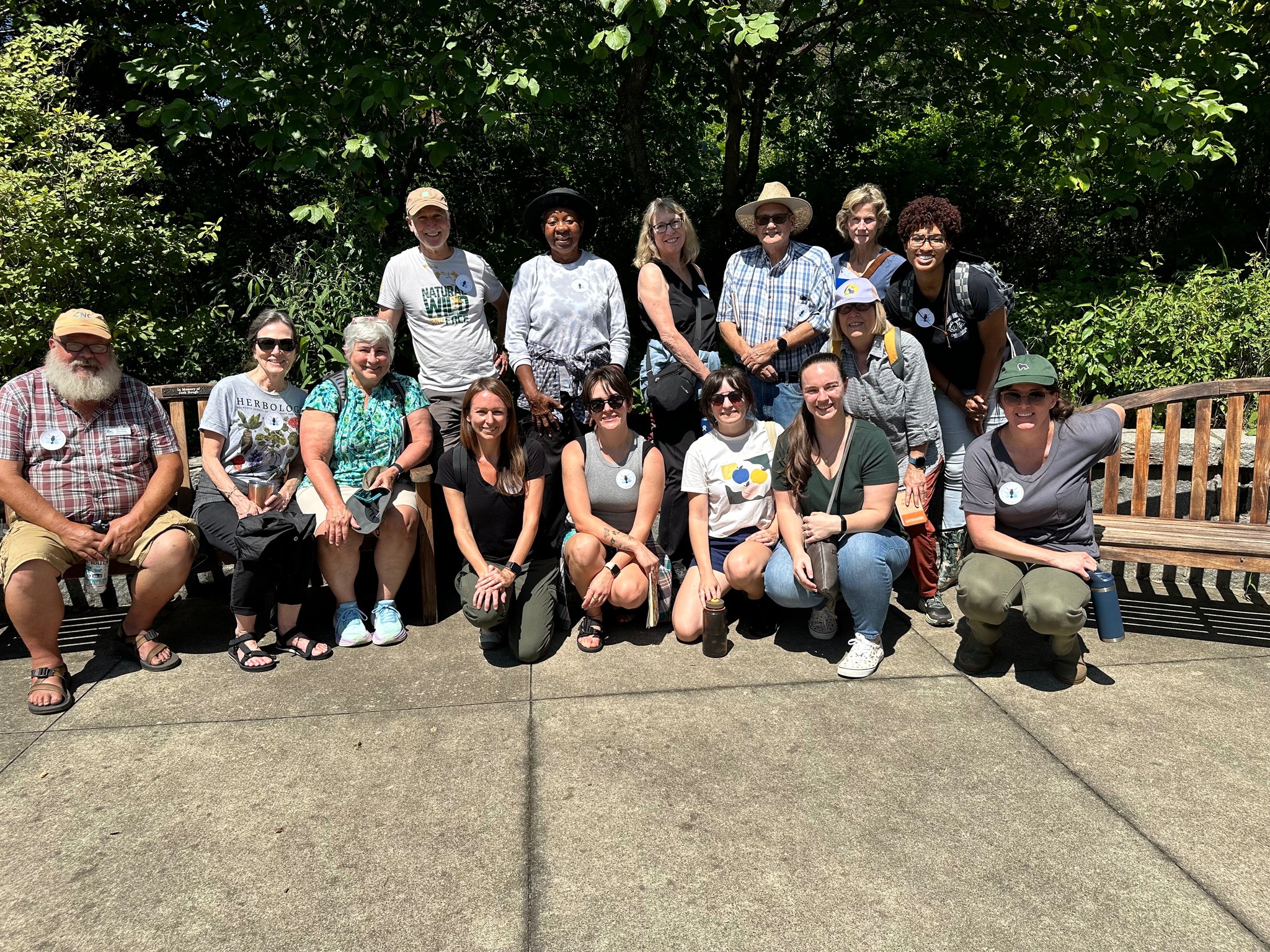
Guest post by Becky Griffin, Great Southeast Pollinator Census Project Coordinator
The buzz is true and the numbers are in!
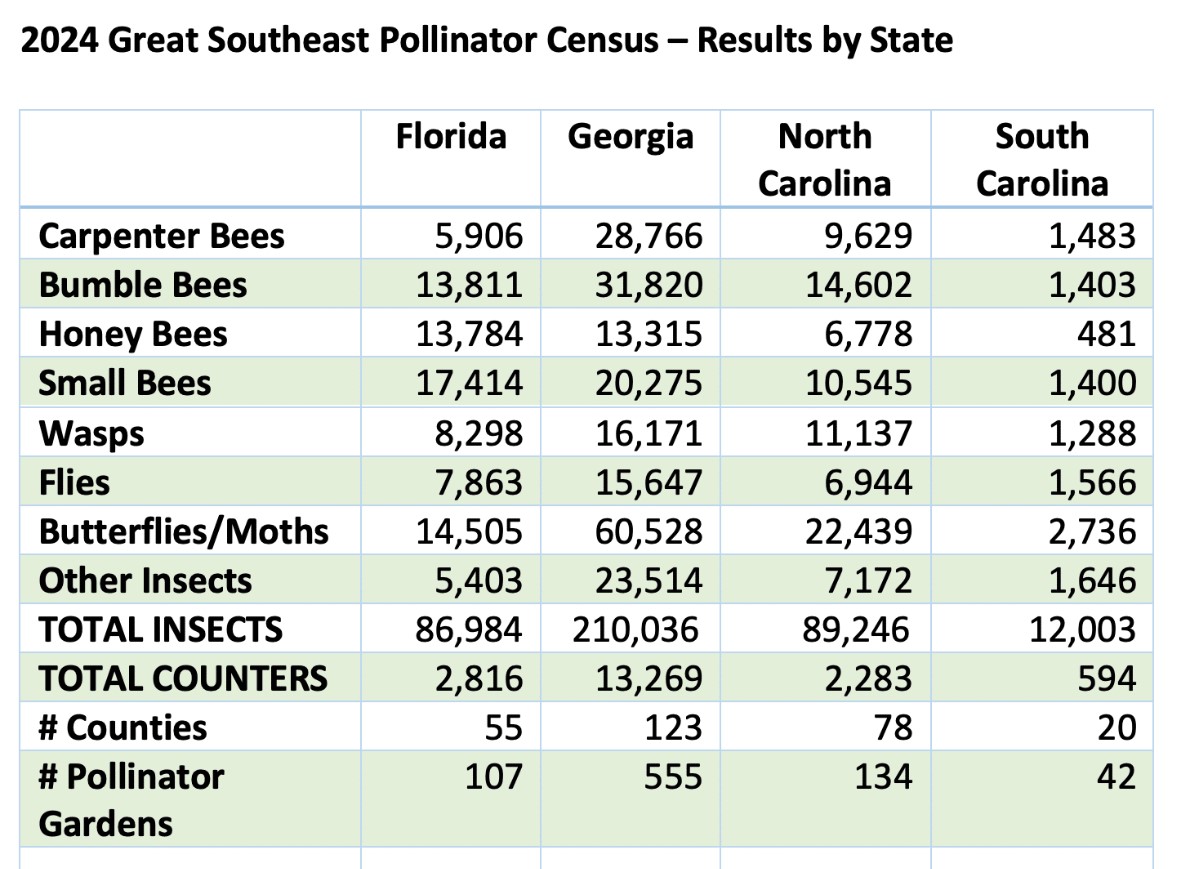
During the August 2024 Great Southeast Pollinator Census, over 18,000 counts were uploaded recording over 380,000 insect visits in Florida, Georgia, North Carolina, and South Carolina. Congratulations to all who made this happen!
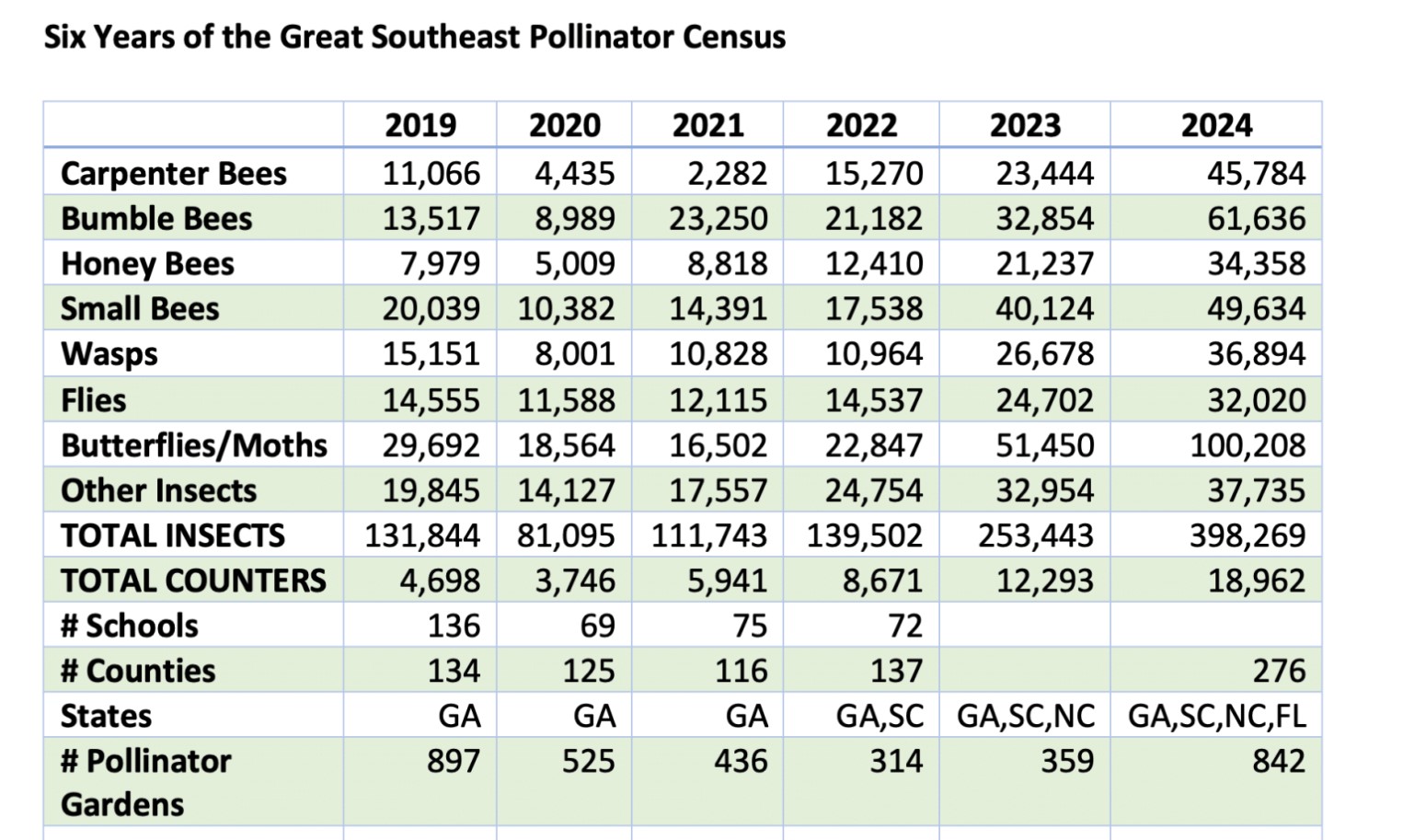
The 18,000 counts held this year are an increase from 12,293 counts in 2023. Floridians started their first year strong with approximately 2,800 counts, while North Carolina increased their participation to over 2,200 counts. Hurricane Debby impacted South Carolina’s effort and it is amazing that approximately 500 participants were able to count and upload data. Georgians continue to increase their participation with over 13,000 counts.
This year:
- 269 counties across Florida, Georgia, North Carolina, and South Carolina participated.
- 540 educators used the Census as part of their STEM/STEAM initiative, impacting over 3,000 students.
- 838 new sustainable pollinator gardens were created as part of the Census project.
We know that numbers are only part of the story. These statements reflect how much we all observe as we participate in the count:
- “You never know how many different insects you will see on one tiny plant.”
- “We were able to see the pollination actually happening.”
- “Wasps are important pollinators.”
- “There’s more than one type of bee.”
Download the 2024 Census data here. The data from all years is on the website and accessible for anyone to use. Thank you for your support and participation in this important project.
Ready for 2025?
If you live in Florida, Georgia, North Carolina, and South Carolina: please make sure your calendars are marked for the 2025 Great Southeast Pollinator Census on August 22nd and 23rd. Look for us on the Southeast Pollinator Census Facebook page and @SoutheastPollinators on Instagram. For those in North Carolina, explore the North Carolina specific web page.
A History of the Census

The Great Southeast Pollinator Census was started in response to my work in community and school gardens. I was meeting gardeners who knew about soil health and plant selection but were lacking knowledge about insect ecosystems, especially pollinators. At the same time, I found that teachers were not usually trained in entomology so they were unlikely to educate their students about the insects they were finding in their school gardens.
A pilot project was launched in 2017 and repeated in 2018. The pilot project included 50 gardens. This allowed us to refine the counting criteria and to determine the needs of the participants to successfully participate in the project. We wanted the project to be easy enough for anyone to learn some basic entomology and participate while at the same time ensure that we were generating useful data. We met with statisticians as well as researchers.
We defined three goals of the project:
- To create sustainable pollinator habitat by educating gardeners about using plants that provide nutrition for our pollinators while handling our summer droughts and do not have disease or pest insect pressure.
- To increase the entomological literacy of our citizens. As I mentioned to one teacher, we want students to go from “oooo, it’s a bug” to “look at the tarsal claw on that bee!”
- To generate useful data about our pollinator populations, we can begin to spot trends and see how pollinator populations are affected by weather and how honey bees influence native bee populations.
Timeline
- The first statewide Great Georgia Pollinator Census was in August of 2019. Over 4,000 people participated.
- During 2020, COVID regulations allowed us to be creative and we encouraged families to count at home. We provided online training through webinars. Family and Consumer Science agents contributed recipes featuring foods needing pollinators, like watermelon salsa. These were published through social media, our website, and newsletter.
- In 2021, almost 6,000 participants recorded data.
- In 2022, South Carolina joined the Census through the efforts of Clemson University.
- In 2023, North Carolina joined the Census through North Carolina A&T.
- In 2024, Florida joined the Census, bringing the count to four states.