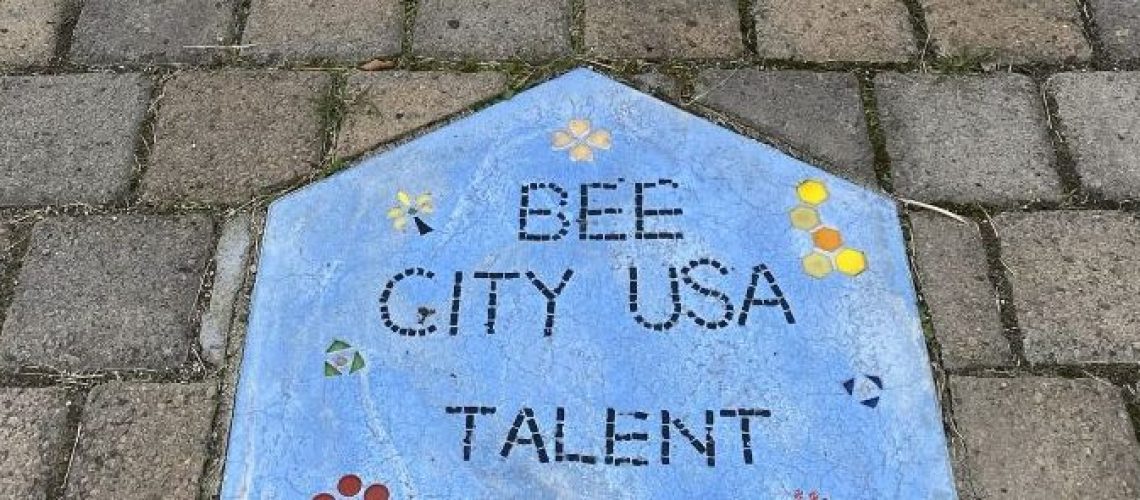
In Talent, Oregon, pollinator conservation is a community-driven effort. Through ongoing outreach, hands-on projects, and local leadership, the residents of Talent have created a model for what grassroots conservation can look like when it’s rooted in place, people, and purpose.
Early efforts by then-Talent resident, Dolly Warden, helped set the stage for the city’s Bee City USA designation. Today, local pollinator advocate Gerlinde Smith continues to guide much of Talent’s pollinator work through her leadership with both Bee City USA-Talent and the Talent Garden Club.
Xerces Society staff Michele Blackburn and Corin Pease support these efforts by providing native plant habitat kits, technical guidance, and coordination for regional plant distribution events. Together, Xerces and Talent’s community leaders are ensuring that pollinator habitat is not only planted – but also celebrated and sustained.
Building a Bee City and a Movement
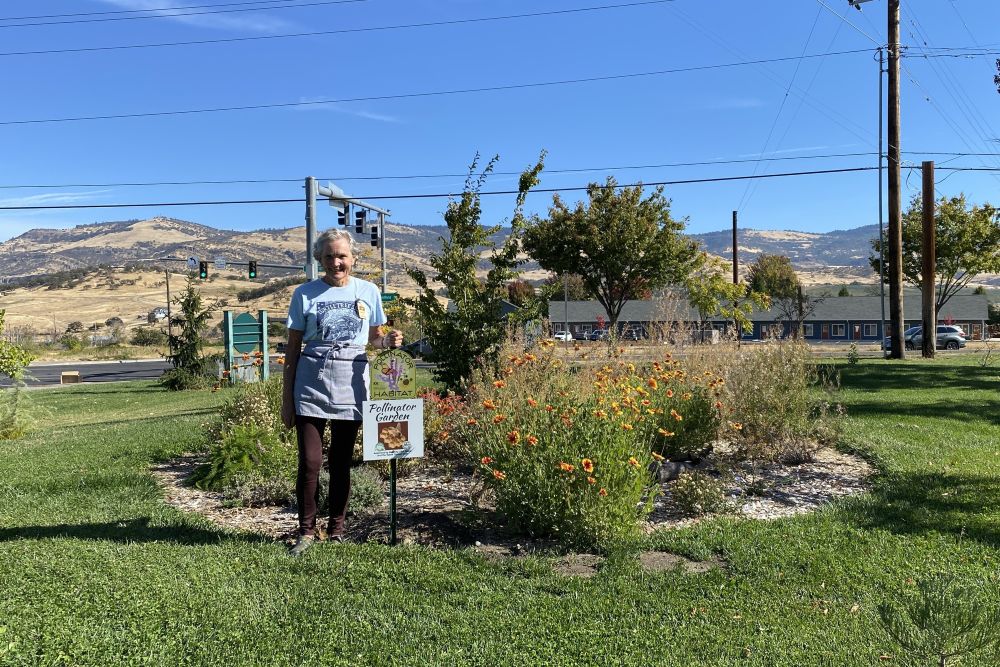
In 2014, Talent became the second Bee City USA affiliate in the country, a milestone made possible by Dolly Warden’s persistence. This set in motion a decade of community-powered action for pollinators. The city’s adoption of an integrated pest management plan in 2018 and the installation of its first pollinator garden in 2016 reflected a growing commitment to healthy, biodiverse public spaces. Soon after, Gerlinde successfully advocated for a highly visible 2,300 square-foot garden in front of city hall, transforming an overgrown patch of invasive and non-native plants into a vibrant, native pollinator habitat.
These efforts have continued to expand. Today, ten public pollinator gardens are maintained weekly by a dedicated group of volunteers, known as the “Talent worker bees.” Under Gerlinde’s leadership of both the garden club and Bee City, members also offer educational presentations, hands-on learning opportunities, community-based outreach, and a garden certification program through Bee City USA-Talent. As of 2024, Talent is home to 91 certified pollinator gardens, a testament to how deeply these values have taken root across the city.
Distributing Habitat Kits to Southern Oregon
Talent’s deep roots in native plant conservation made it a natural partner for the Xerces Society’s Habitat Kit Program, which provides native plants to eligible participants committed to creating pollinator habitat. In both 2023 and 2024, Xerces coordinated distribution events at the Talent Community Center with Gerlinde, who helped secure the location and organize volunteers. Local organizers, Xerces staff, and a volunteer Xerces Ambassador unloaded, sorted, and distributed thousands of native plants, ensuring a smooth, welcoming process for dozens of kit recipients.
Thanks to this support, habitat kits were installed in highly visible public spaces, including the city entrance, Talent Elementary School, and around Talent Maker City, a local nonprofit makerspace. One was also installed at the Bear Creek Greenway, a key habitat corridor and one of the areas most affected by the Almeda Fire. These new plantings not only provide important habitats for native pollinators and greenspaces for the community, but also demonstrate how native vegetation can help restore fire-impacted landscapes.
Planting Pollinator Habitat for the Community
In 2024, volunteers collaborated on a habitat design for Talent Maker City, with Gerlinde coordinating the planting and leading the effort to incorporate three kits, revitalizing sidewalk strips surrounding the new eco-friendly building. To bring the plan to life, community members hosted a youth-led planting event, giving students a chance to get their hands in the soil while learning about native bees, butterflies, and the role of habitat in supporting biodiversity.
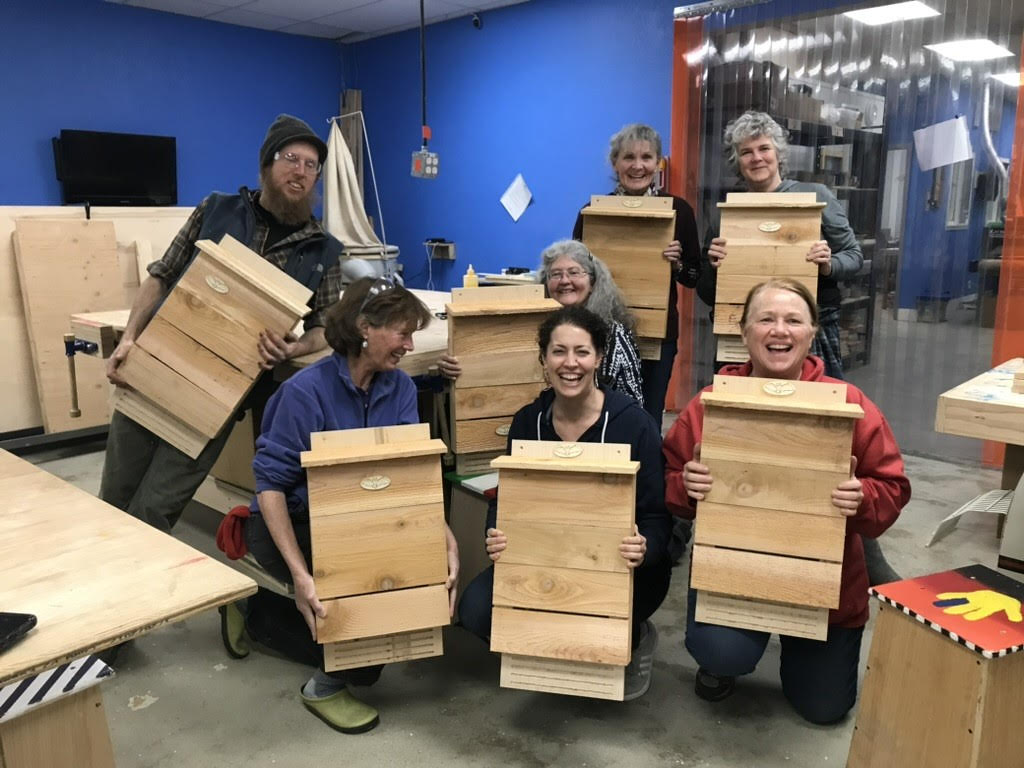
This event builds on a long-running partnership with Talent Maker City, which has hosted pollinator-themed STEAM workshops since 2019. These multigenerational programs have included hands-on activities like building bee houses, bird boxes, and pollinator-themed art projects, serving to link creativity and conservation in a meaningful way.
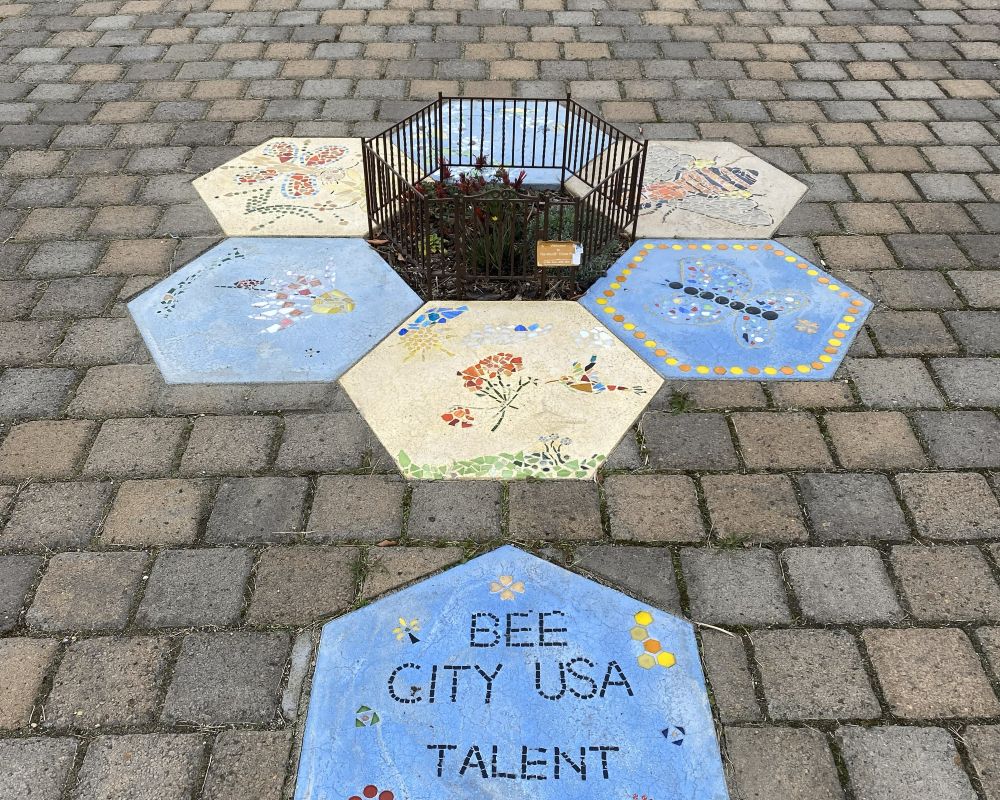
And in 2022, Talent made headlines with the creation of the Talent Tiny Park, a 78-square-inch biodynamic garden featuring drought-tolerant, pollinator-friendly plants and surrounded by student-made mosaic steppingstones. It may be small, but it speaks volumes about the community’s creativity and commitment.
Talent Residents Plan More Habitat Restoration Ahead
In 2025, Talent Maker City hosted the Xerces Society’s habitat kit distribution for the first time, providing the perfect space for this event and further deepening its role as a hub for local community efforts . With Gerlinde’s help securing the space and organizing volunteers, the event ran smoothly and brought together local partners and community members in a lively, welcoming atmosphere. The event also provided an opportunity for Xerces staff to connect with participants and offer technical guidance.
Meanwhile, efforts continue to restore land affected by the devastating 2020 Almeda wildfire, especially along Bear Creek. Collaborative efforts led by local groups, including Bee City Talent, the Garden Club, and restoration partners are helping native vegetation and pollinators return, with Xerces habitat kits contributing to the recovery.
Talent’s success in pollinator conservation stems from strong partnerships and steady community involvement. From Dolly’s initial vision to Gerlinde’s ongoing leadership—with Xerces providing plants, expertise, and coordination—these efforts show what can be achieved through dedicated collaboration. By combining public engagement, habitat restoration, and educational outreach, local leaders and volunteers have created a blueprint for meaningful, place-based action.
We’re honored to work with our partners in Talent and excited to support their continued efforts to make the city and the region a healthier place for pollinators and people alike.
Interested in creating pollinator habitat in your own community? Visit the Xerces Society Habitat Kit Program webpage to learn how to participate.
Author