Media Contacts:
Ray Moranz, Pollinator Conservation Specialist, Xerces Society for Invertebrate Conservation, 405-334-6684, [email protected]
Scott Black, Executive Director, Xerces Society for Invertebrate Conservation, 503-449-3792, [email protected]
JACKSONVILLE, Fla.; May 27, 2026—Toting an ultralight radio tag affixed to his back, a tiny monarch butterfly known as “Xerces25 Fish Creek” fluttered north this April from Keaton Beach, FL to Valdosta, GA and changed what scientists know about one of the world’s most studied butterfly species.
Famed for their long annual migrations between Canada and Mexico or between California and the interior West, it’s perhaps less well known that a subset of monarch butterflies flies to Florida in the fall. The fate of those monarchs is still unclear, with some scientists suggesting that they and their offspring stay in Florida and get absorbed into a year-round residential population that never leaves.
However, for the past two years, biologist Ray Moranz with the Xerces Society for Invertebrate Conservation has been working to discover if monarchs migrate from Florida northward in the spring to rejoin the eastern population. Moranz and other scientists suspected as much, but without a reliable way to track monarch movement, the idea was missing proof.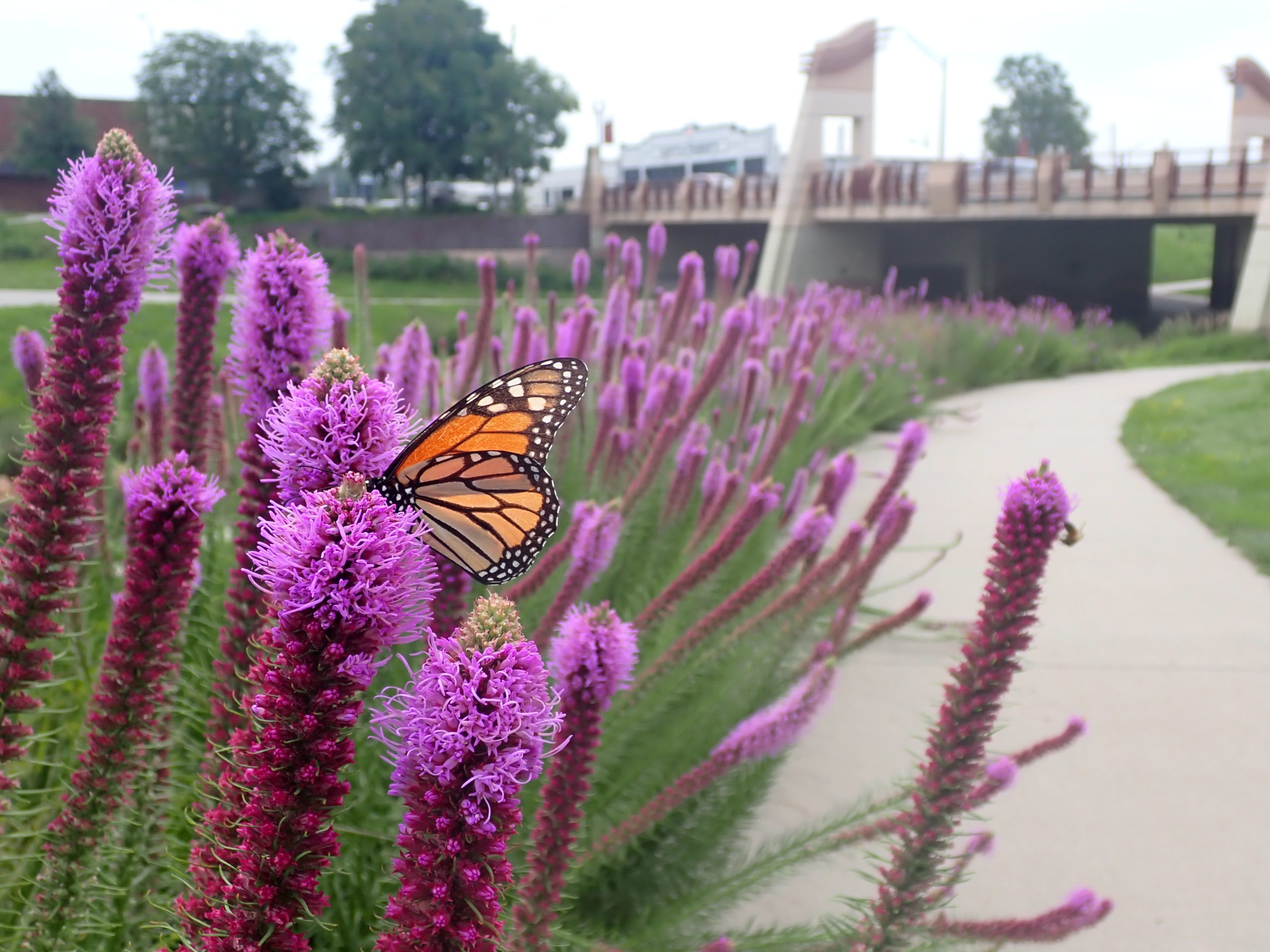 Eastern Monarch on blazingstar (Liatris pycnostachya) in urban habitat in Nebraska (Photo: Xerces Society/ KatieLamke)
Ultralight tracking tags reveal that some Florida monarchs fly north
That changed in 2025 with the widespread deployment of 60-milligram, solar-powered Bluetooth transmitters developed by the company Cellular Tracking Technologies (CTT), light enough for monarchs to carry on a sustained migration. The technology allows scientists and monarch enthusiasts to see where tagged monarchs travel via the Project Monarch app.
This April, Moranz left his home in Oklahoma for Florida with additional transmitters on a hunch: that the monarchs that emerge from their chrysalis in April and May are the ones most likely to fly north. With help from biologists from the University of Florida, the Oklahoma City Zoo and the Florida Fish and Wildlife Conservation Commission, he scoured natural areas of north central Florida and the eastern panhandle for monarchs. The scientists affixed miniscule transmitters with eyelash glue to the thorax of 16 butterflies, including 10 that appeared to have emerged this spring, based on their pristine condition. Their early spring capture indicated that these monarchs were the offspring of parents that had overwintered in Florida.
“Of the ten newly emerged monarchs that I deployed with transmitters, none flew more than 1 mile to the south. Instead, four flew at least 50 miles north to Georgia, with one of those continuing 177 miles to the northeast and another flying 212 miles northwest to Alabama,” said Moranz. “To my knowledge, this is the best set of evidence yet that some monarchs migrate north from Florida in spring.”
In contrast, when Moranz deployed transmitters on monarchs that looked worn and old, they tended to stay within a few miles of the deployment area. Given their appearance, those monarchs were probably fall migrants that had overwintered.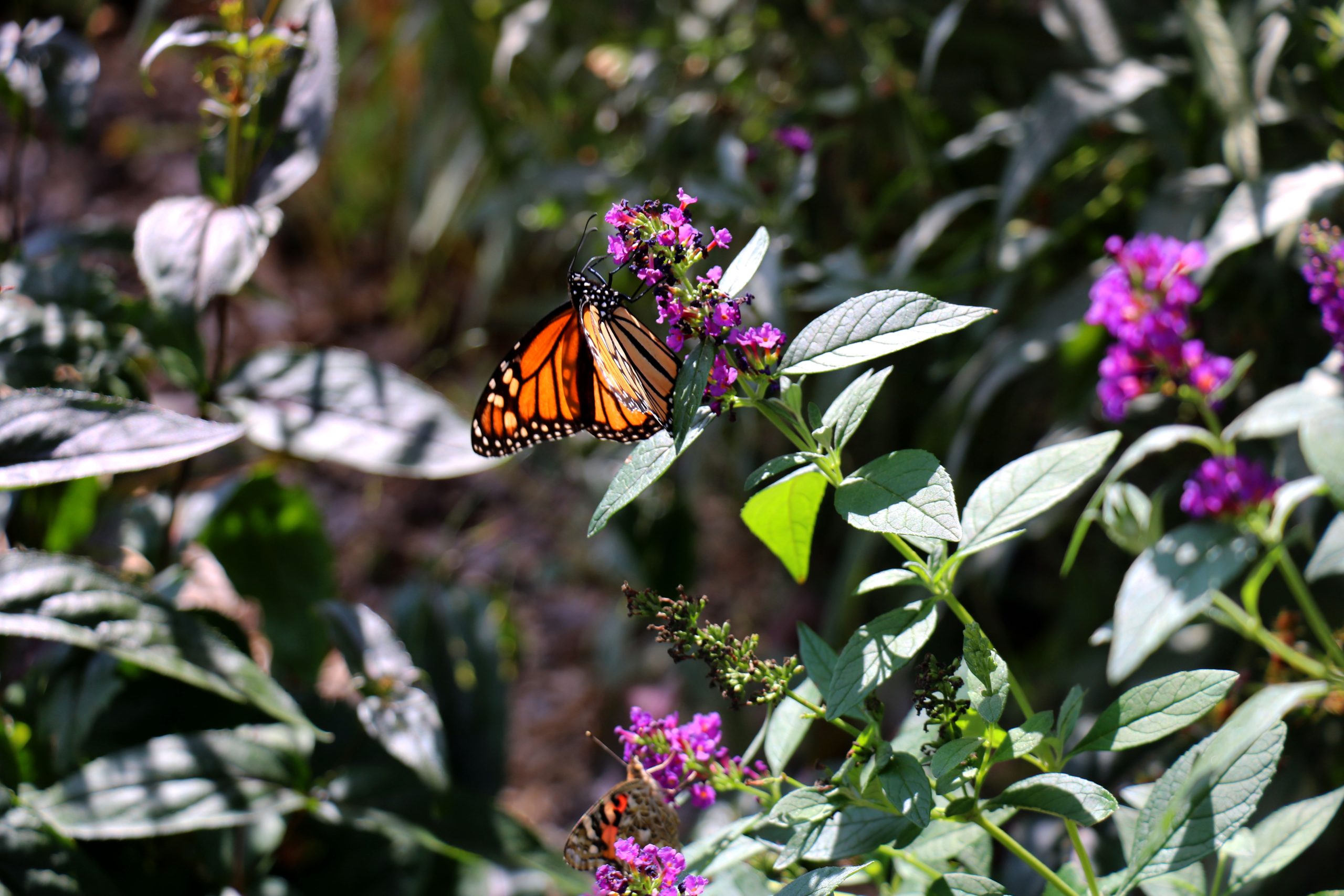 Monarch and painted-lady butterflies in same photo from Hastings pollinator garden (Photo: Central Community College, TX)
What happens in Florida impacts survival of threatened monarch butterflies
This study’s results mean that monarchs that spend the winter in Florida are a more integral part of the eastern migratory population than previously known. Rather than being an isolated outpost for a distinct population of monarchs, Florida receives monarchs from the north each fall and produces monarchs that head north in April and May.
Eastern migratory monarchs used to number in the hundreds of millions, but the population has declined by more than 80%. The species has been proposed for listing under the U.S. Endangered Species Act.
Depending on the numbers of monarchs emerging and migrating north from Florida, these migrants could bolster population numbers in the Northeast, but there is a risk. Previous studies have shown that a high percentage of monarchs in many Florida cities and suburbs are infected with a protozoan parasite called OE (short for Ophryocystis elektroscirrha). OE is spread largely from non-native tropical milkweed, which does not die back in winter and shed its parasite load like native milkweed varieties do. Milkweeds are the sole food source of monarch caterpillars.
“For monarch butterflies, what happens in Florida doesn’t stay in Florida,” said Moranz. “It impacts the eastern population as a whole. If monarchs in Florida are unhealthy, this could reduce monarch health elsewhere.” Moranz also found, however, that the butterflies overwintering in natural areas with native plants had low levels of OE. Instead, the greatest risk for infection comes from home gardens planted with non-native tropical milkweed.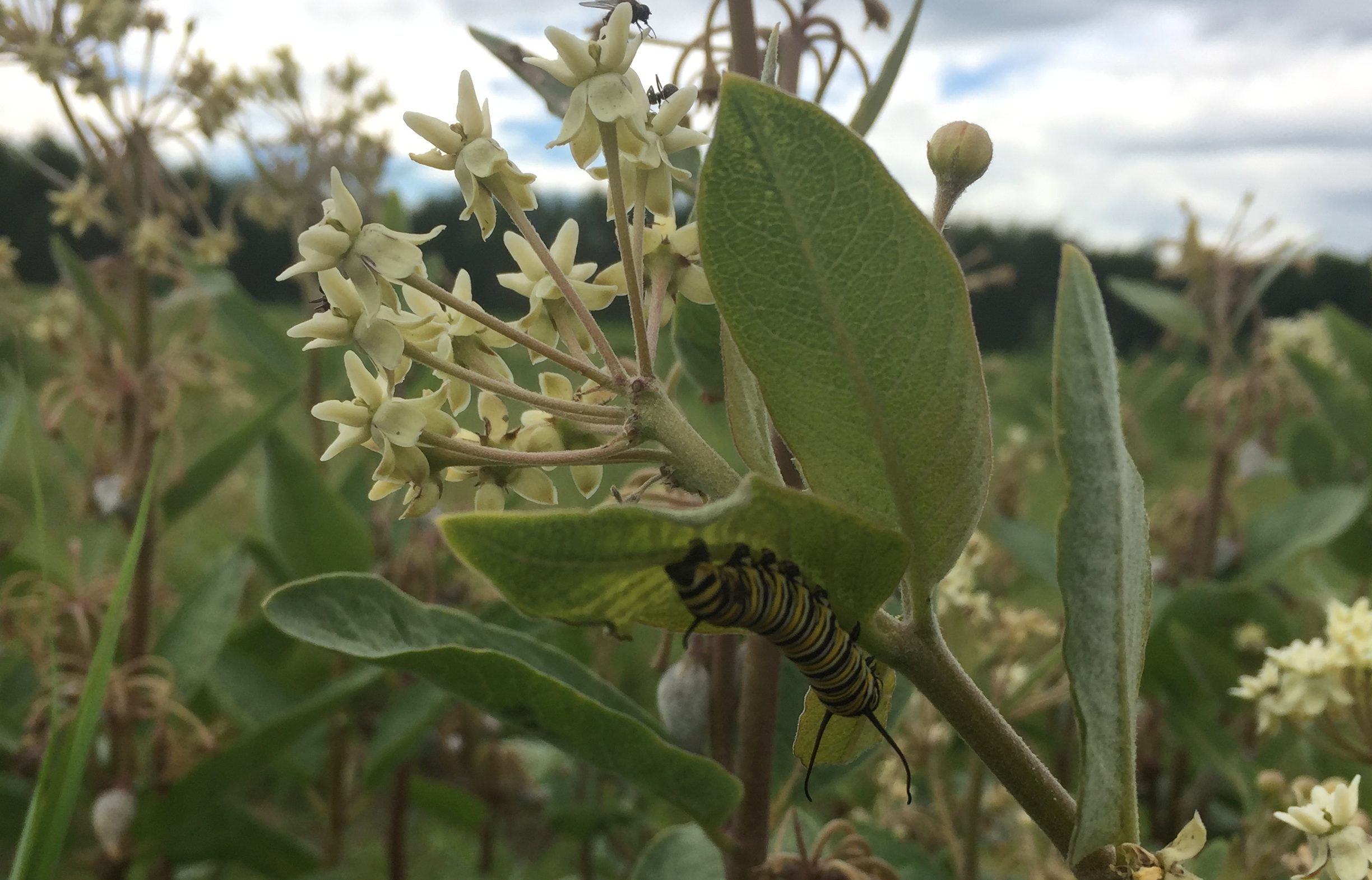 Eastern Monarch Caterpillar (Photo: Xerces Society/ Stephanie Frischie)
How Floridians can support monarch butterflies
Protecting healthy habitat for monarchs is key to their survival. Moranz said, “Floridians should continue to support the conservation of public lands in their state, as many of these public lands host the ecosystems—with the native milkweed and nectar plant species—that monarchs need as habitat.”
Floridians can also take several measures to make their homes, schools and neighborhoods hospitable to monarch butterflies and other essential pollinators:
- Avoid insecticides, many of which are harmful to monarchs and other pollinators.
- Plant native Florida wildflowers such as scarlet sage and seaside goldenrod that are known to be preferred as nectar sources by adult monarchs. The Xerces Society has a list of preferred monarch nectar plants for Florida.
- Remove non-native milkweeds, the major cause of increased OE infection rates in Florida, and plant native milkweed species.
- Learn more about monarch conservation and spread the word.