Blog 2 of 3 of Our Texas Visit
View Blog 1: Southwestern University and University of Texas at Austin
View Blog 3: Austin
Round Rock
Our first visit on our trip was to the fast-growing city of Round Rock, which became a Bee City in 2022, in part due to the work of Konrad Bouffard of Round Rock Honey. We met up with Konrad at his warehouse, where he gave us some background on the city’s pollinator conservation efforts, then we headed out for a guided tour of the Chisholm Trail Crossing Park.
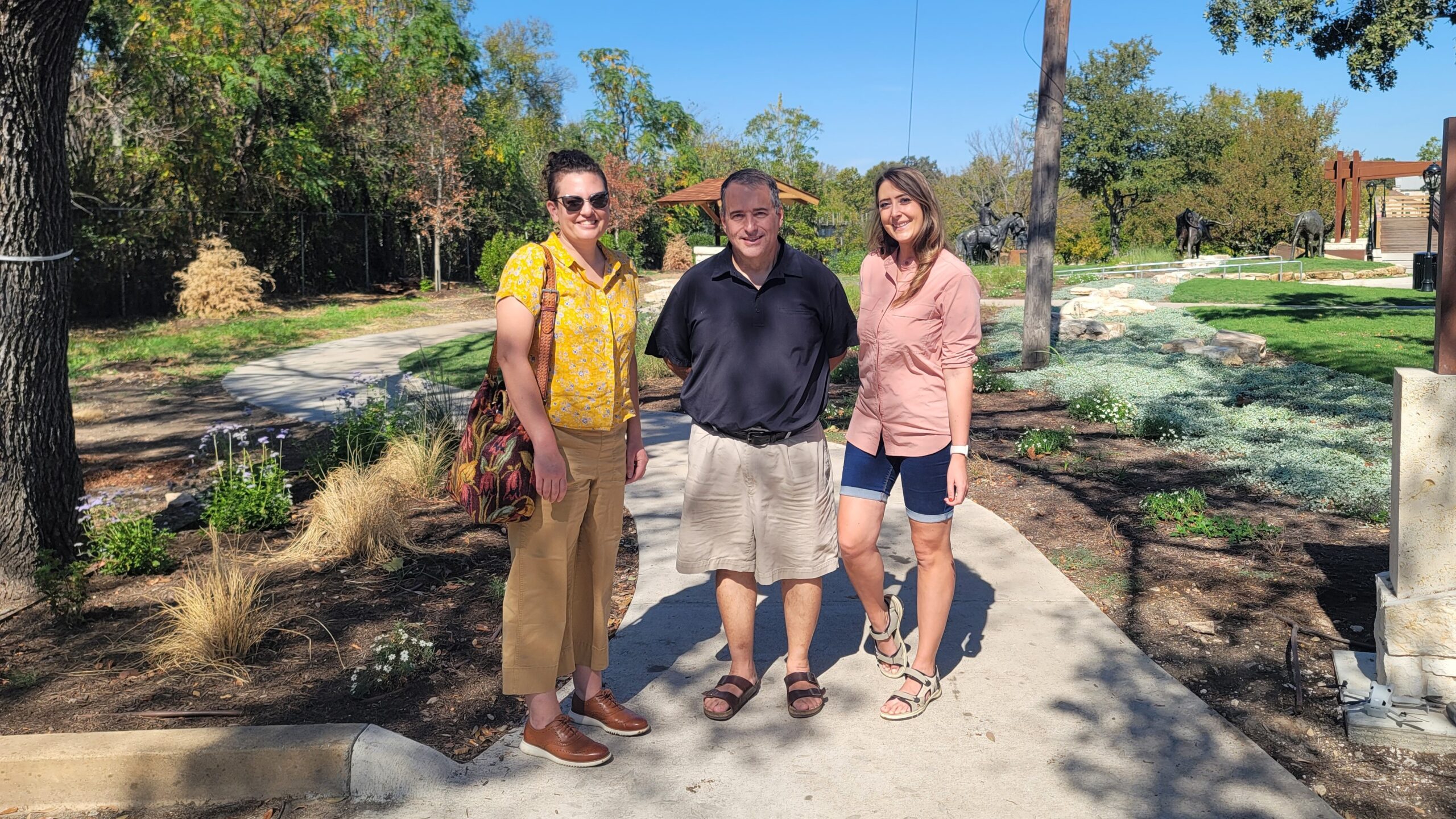
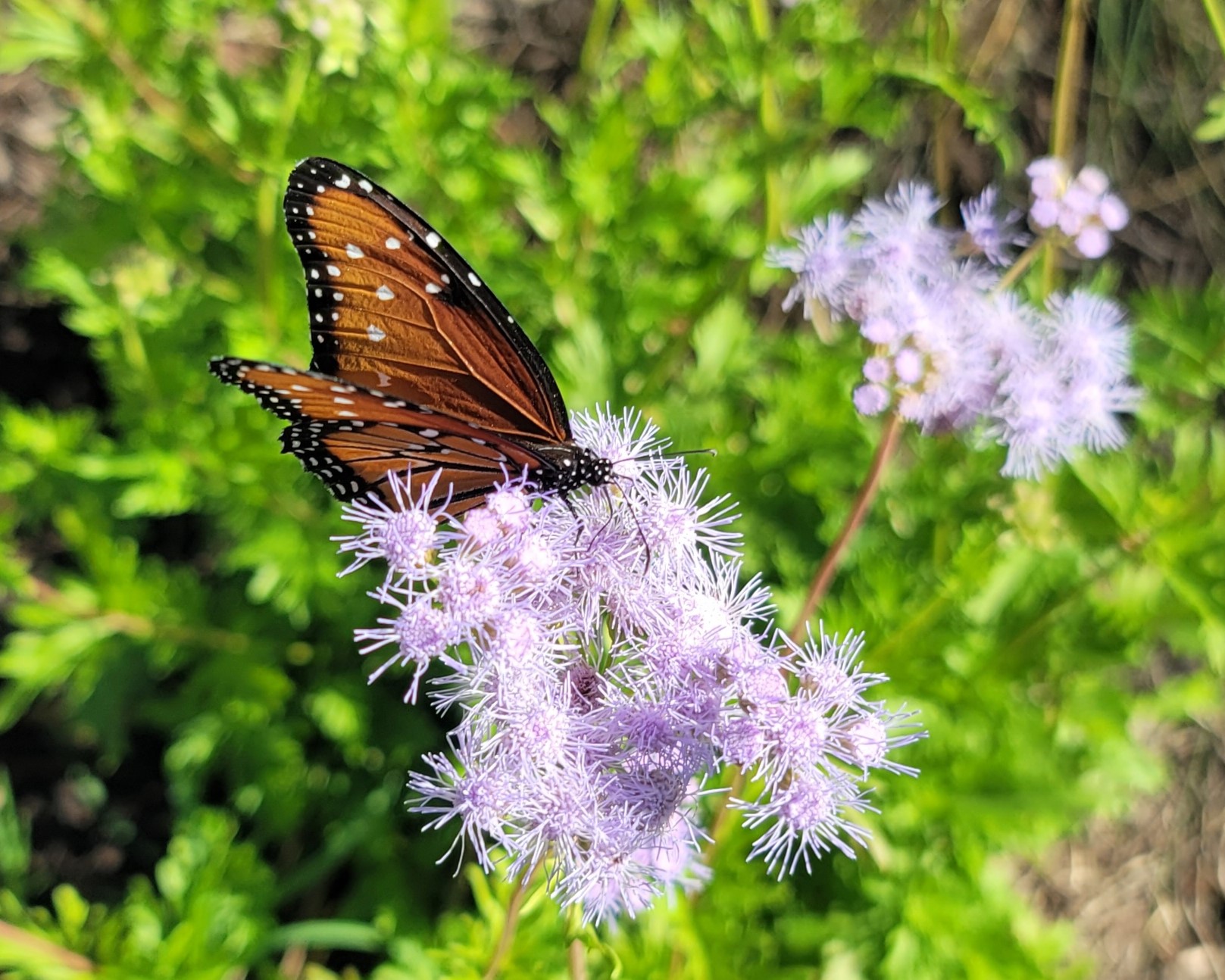
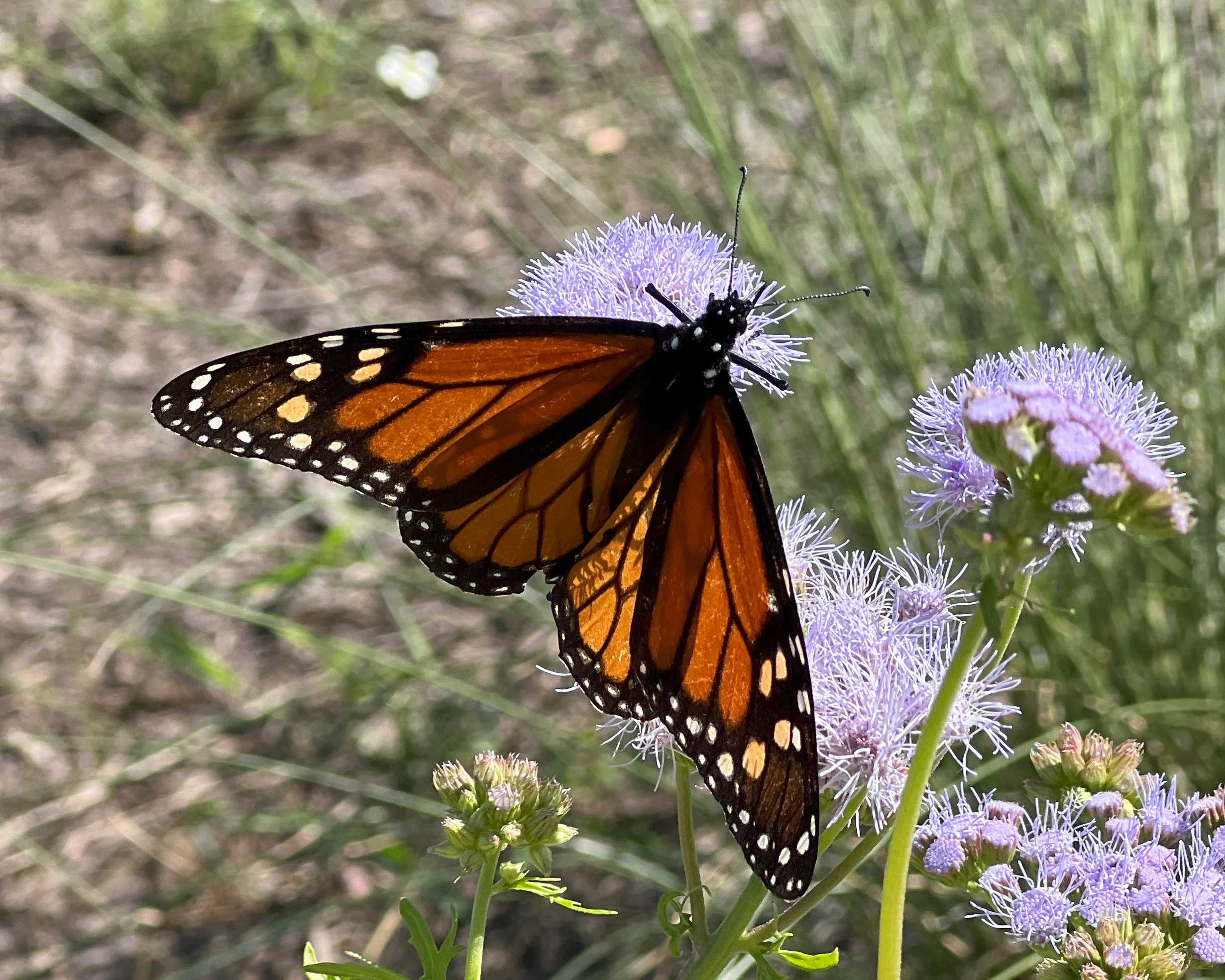
This park is the site of the establishment of the City of Round Rock and sits on the banks of Brushy Creek. The low-water crossing point is marked with a round, table-shaped rock, which is how the town got its name. We were immediately greeted by a variety of butterflies along the trail, flitting around the bushes of Gregg’s mistflower (Conoclinium greggii).
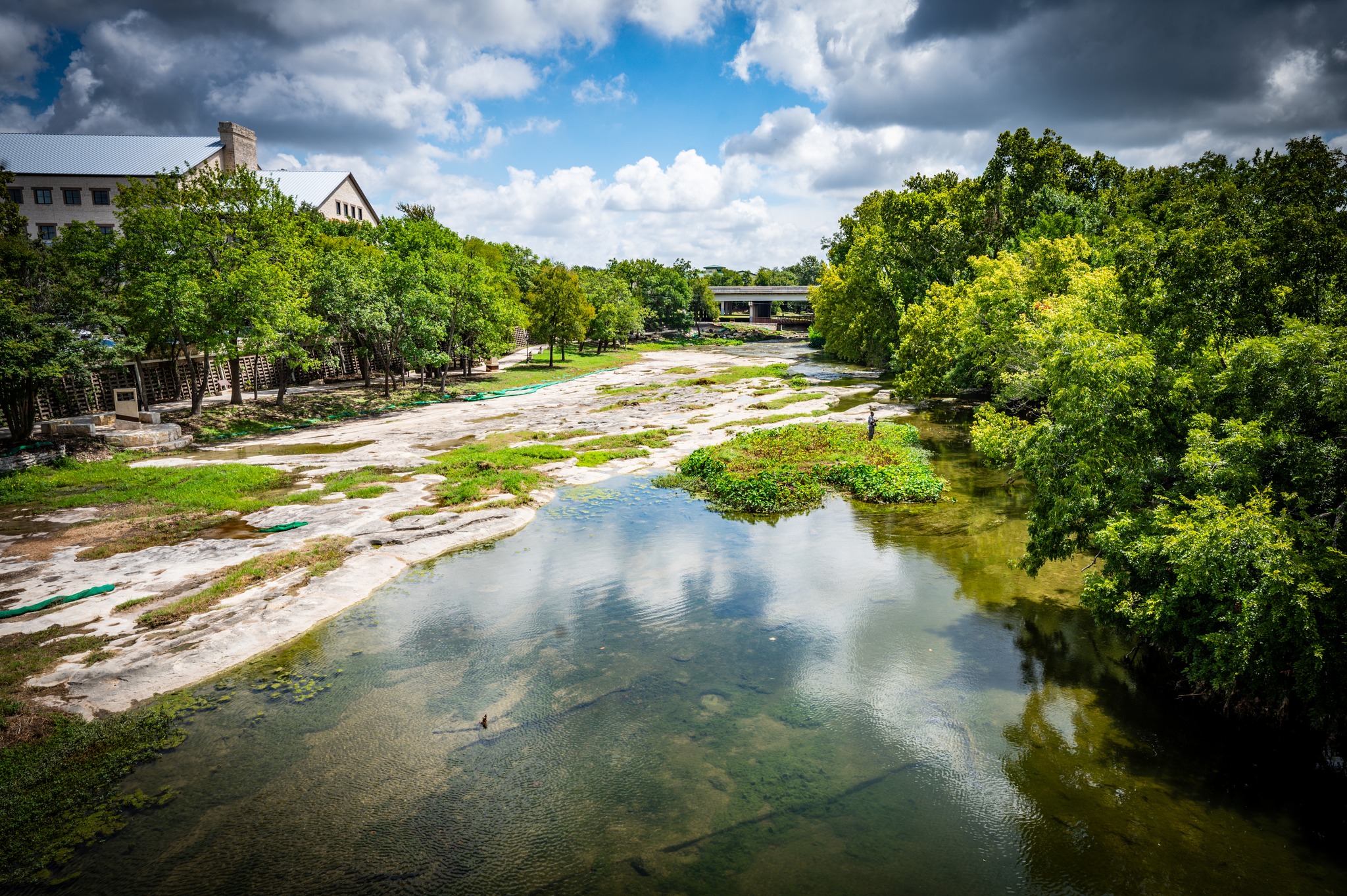
Brushy Creek sits in the Brazos River Basin. It has had severe water quality issues over the years, but with monitoring and wastewater management upgrades, conditions are starting to improve. There is still work to be done, but it’s clear that pollinators and dragonflies are enjoying the creekside restoration efforts already.
Bee Cave
The next day, we traveled south to the appropriately-named Bee Cave, affiliates since 2021. Established in 1870, the town was named for a cave with a population of bees. We stopped by city hall, which is also the site of the public library, where the city carries out most of its Bee City outreach activities. City hall and library staff met with us and we discussed landscape strategies, their regionally famous Books and Bees Festival, and more.
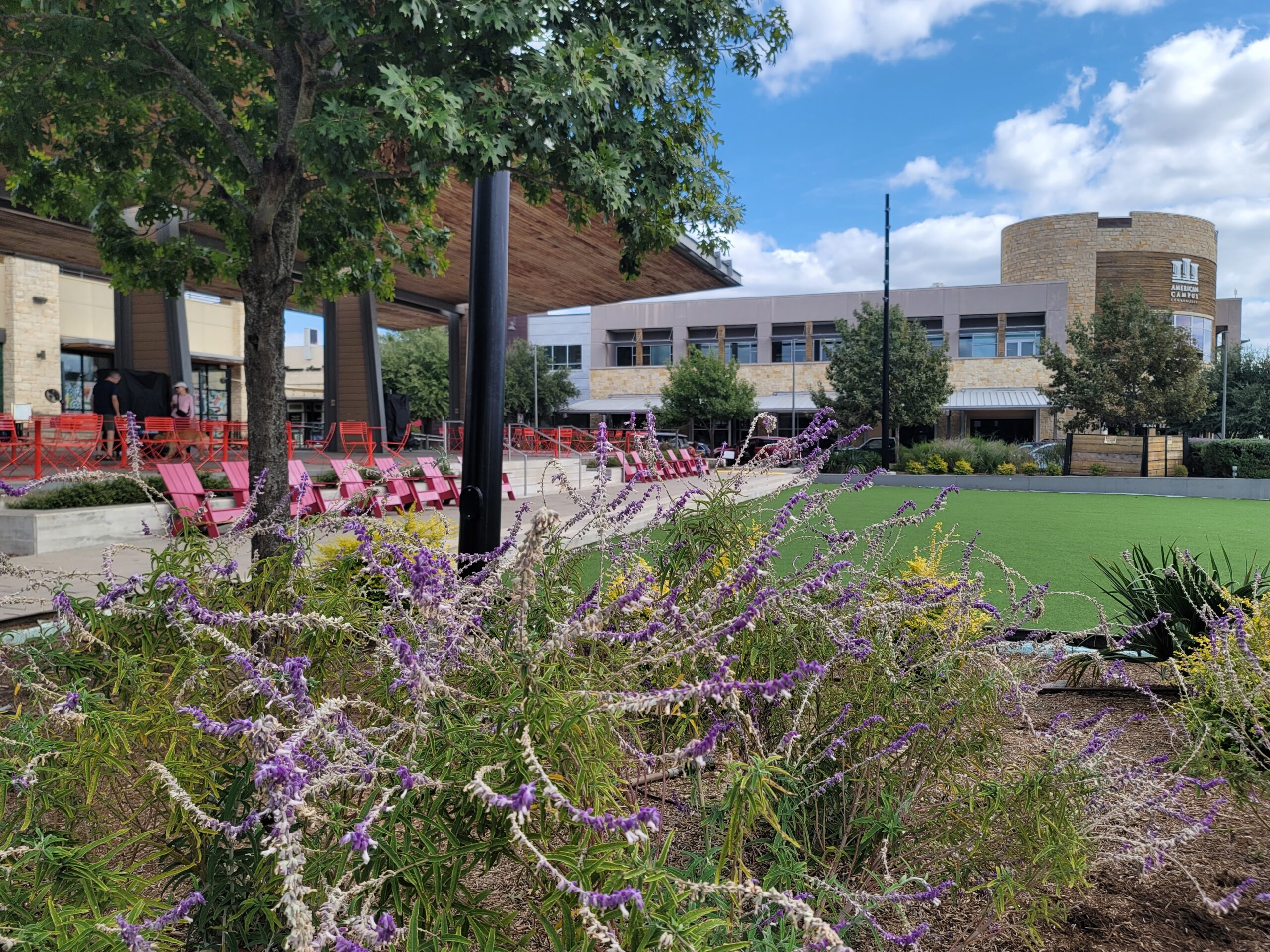
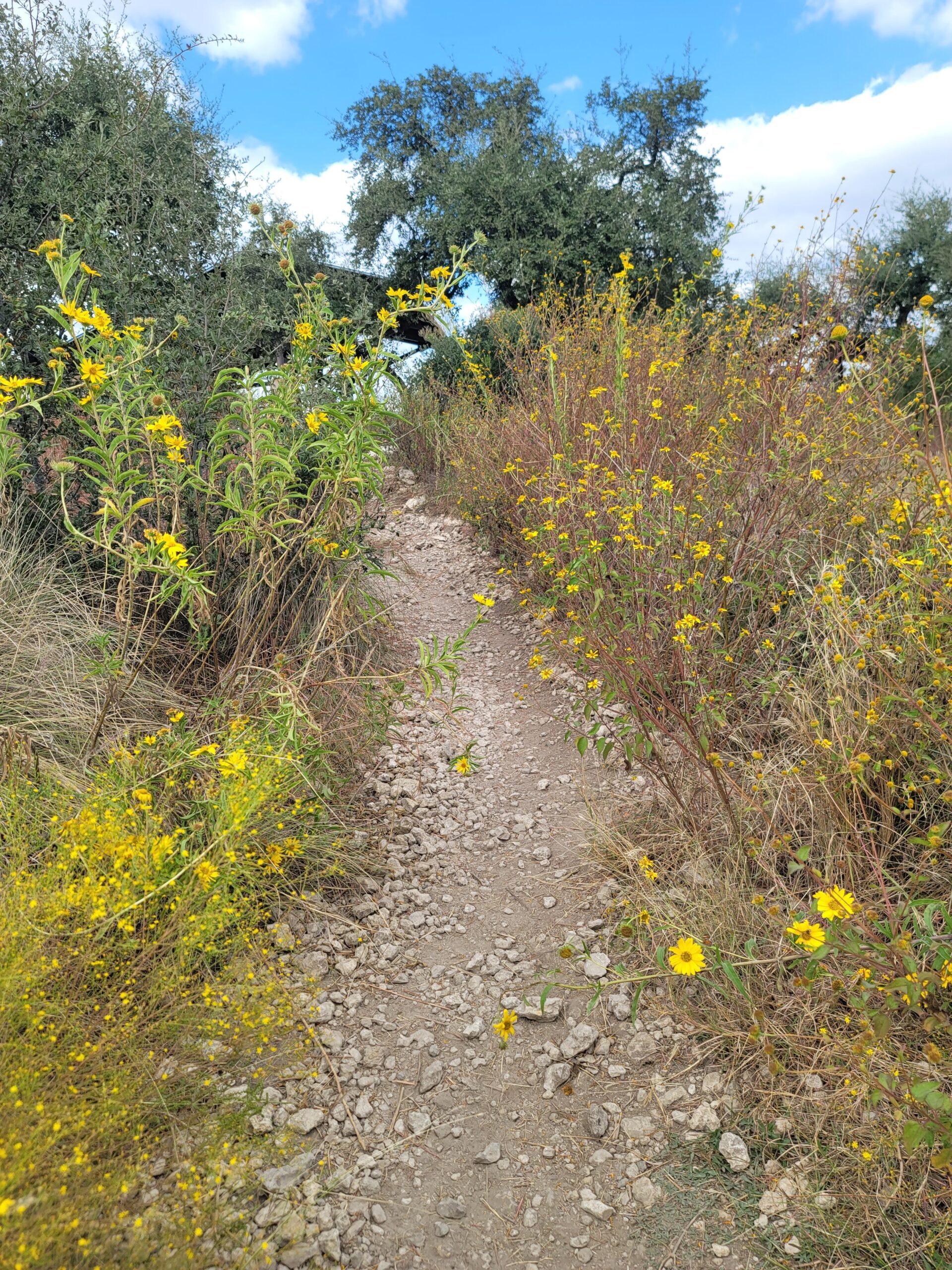
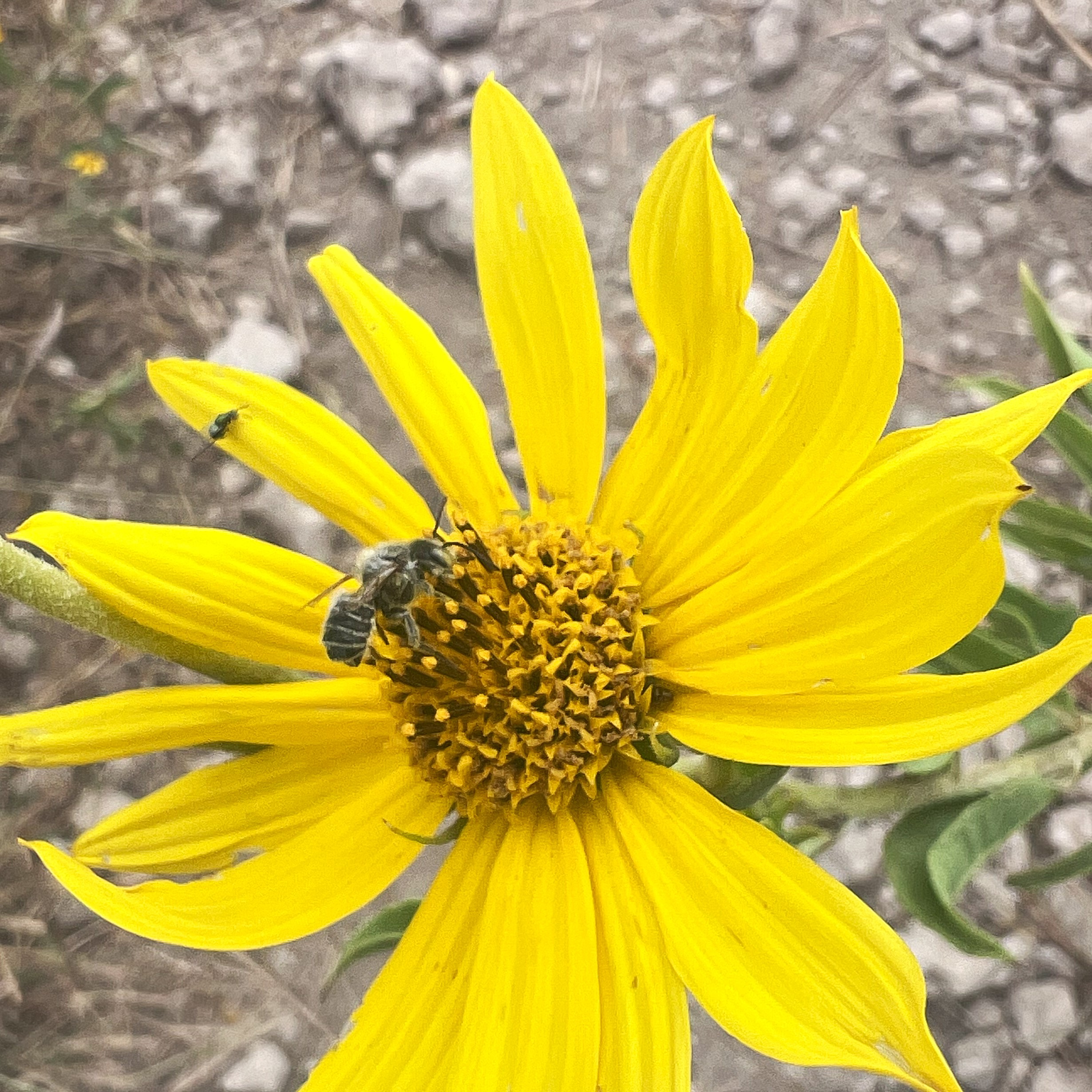
After admiring the plantings around the city building, we took ourselves on a self-guided tour of Bee Cave Central Park. Established in 2009, Central Park is the rapidly growing city’s first public park, offering the opportunity to see the largest oak trees in the city, and featuring over 20 species of native plants. During our walk, we were delighted to see mating Phaon crescent butterflies (Phyciodes phaon) beneath the shade of a towering oak tree.

We noticed many habitat features that would appeal native pollinators: late-season native flowers blooming along a hillside perfect for ground-nesting native bees, large native oak trees with leaf-litter for overwintering butterflies, and unmowed natural riparian area with abundant native undergrowth to provide food, nesting and shelter for variety of species. The Bee Cave Central Park Master Plan includes language on native landscaping in concert with the City’s Bee City USA designation. This park does a great job of showcasing how native habitat can integrate into a people-friendly, accessible park layout.