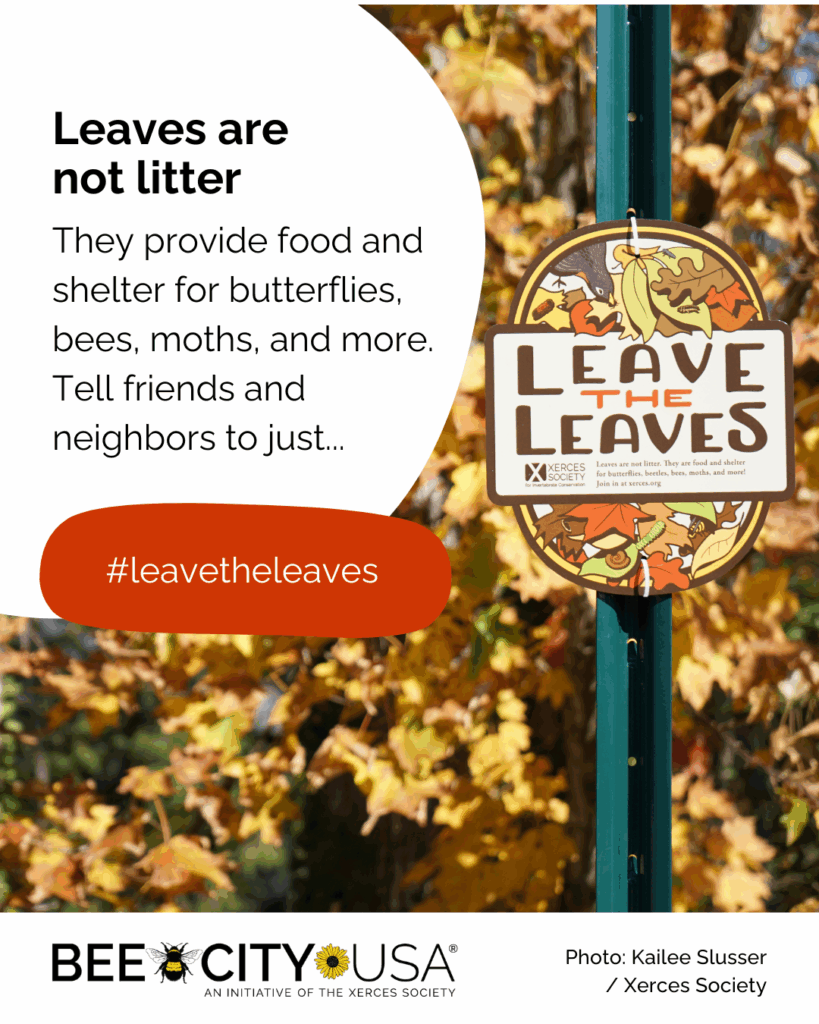
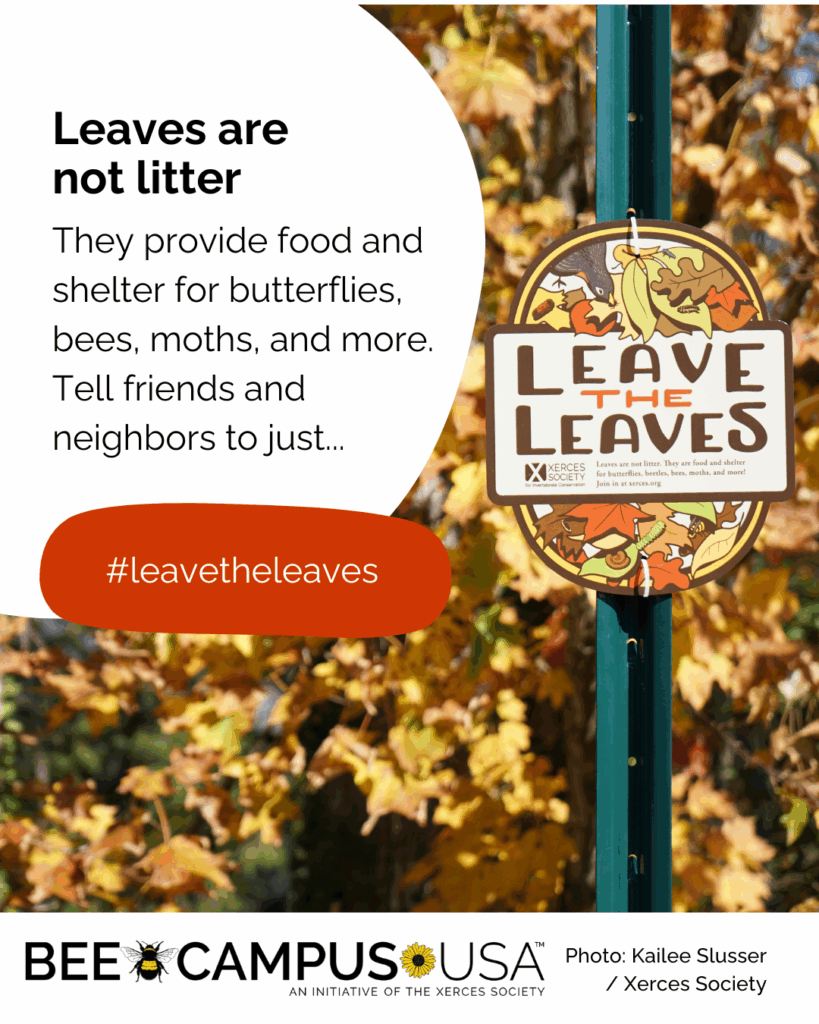
A "Leave the Leaves" sign on a post

Credit: Kailee Slusser / Xerces Society

Promo Kit: Leave the Leaves and Save the Stems

Talking Points
 

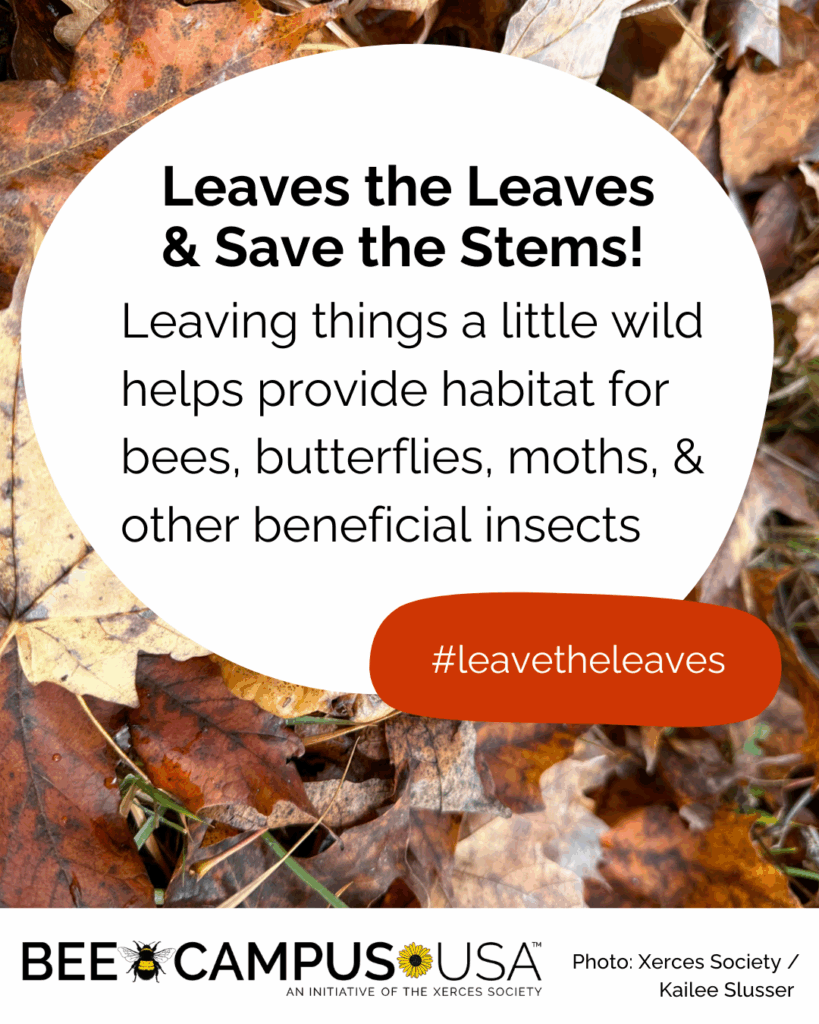
Leaves are not litter. They are food and shelter for butterflies, beetles, bees, moths, and more! Keep things a little wild in your city or campus this fall. Leaves, hollow and pithy stems, brush piles, dead wood, soil, and flower heads all provide important winter shelter for many invertebrates, including native bees. Learn more at: xerces.org/leave-the-leaves.

Who uses leaves and dead stems?:

  • 30% of native bees are tunnel-nesting, such as leafcutter and mason bees. These solitary-nesting species need narrow tunnels or other tiny spaces in dead wood, hollow stems, or brush piles.
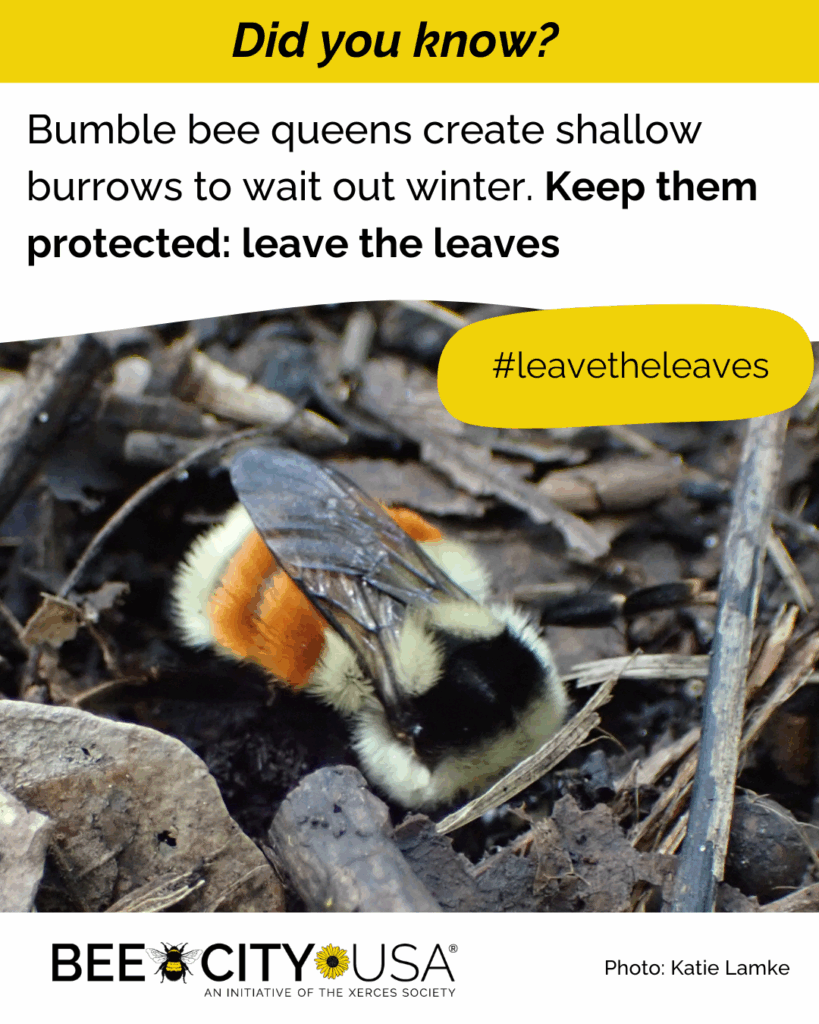
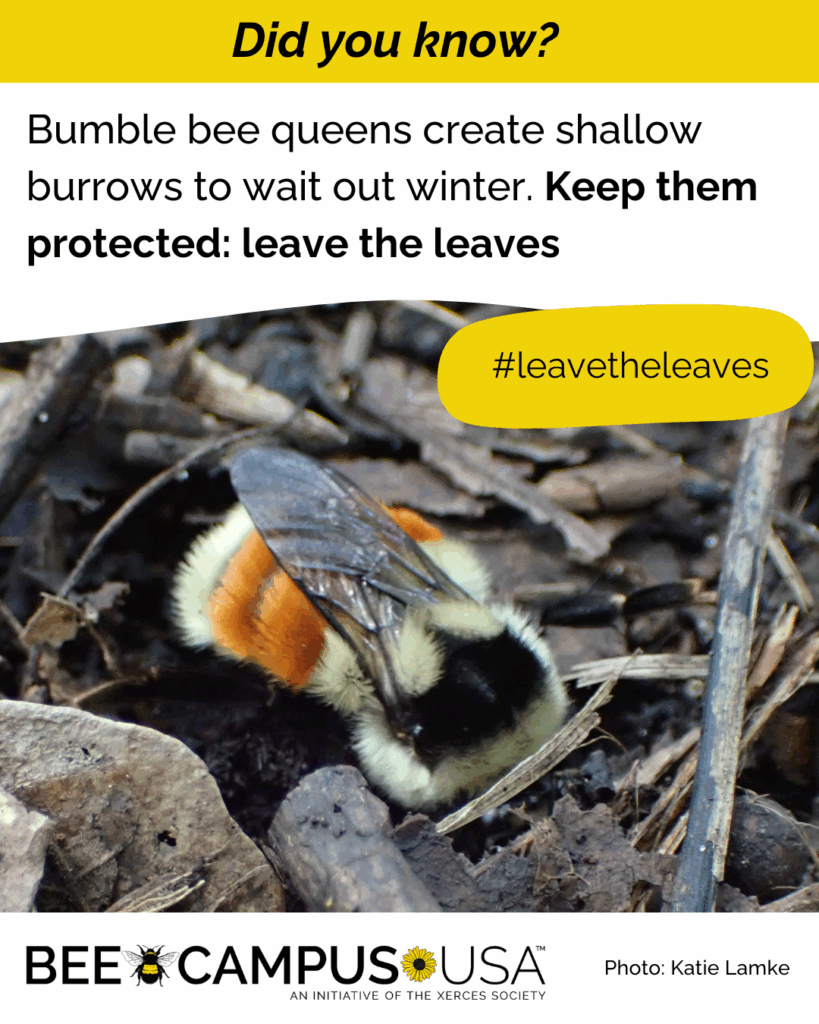
  • Bumble bee queens burrow an inch or two into the earth to hibernate for winter. An extra thick layer of leaves is welcome protection from the elements.
  • Tunnel-nesting solitary bees, such as leafcutter and mason bees, need narrow tunnels or other tiny spaces in dead wood, hollow stems, or brush piles.
  • Red-banded hairstreak butterflies lay their eggs on fallen oak leaves, which become the first food of the caterpillars when they emerge.
  • Luna moth and swallowtail butterfly caterpillars disguise their cocoons and chrysalises as dried leaves, which blend in with the real leaves.
  • Woolly bear caterpillars tuck themselves into leaf piles for protection from cold weather.

There are many ways to participate in leaving the leaves:

  • Let leaves rest where they fall,
  • Make piles in the back corner of a yard or park, 
  • Use them to mulch garden beds

Avoid shredding the leaves and keep in mind: if you wait too long to move leaves around, that good habitat may become occupied by their winter residents!

Use the following tools to help inspire your city or campus to #LeavetheLeaves this fall!

Watch (Feel free to screen publicly)

Xerces Bug Banter Podcast: Leave the Leaves or Lose the Insects. Leave the leaves has become something of a rallying cry and discussion topic in recent years. When the weather starts to cool and leaves begin to fall, we’re presented with a valuable wildlife and gardening resource — but also something of a headache. Do I keep them all? Can I mulch them? Won’t they kill my lawn? What about pests? How do I keep my HOA happy? Joining us to take a deeper dive into a pile of leaves, how they help insects, and how to manage them is Max Ferlauto, state entomologist with the Maryland Natural Heritage Program, where he is in charge of rare insect conservation. Before that, Max was undertaking research for his PhD at the University of Maryland, where he studied the impact of leaves (and leaf removal) on insects in gardens as well as on soil health.

Xerces Webinar: Fall Gardening for Pollinators: Creating a Resilient Garden for all Seasons. Emily May, Pollinator Conservation Specialist with the Xerces Society for Invertebrate Conservation, talks about supporting pollinators and other wildlife in our yards and gardens through the changing seasons. Where do beneficial insects spend the winter? What does gardening for wildlife look like in the fall and winter? We’ll talk about building resilience into our yards and gardens and rethinking our fall/winter garden aesthetic to better understand and support the lives around us.

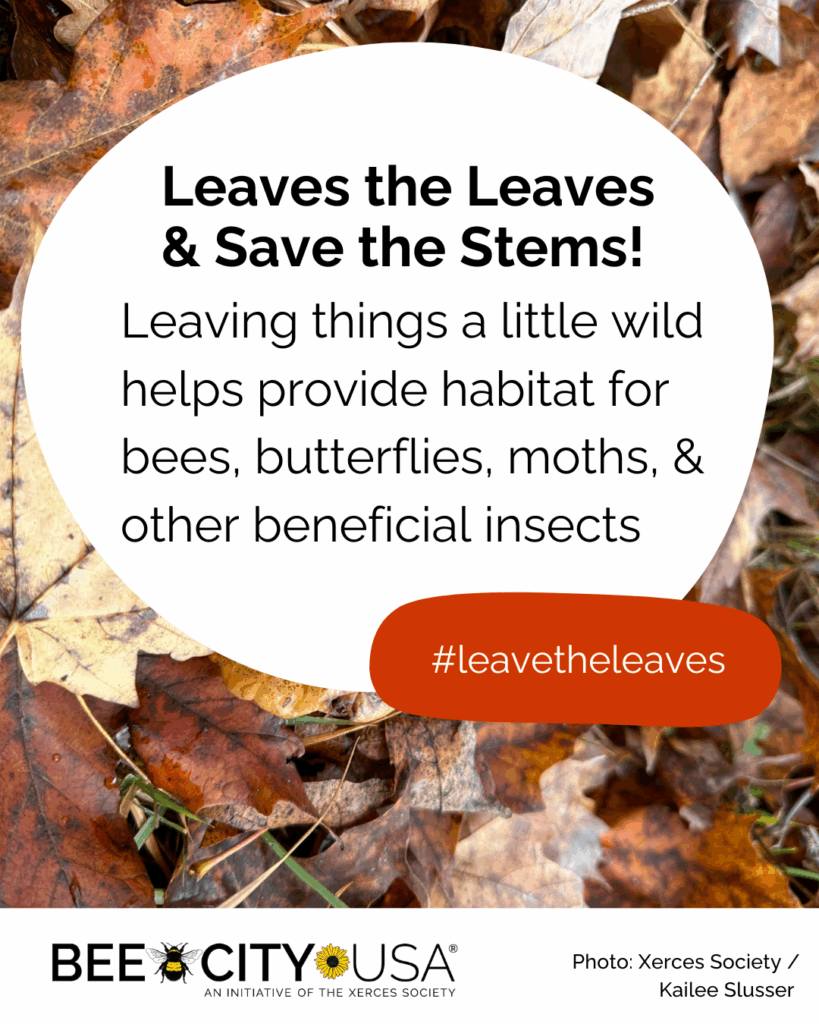
Social Media Images (Facebook and Instagram -friendly format):
Click image, then right click to save and download each image.

Bee City USA logo

Bee Campus USA logo

Social Media Text

Short Text #1:

🍂 Do you #leavetheleaves? [AFFILIATE NAME] and other @beecityusa and #beecampususa affiliates are asking you to keep leaf litter in your garden or yard to help save the bees. #beecityusa #[your city/campus hashtag]

Short Text #2:

Leaves, stems, and brush piles provides habitat for 🐝 bumble bees, 🦋 butterflies, lacewings and 🐞 lady beetles all winter long. Learn more at xerces.org/leave-the-leaves. #leavetheleaves #beecityusa #beecampususa #[your city/campus hashtag]

Short Text #3:

Keeping leaf litter in your yard doesn’t have to be messy – you can rake leaves into thin piles around trees or into garden beds. 🍂 #leavetheleaves #beecityusa #beecampususa #[your city/campus hashtag]

Long text:

Do you #leavetheleaves? [AFFILIATE NAME] and other @beecityusa and #beecampususa affiliates are asking you to keep leaf litter in your garden or yard to help save the bees.

Leaves provide food and shelter for:

🐝 bumble bees
🦋 butterflies
🐞 lady beetles

…and so many more beneficial insects that will help control pests and pollinate your garden the following spring.

Keeping leaf litter in your yard doesn’t have to be messy:

🍂 rake leaves into thin piles around trees or into garden beds
🌻flower stems can be left standing

Together these simple steps can provide winter shelter for insects, seed heads to feed birds, and stems as nest sites for solitary bees. Invite the wild into your backyard!

#leavetheleaves #beecityusa #beecampususa #[your city/campus hashtag]
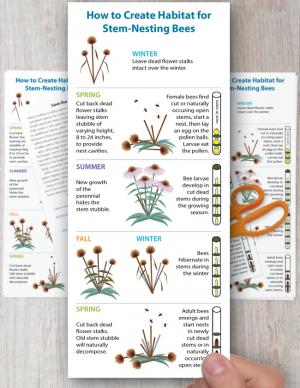
Printable Outreach Tools
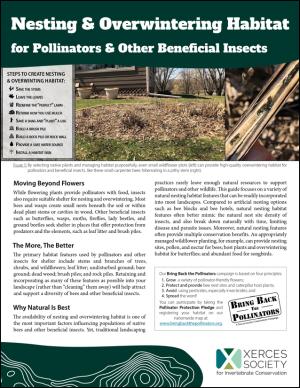
An image of a bookmark and brochure
advanced-floating-content-close-btn

Help us empower communities to protect the life that sustains us! DONATE