They are in our bodies, our ecosystems, and yes, even pesticides. It seems that PFAS are everywhere. Read on for expert answers to your questions about these “forever chemicals”, their impacts on people and pollinators, and steps everyone can take to protect themselves and our wild invertebrate neighbors.
What are PFAS? Why are PFAS called “forever chemicals”?
PFAS is the name of a specific group of human-made chemicals. The term is an acronym, standing for Per- and poly-Fluoro-Alkyl Substances.
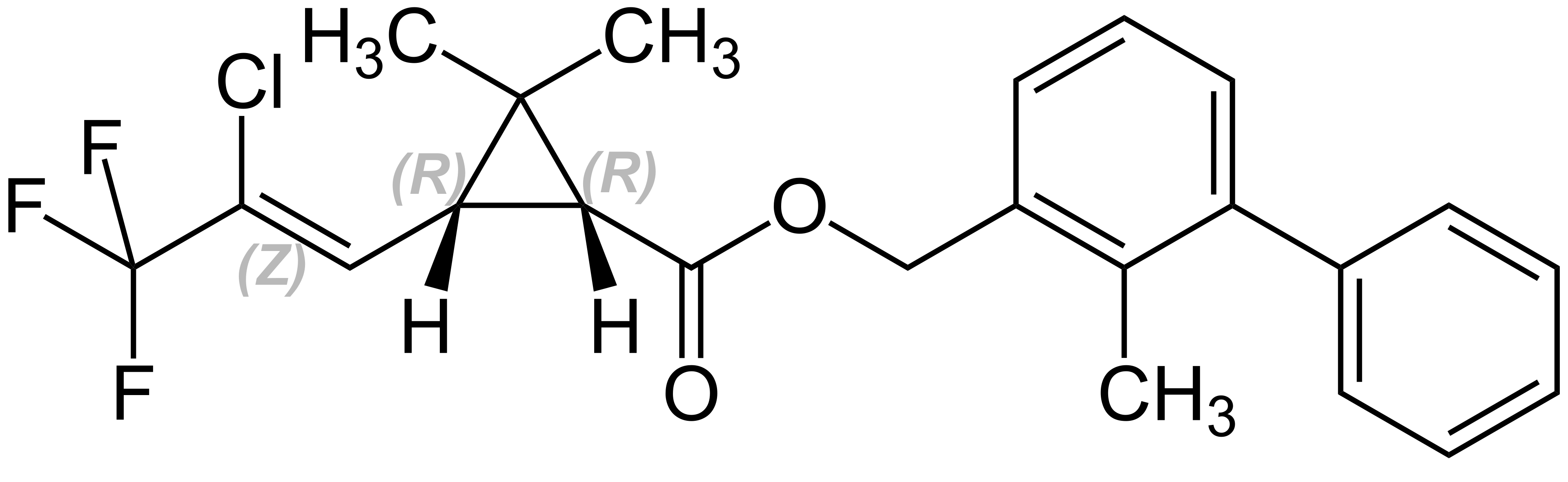
Whether we classify something as a PFAS has to do with the presence of certain specific groups of elements. The most up-to-date and scientifically accurate definition was put together by the Organization for Economic Cooperation and Development (OECD). If a molecule includes at least one cluster of a single carbon atom attached to two (–CF2) or three (–CF3) fluoride atoms, it is considered a PFAS (with a few limited exceptions). These particular groups of elements (called perfluorinated methylene groups and perfluorinated methyl groups, respectively) do not occur in nature, and create very strong bonds within the molecule that are difficult to break.
As a result, PFAS do not easily break down. They can be used to make products that are very durable and resist heat, oil, water, and more. But that means that trash from PFAS products — and the tiny flecks of PFAS chemicals that often shed off — also never go away. They can persist for centuries, earning the nickname “forever chemicals”. Because they stick around so long, these chemicals build up within water, ecosystems, and living things. PFAS can be found in a variety of manufactured household items, including personal care products, kitchenware, and yes, pesticides.
What are PFAS pesticides, or “forever pesticides”?
Remember that chemical structure that defines a PFAS? Many pesticide products have this chemical structure, and are thus classified as PFAS pesticides. They are dubbed “forever pesticides” for the durability of their chemical structure and problematic persistence.
According to a recent analysis, there are 66 different PFAS chemicals registered by the U.S. Environmental Protection Agency (EPA) as active ingredients in pesticides. This adds up to 14% of all active ingredients. And the problem doesn’t seem to be getting better. Of the new active ingredients approved for use over the last 10 years, 30% or 16 were PFAS. At the end of 2025, the EPA registered two additional PFAS active ingredients, and proposed adding three more.
Other chemicals added to a pesticide during manufacturing can also be PFAS, even if they aren’t the ingredient used to directly kill the target. Information from the EPA shows that eight of these non-active ingredients, registered for use in over 30 pesticide products, are PFAS. This is likely an underestimate, because many ingredients that can be added to pesticides are not well regulated or reported.
In addition, plastic containers that store pesticides are sometimes treated with an extra chemical coating. This treatment is designed to prevent pesticides or their smells from getting out. However, this process can unintentionally add PFAS to the pesticides within the container, as was the case with a pesticide commonly used in community mosquito control. The unfortunate result: widespread, unintended PFAS contamination.
What risks do PFAS pose to people & pollinators?
PFAS have been linked to a litany of adverse affects. For people, certain levels of PFAS have been linked to reproductive harms, developmental issues in children, increased risk of certain cancers, endocrine disruption, and impaired immune system activity.
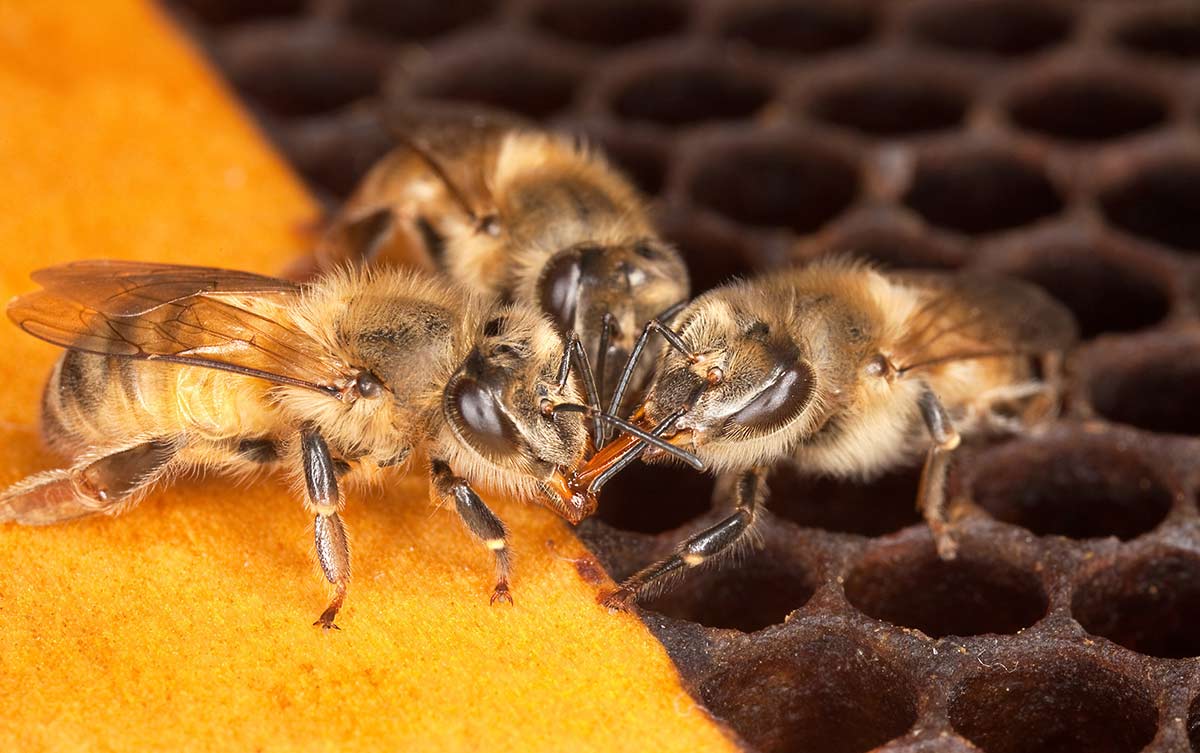
Invertebrates and other wildlife are also threatened by PFAS. While there is less research than on humans, what we have learned so far indicates some similar effects. Effects of PFAS are documented in honey bees, and exposed hives stopped reproduction, decreased or stopped gathering resources, decreased their activity levels, and lost a higher proportion of their population. Native bees and other pollinators are very likely to suffer many of the same effects.
Because they last a long time, PFAS can be passed through the food chain and accumulate. For example, from a contaminated plant to a munching caterpillar, from the water to aquatic insects, and from aquatic insects to their predators on land.
How are people and pollinators exposed to PFAS pesticides?
PFAS pesticides are frequently used on a wide variety of food crops, including strawberries, broccoli, lettuce, peppers, cherries, tomatoes, grapes, almonds, and more. For example, bifenthrin is a widely used PFAS insecticide, and it is applied to more than 14 million acres of cropland in the U.S. each year alone.
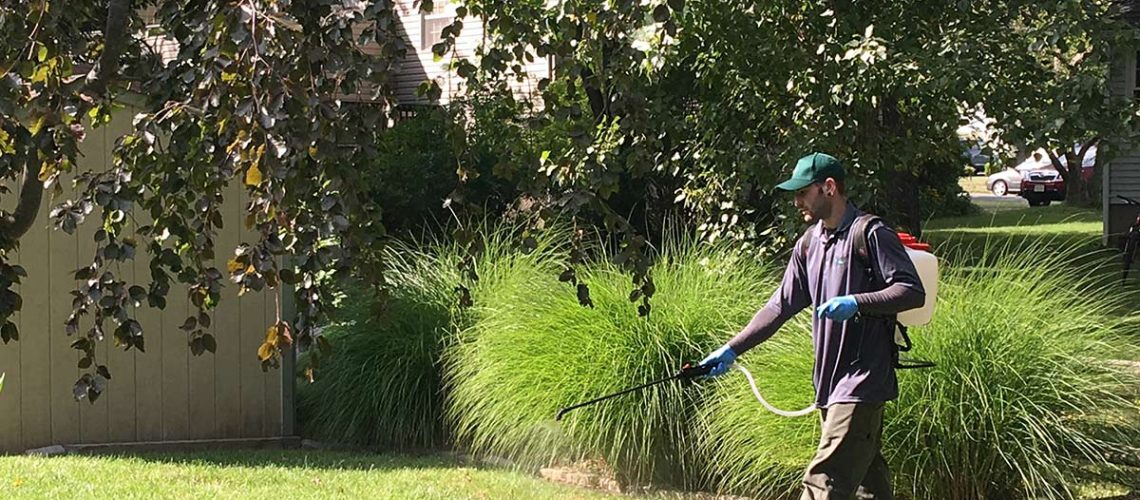
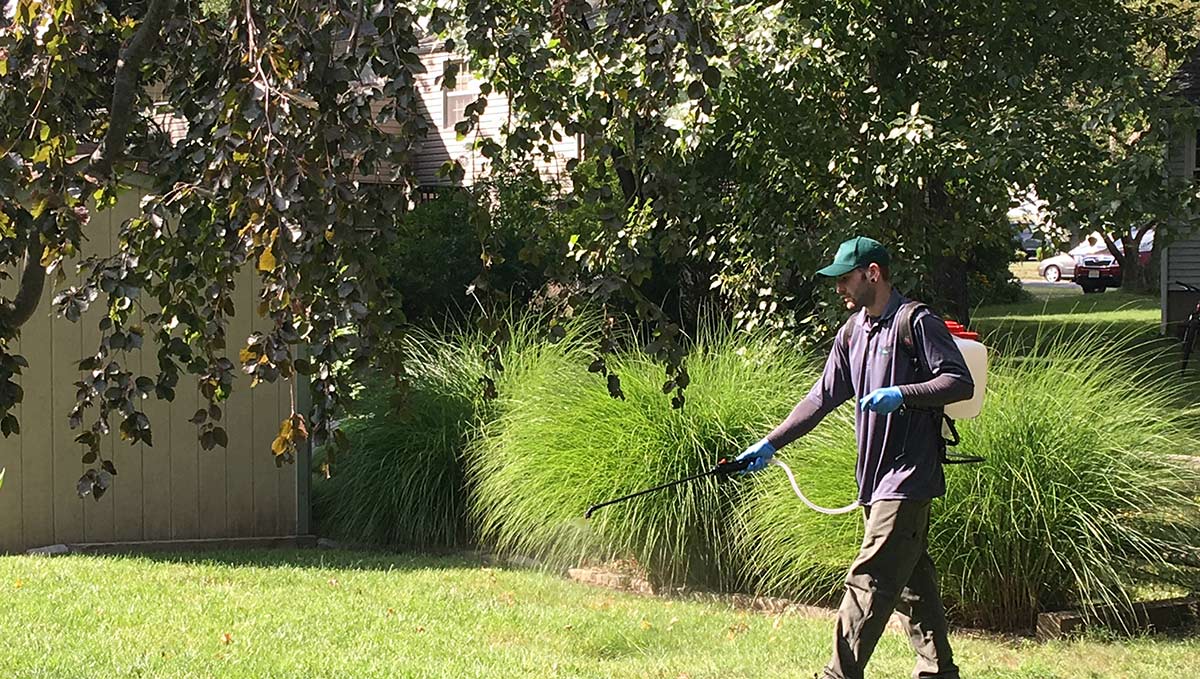
People and pollinators may also come in contact with PFAS pesticides through residential use. Off-the-shelf products used to kill pests around the home and garden sometimes contain PFAS pesticides, ranging from fungicides to insecticides. This exposure risk is not limited to DIY use! PFAS pesticides are often used in treatments by pest control companies, including drenches to kill ants and termites, and in residential mosquito sprays that are fogged across yards.
In fact, a study published by Xerces staff and our partners found very high levels of PFAS insecticides in yards sprayed for mosquitoes by private pest control services (multiple times greater than the amount that would kill adult honey bees). These sprays did not stay where they were applied: 75% of the yards nearby one of these backyard sprays had pesticides that drifted across the property lines.
In another Xerces sampling study, we detected concerning levels of fipronil, a PFAS insecticide often used to kill structural pests, on milkweed growing near the foundation of a house. The property was treated for ants or termites six years before, and the milkweed had been absorbing the insecticide from the contaminated soil ever since.
These examples illustrate how pervasive PFAS pesticide contamination can be, and unexpected avenues through which people and pollinators can be exposed.
How can I reduce risks from PFAS pesticides?
Luckily, there are steps everyone can take to reduce their exposure to PFAS pesticides and to reduce risks to pollinators.
Go pesticide-free at home!
In home gardens, weeds and pests can often be managed without pesticides. This is a key way to keep your landscape healthy to protect pollinators and other beneficial insects.
- Prevent issues before they start by keeping your plants healthy. Put plants in locations with conditions that match their needs, and make sure plants have the correct amounts of water and nutrients.
- Remember that finding little bite marks and other feeding damage on plant leaves can be a good sign! It means that your plants are providing habitat and food for insects! Healthy plants can generally tolerate a good amount of feeding without being at risk.
- If you do feel the need to use a pesticide, consider using an organic pesticide, since these are all PFAS-free. Though organic pesticides are generally less toxic than many conventional ones, you’ll still want to be as targeted as possible and to use the smallest effective amount, as these products can still cause harm to wildlife.
Avoid hiring companies to spray for mosquitoes or other nuisance pests
It’s difficult to avoid PFAS pesticides when you don’t know what is being sprayed, and many companies are not upfront with that information. Companies often apply pesticides on a predetermined schedule, whether or not there is actually a valid reason to do so, increasing your exposure.
If you already hire a landscaping or pest control company, or if one treats the common areas in your community, get the details:
- What pesticides are they applying, and what issue are they trying to solve?
- Do they consider non-chemical methods before using pesticides?
- If pesticides are used, are they using the least toxic products and using the smallest effective amount? Make sure they aren’t spraying a “barrier” around your property or patio.
Feel free to email us questions about the pesticides being used, just include the product name and EPA registration number.
Support organic certified producers with your food purchases
Organic agriculture generally supports more of the bees, butterflies, and other beneficial invertebrates we love. As an added bonus, organic pesticides approved for use on organic farms do not contain PFAS. Organic farms are also not allowed to use biosolids or sewage sludge as fertilizer, which are another key path of PFAS contamination for farms.
Advocate for regulations on PFAS and PFAS pesticides
In the USA, current federal laws on PFAS do not provide sufficient protections to keep people and wildlife safe. However, many states are beginning to take action to reduce exposure and risks from PFAS, including PFAS pesticides. Supporting these laws can make a huge difference.
Check to see if your state has an official definition of PFAS – this is an important first step that allows future regulations to happen. The definition should follow OECD guidance: a chemical with at least one perfluorinated methyl group (–CF3) or a perfluorinated methylene group (–CF2). But be aware – different entities, including the U.S. Environmental Protection Agency, may not use this widely agreed upon definition. Oftentimes, alternative definitions are flimsy on the science and are used by the chemical industry as a tool to escape regulation. If you live in a state that doesn’t already have a PFAS definition on the books (or it is a bad one), let your legislators know that, to protect your community, that needs to change!
Once a definition is established, this paves the way for states to pass additional legislation to limit harm from PFAS. For example, states may require disclosure of PFAS in consumer products and ban their unnecessary use in these products. Legislation can also be used to restrict use of PFAS pesticides and give support to communities in the state who are tackling PFAS contamination!
Authors


Jacqueline works with Xerces partners and community leaders to reduce pesticide use in towns, cities, and campuses through strategic outreach and policy action. Prior to joining the Xerces Society, Jacqueline worked with local governments in Colorado and Florida to enhance their integrated pest and pollinator management, promote biological control, and reduce reliance on pesticides. Her greatest passion is working directly with community members and decision makers to protect the invertebrate life that sustains us.