Credit: Alina Harris
Part I: About Bee-Friendly Lawns & Gardens
If 10% of lawns in the US were replaced with pollinator-friendly plants, we would add 4 million acres of pollinator habitat!
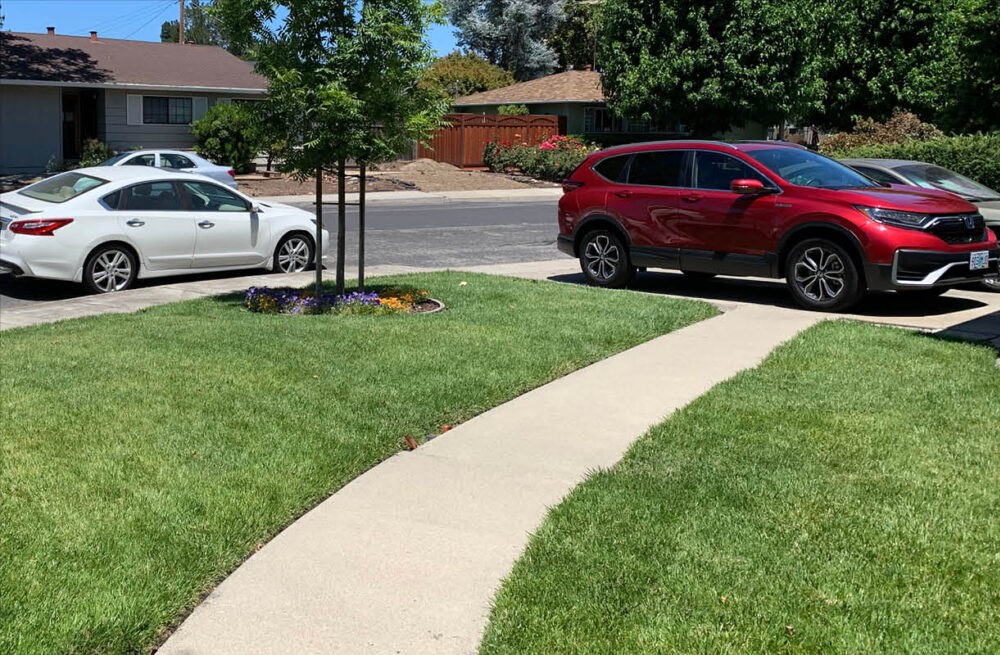
Lawns cover 40 million acres, or 2%, of land in the US. They are the single largest irrigated crop we grow. Lawns are mowed, raked, fertilized, weeded, chemically treated, and watered—sucking up time, money, and other resources. Grass-only lawns provide little benefit to wildlife and are often treated with pesticides that harm bees and other invertebrates.
When we think of habitat loss, we tend to imagine bulldozers and rutted dirt, but acres of manicured lawn are as much a loss of habitat as any development site. Re-thinking the American lawn can take a variety of forms from less intense maintenance to conversion to a more diverse and natural landscape.
Why mow less in the spring (and all year)?
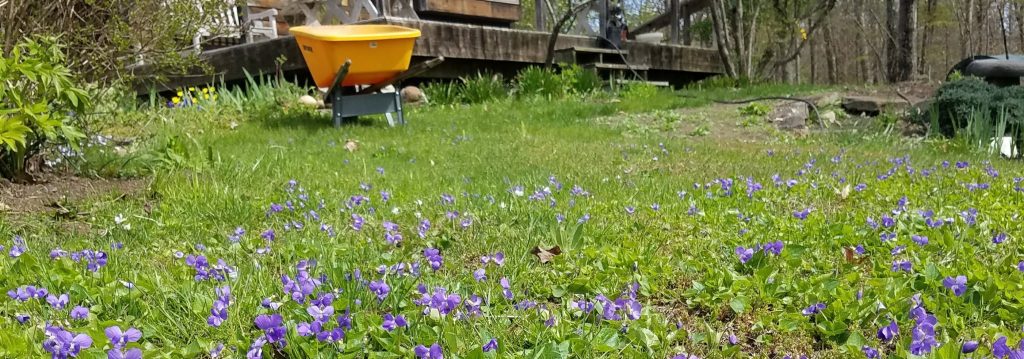
The start of the growing season is a critical time for hungry, newly emerged native bees. Flowers may be hard to find. By allowing flowers to bloom in your lawn, you can potentially provide nectar and pollen to help your bee neighbors thrive.
Mowing less can create habitat, and can increase the abundance and diversity of wildlife, including bees and other pollinators. No Mow April, No Mow May, or Low Mow Spring are small, introductory steps to helping support pollinators on a larger scale. And you don’t need to go a full month without mowing — mowing every two or three weeks can still increase flower blooms and provide food for hungry bees.
But if we want to help pollinators survive and thrive, we need to look beyond mowing less in the spring. Make a permanent Low Mow Zone or convert your lawn to higher value habitat.
Side benefits of mowing less, year-round
- Save water while increasing drought tolerance: Taller grass tends to have deeper roots and less water evaporates from the soil.
- Reduce air and noise pollution from gas-powered lawn equipment.
- Better conditions for other invertebrates like lacewings and fireflies. They prefer longer grass.
- Save time and money: So now you’re ready to invest in more native plants!
Go beyond mowing less to help pollinators.
Bees need more than weeds. Simply allowing weeds to grow is better than no flowers, but the typical lawn weeds may not be the best for bees, or the best neighbors to other flowers. Dandelions, for example, have pollen that is low in protein (poor nutrition for bees) and is known to suppress other flowers. You can go beyond reduced mowing by adding more flowering species. A “bee lawn” may include white clover (Trifolium repens) and other low-growing flowering plants such as creeping thyme (Thymus spp.), selfheal (Prunella vulgaris), and others. Some plants, such as native violets (Viola spp.), may already be present and should be encouraged as they are valuable host plants for fritillary butterflies. For more information about creating a flowering lawn please see the resources at the end of this web page.
Bees need more than long grass. Mowing less is one small step to help bees, but it isn’t enough to save the bees. The best way we can protect the over 3,600 species of bees in the US is to:
- Plant a variety of native plants that bloom consistently throughout the growing season,
- Provide natural nesting sites (leaves, stems, logs, bare ground): 70% of bees are ground nesting, 90% are solitary nesting,
- Reduce or eliminate pesticide use, and
- Spread the word: Educate friends, neighbors, and elected officials about pollinator conservation.
Who uses long grass?
- Beetles
- Syrphid flies
- Lacewings
- Fireflies
- Damsel bugs, and more!
Who uses short grass and bare ground?
- Beetles
- Syrphid flies
- Ground nesting bees, and more!
Don’t wait. Start now. Even one small step helps!
If we want to slow or reverse pollinator declines, we need to take action now. Don’t worry that you can’t do much—just do something:
- Plant one new native plant this season.
- Hand-pull a stubborn weed instead of spraying it with an herbicide.
- Do what you can today, make small changes over time, and learn as you go.
It may not turn out how you expect, but that’s okay. Keep trying—aim for progress, not perfection!
Every region is different, learn what works for your habitat.
Pollinator habitat can look like a lot of things. There are no set rules. What you choose to do is up to you (and what your HOA or local ordinances allow). Watch the native bees in your area. When do they emerge? What native plants do they like?
Bee Friendly Lawns Promo Kit
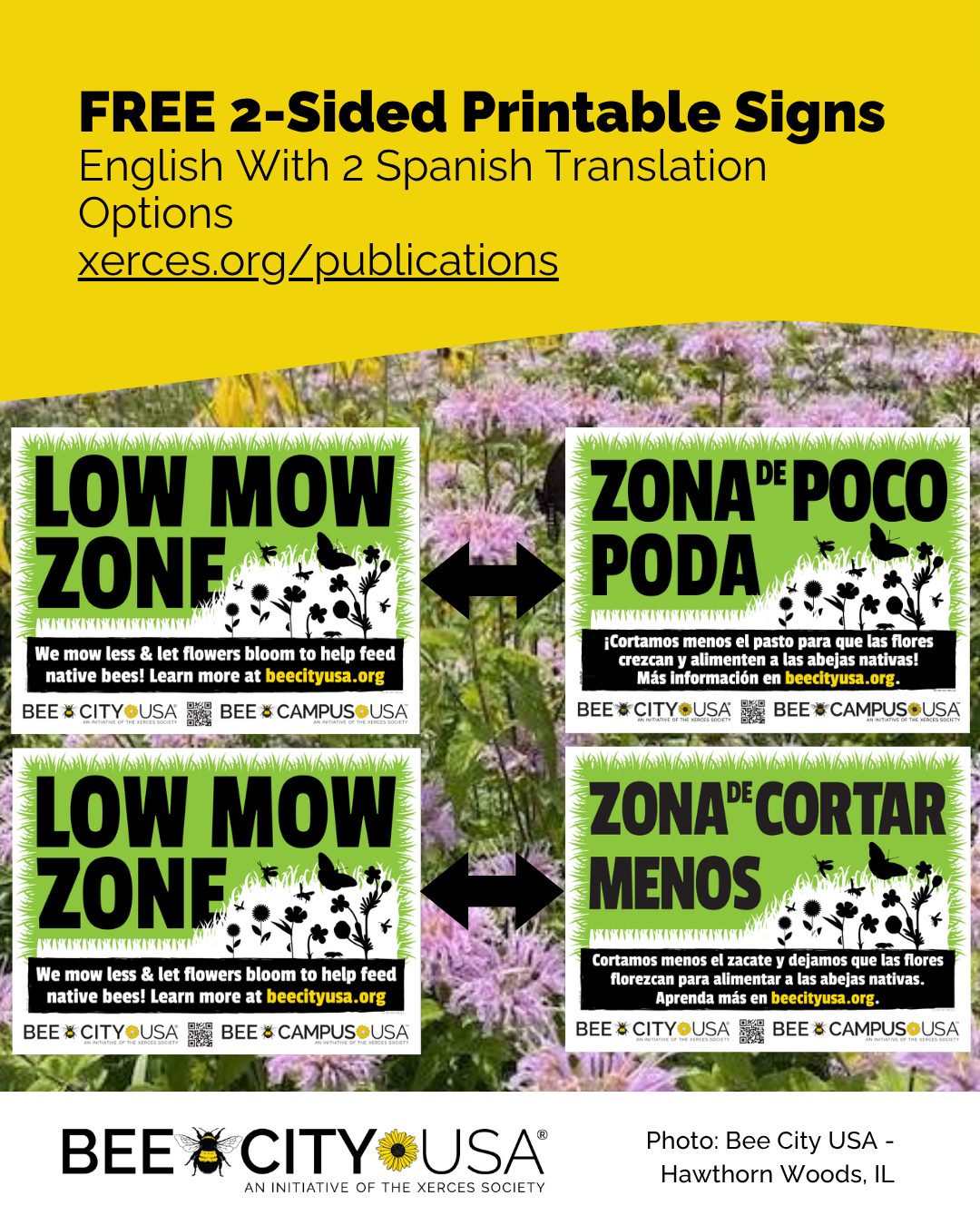
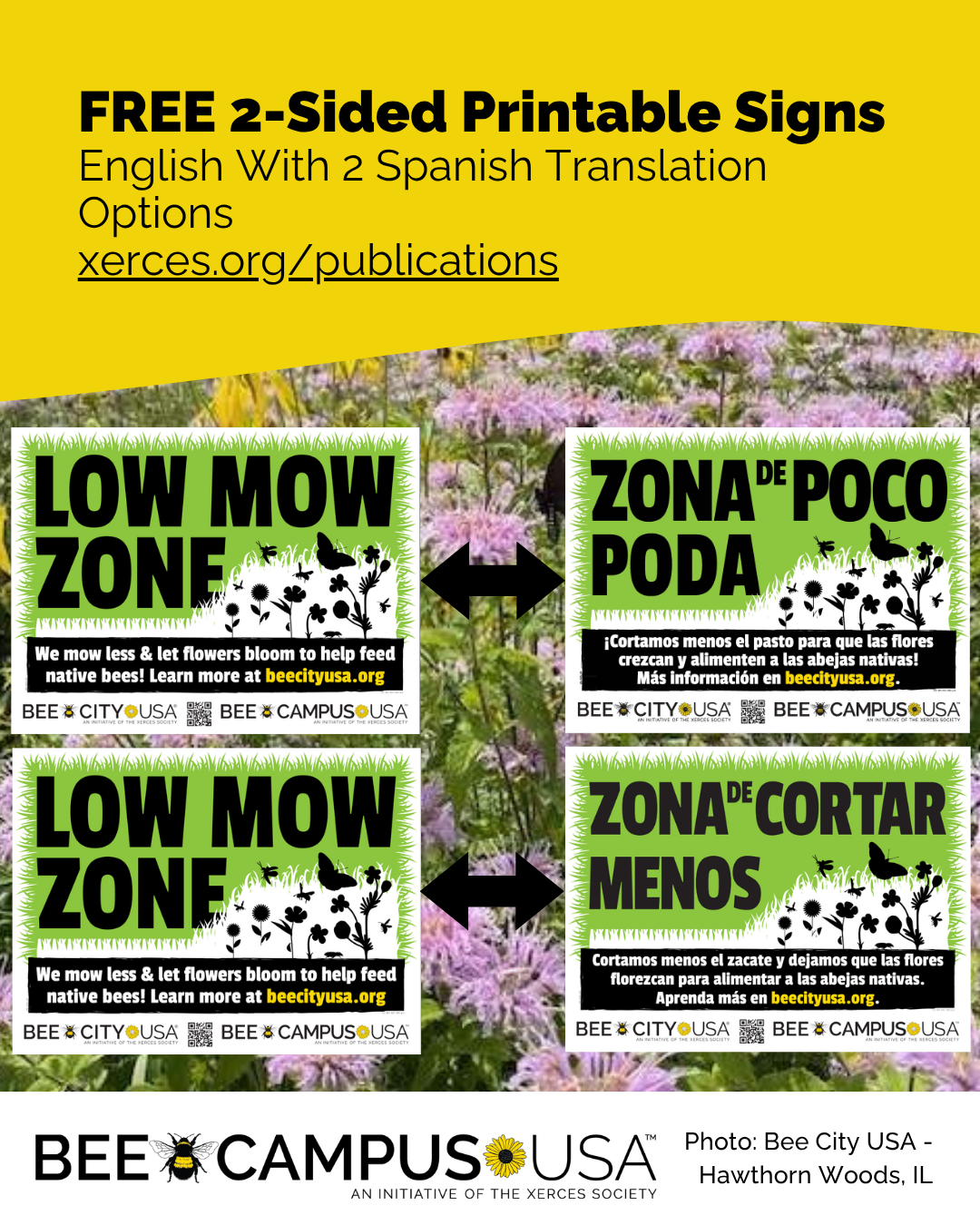
We have free, printable Low Mow Zone yard sign in Spanish and English (both double-sided). Two Spanish translation options below:
- “Zona de Poca Poda” for the majority of Spanish-speaking audiences
- “Zona de Cortar Menos” may work better for Spanish-speaking audiences in California
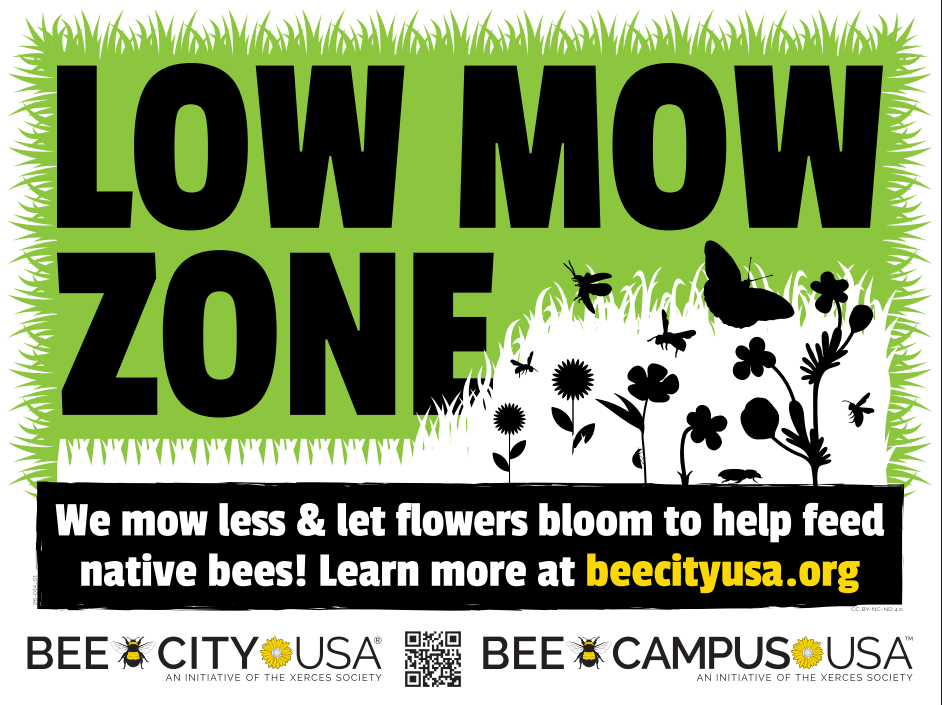
Are you mowing less and adding native flowers to your lawn or field to feed the bees? Designed for Bee City USA and Bee Campus USA affiliates, but available for public use, this two-sided Low Mow Zone sign can help educate the public and ensure your site is correctly maintained.
This file (18″ x 24″ standard yard sign) is written in English and Spanish and can be downloaded and printed at home or work, or sent to a printing service of your choice.
Looking for a premade habitat sign? Check out Xerces Society’s other signs here.
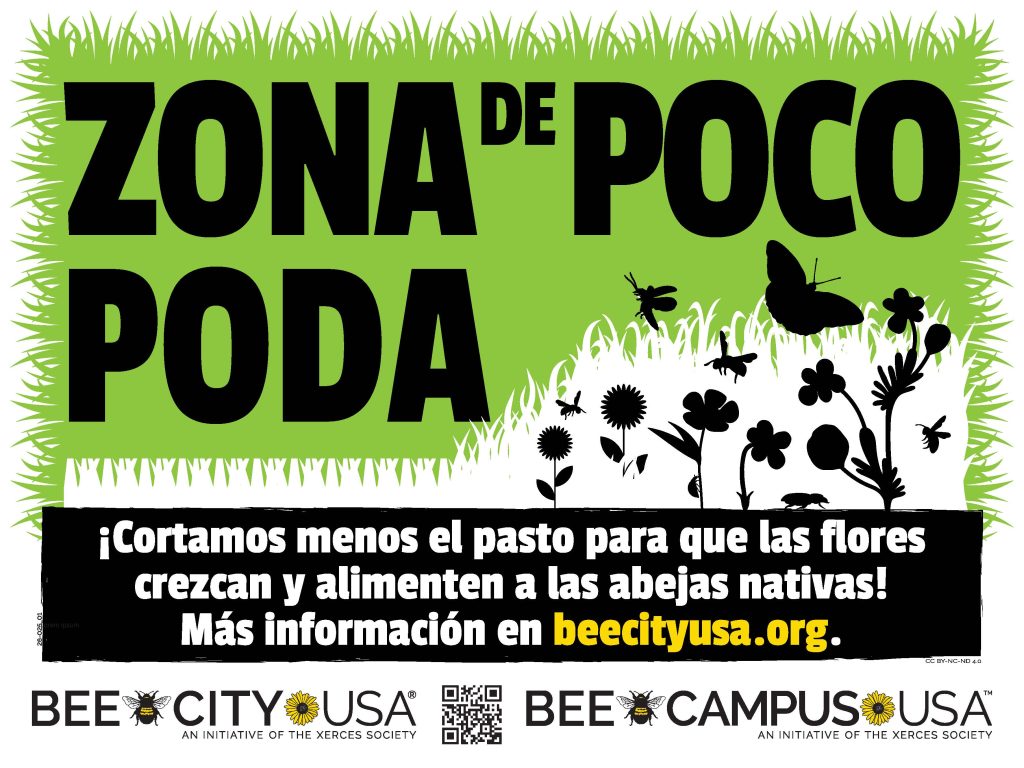
¿Corta menos el pasto y agrega flores nativas a su jardín para alimentar a las abejas? Diseñado para afiliados de Bee City USA y Bee Campus USA, pero disponible para todos, este letrero de “Zona de poca poda” de doble cara ayuda a crear conciencia en el público y garantizar el correcto mantenimiento de su propiedad.
Este archivo (letrero estándar de 18″ x 24″ para jardín) está escrito en inglés y español y se puede descargar e imprimir en casa o en el trabajo, o enviar a una imprenta de su elección. ¿Busca un letrero prediseñado sobre protección del hábitat? Vea otros letreros de la Xerces Society aquí.
Are you mowing less and adding native flowers to your lawn or field to feed the bees? Designed for Bee City USA and Bee Campus USA affiliates, but available for public use, this two-sided Low Mow Zone sign can help educate the public and ensure your site is correctly maintained.
This file (18″ x 24″ standard yard sign) is written in English and Spanish and can be downloaded and printed at home or work, or sent to a printing service of your choice.
Looking for a premade habitat sign? Check out Xerces Society’s other signs here.
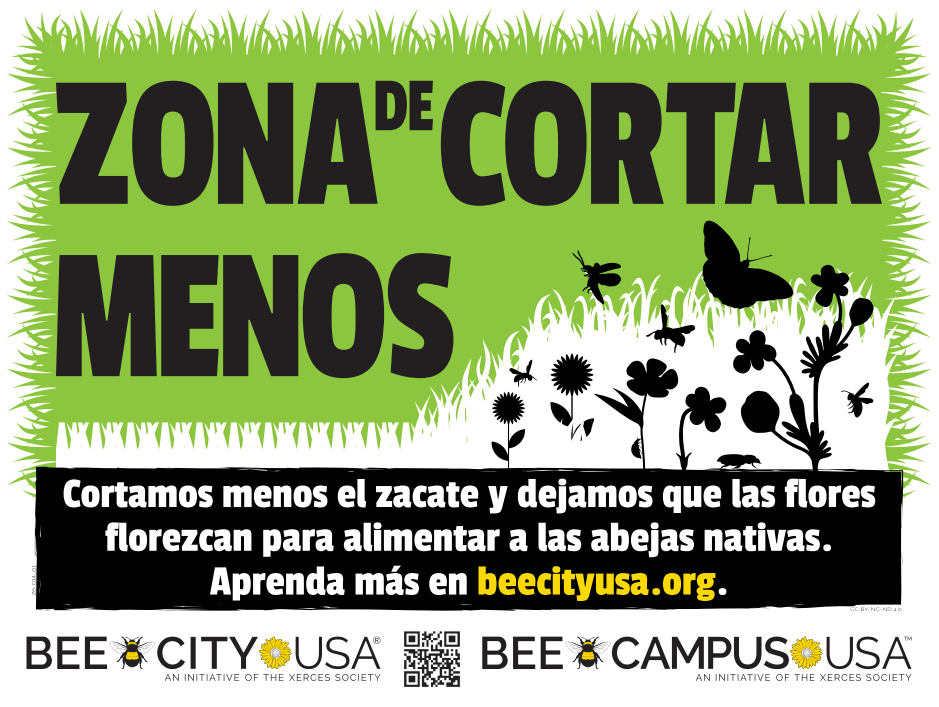
¿Corta menos el zacate y está agregando flores nativas a su jardín o campo para alimentar a las abejas? Diseñado por afiliados de Bee City USA y Bee Campus USA, pero disponible para el uso público, este letrero de dos lados puede ayudar a educar al público y garantizar que su terreno se mantenga correctamente.
Este archivo (18 “x 24” signo de jardín estándar) está escrito en inglés y español y se puede descargar e imprimir en casa o en el trabajo, o enviar a un servicio de impresión de su elección.
¿Está buscando un letrero prefabricado? Mire los otros letreros de la Sociedad Xerces aquí.