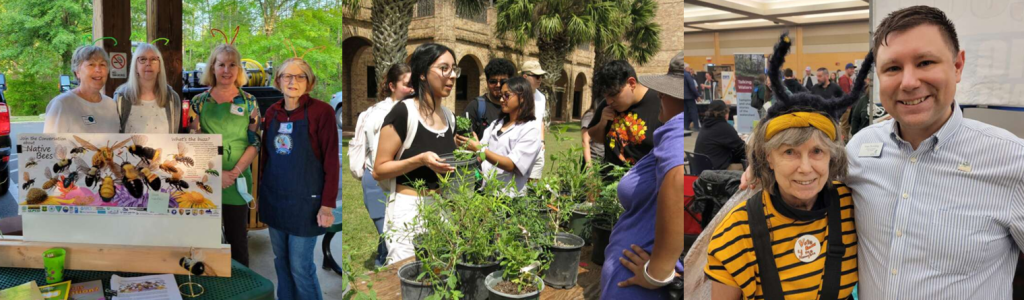
Affiliates tabling during past Earth Week celebrations.(L to R):
Bee City USA – Hillsborough, NC, credit: Bee City USA – Hillsborough NC.
Bee Campus USA – The University of Texas Rio Grande Valley, credit: Dr. Julie Mustard.
Bee City USA – River Falls, WI, credit: Sean Downing.
Earth Day is April 22nd and this year Earth Week is April 18-24. The official theme of Earth Day this year is “Our Power. Our Planet.”
There are many ways to celebrate, so we’ve compiled some fun and helpful resources that could support a variety of events. Enjoy!
Talking Points
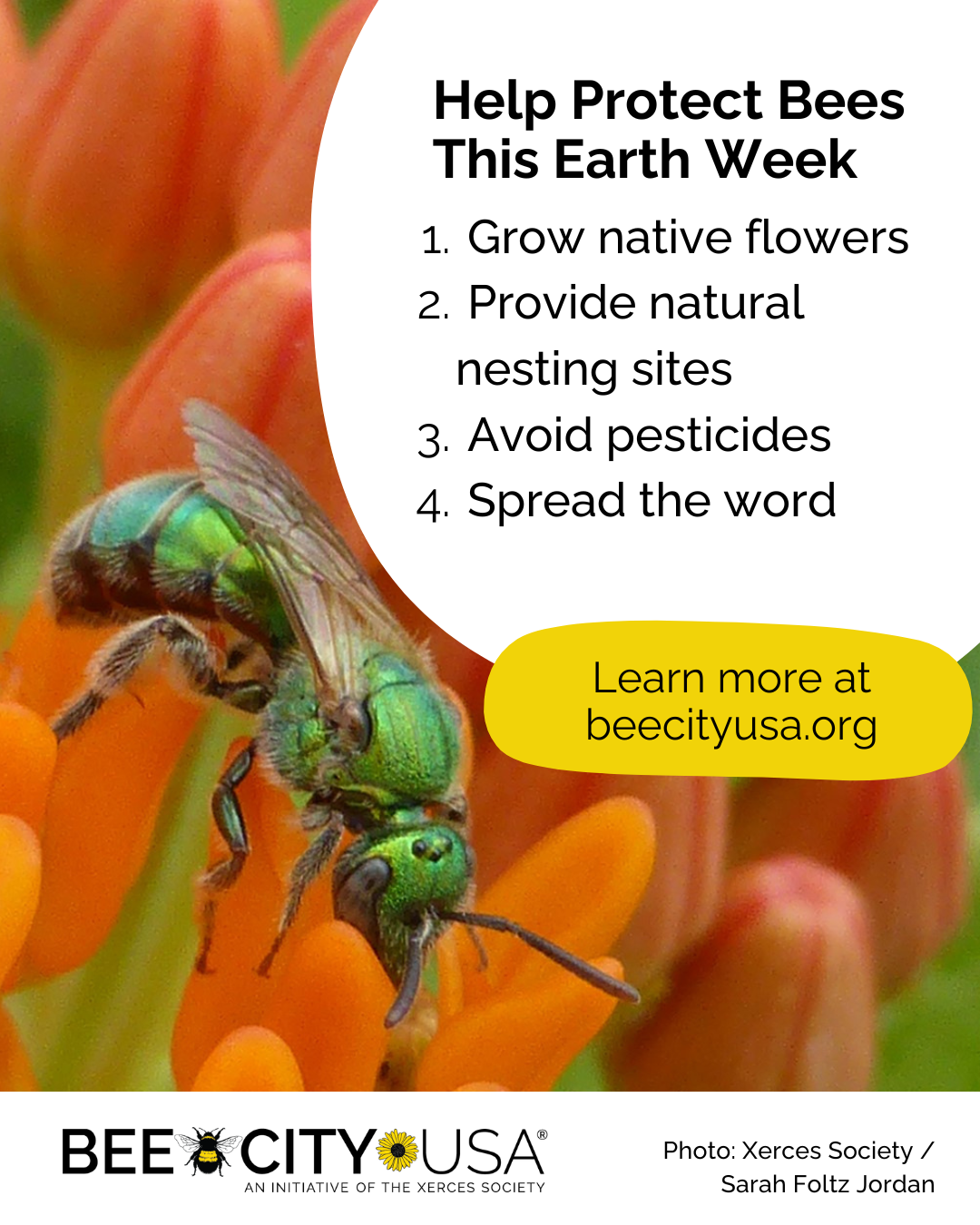
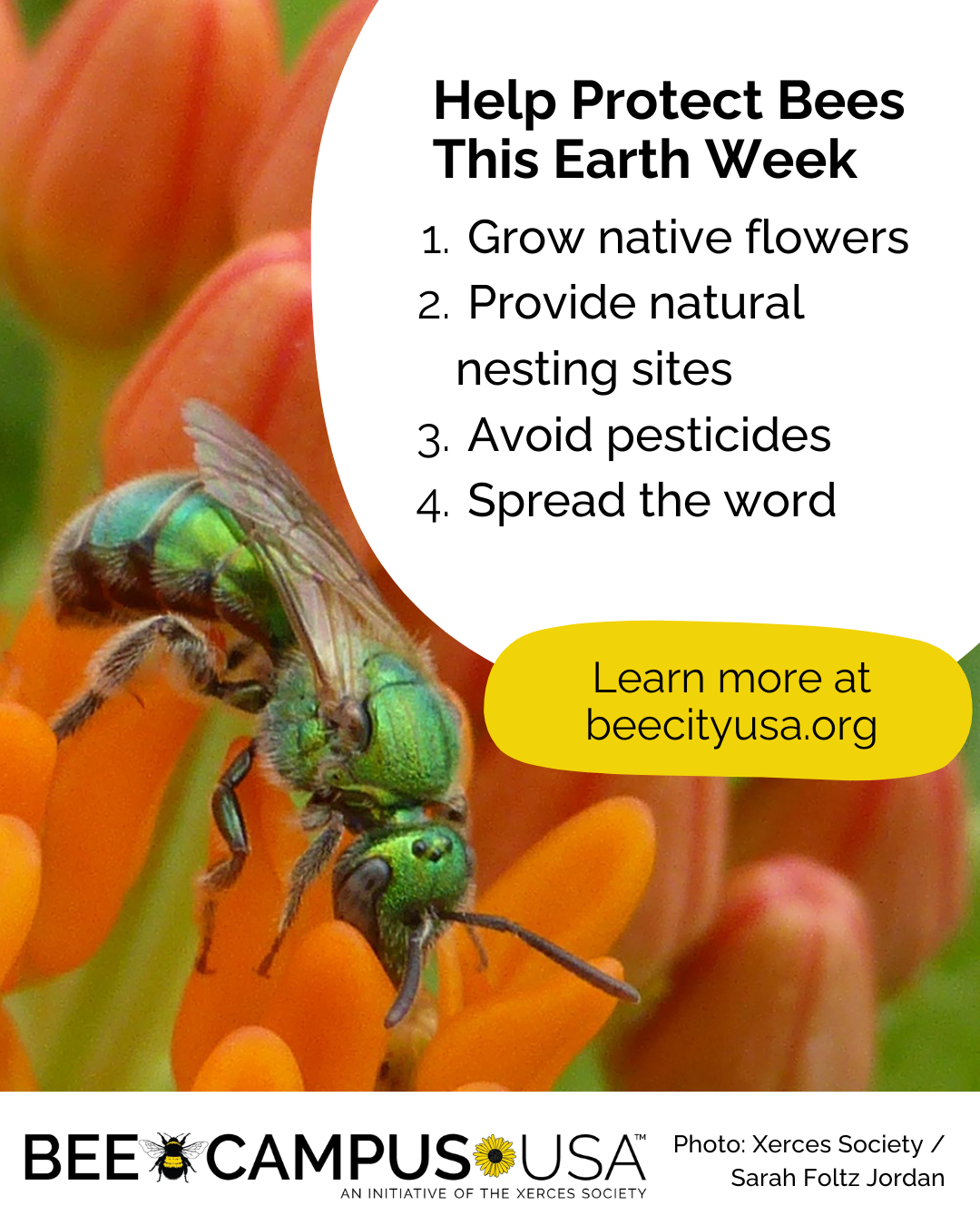
- There are 4 ways you can protect pollinating native bees, moths, butterflies, beetles, birds & more:
- Grow native flowers and host plants
- Provide natural nesting sites (leaves, bare soil, stems, and logs)
- Avoid pesticides
- Spread the word!
- We can thank pollinators for 1 in 3 bites of food we consume.
- Pollinators provide us with blueberries, tomatoes, coffee, chocolate, beer, squash, peppers, and so much more. Without pollinators, food would be pretty boring.
- Did you know there are over 3,600 species of native bees in the US? They come in a huge range of sizes, shapes, and lifestyles.
- When most people think of a pollinator they picture a honey bee, but honey bees are actually not native to North America, they were introduced from Europe.
- Honey bees are important to farming, but there is a whole wide world of native bees and other pollinators that we depend on for food and a healthy ecosystem.
- You do not need to building anything or buy bees to help protect native bees. If you grow flowers they need, provide natural nesting sites, and protect them from pesticides, they will show up on their own.
- 70% of bees are ground-nesting and 90% of bees are solitary-nesting, meaning they do not live in a hive.
- For a healthy environment, we need native pollinators because they have co-adapted and co-evolved with native plants, and many have specialized relationships with certain plants.
- Fruits and seeds derived from insect pollination are a major part of the diet of approximately 25% of all birds.
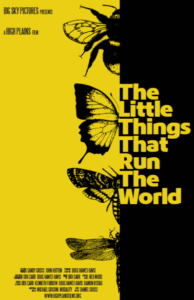
Watch or Publicly Screen
Printable Outreach Tools
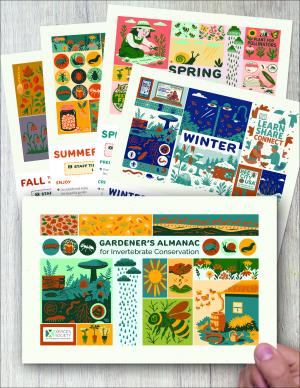
NEW! Xerces Society’s Gardener’s Almanac for Invertebrate Conservation: simple seasonal tips to help you create and maintain pollinator habitat.
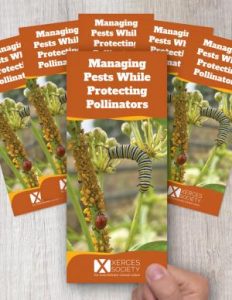
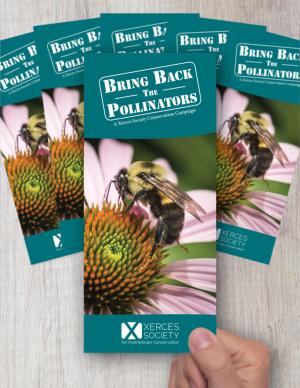
NEW! Managing Pests While Protecting Pollinators brochure: easy-to-read integrated pest management (IPM) guidelines for yards, gardens, and other home landscapes.
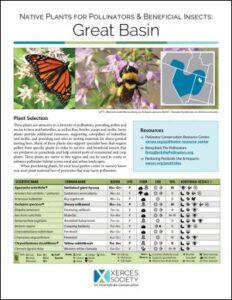
Regional Plant Lists: both pollinators and beneficial insects, as well as monarch nectar plant lists.
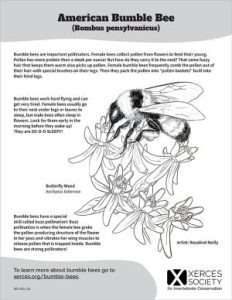
NEW! American Bumble Bee Coloring Sheet by Rosalind Reilly
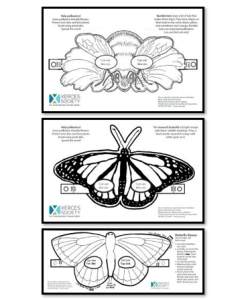
Cut, color, and wear this fun mask! This is an educational craft activity for kids. You can attach string for wearable masks, or attach popsicle sticks for handheld masks.
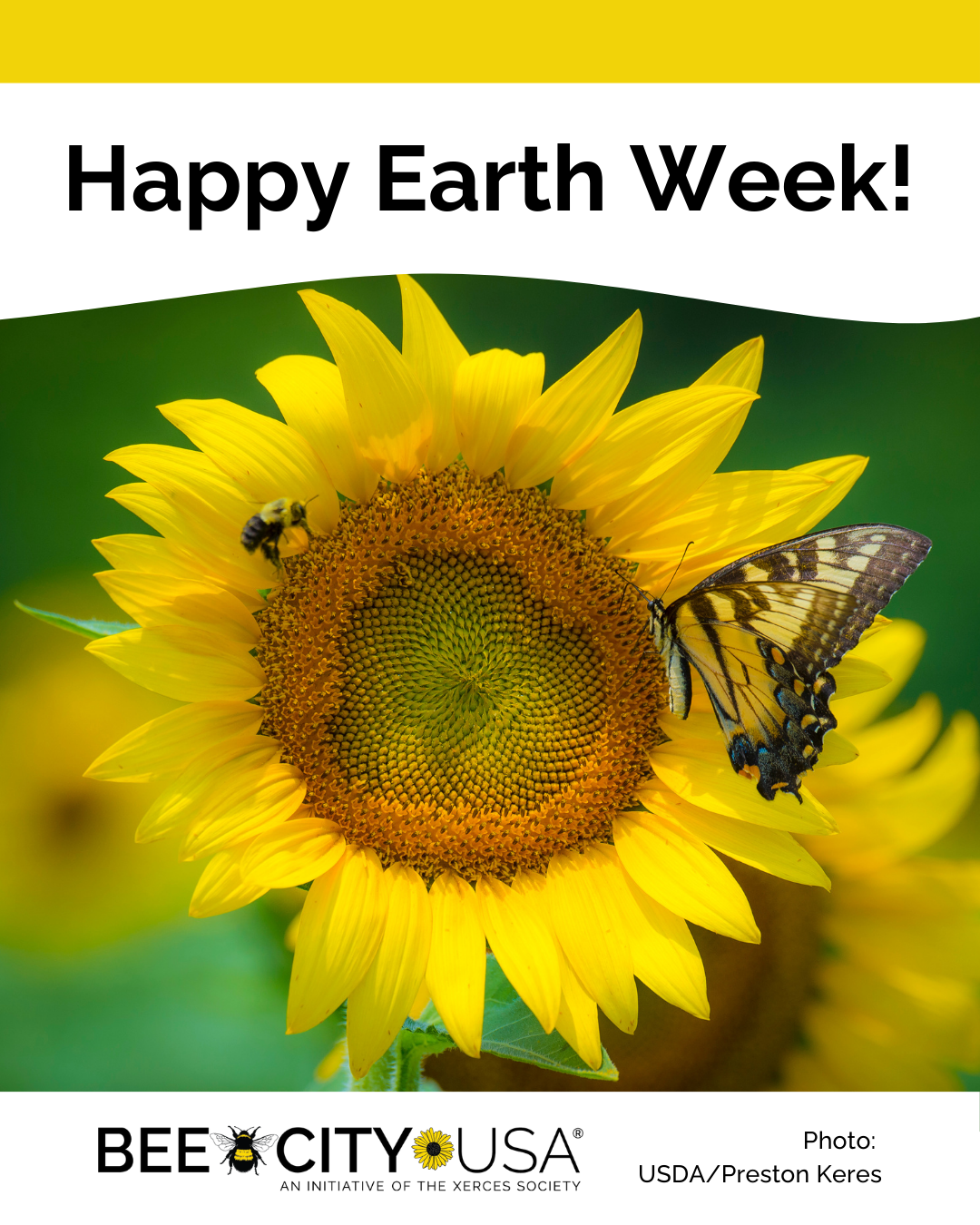
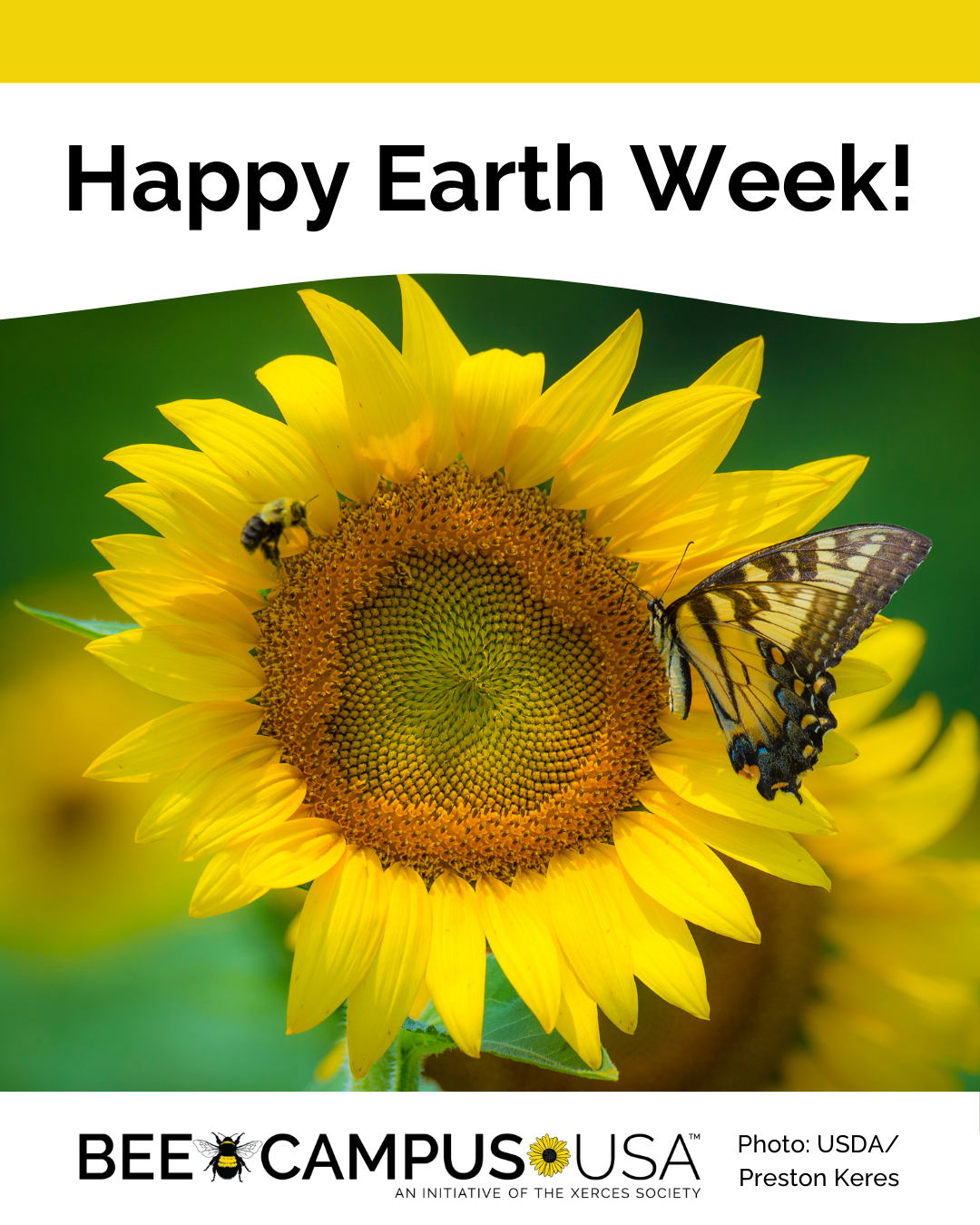
Social media images (Facebook and Instagram -friendly format) Click text to view full size and download:
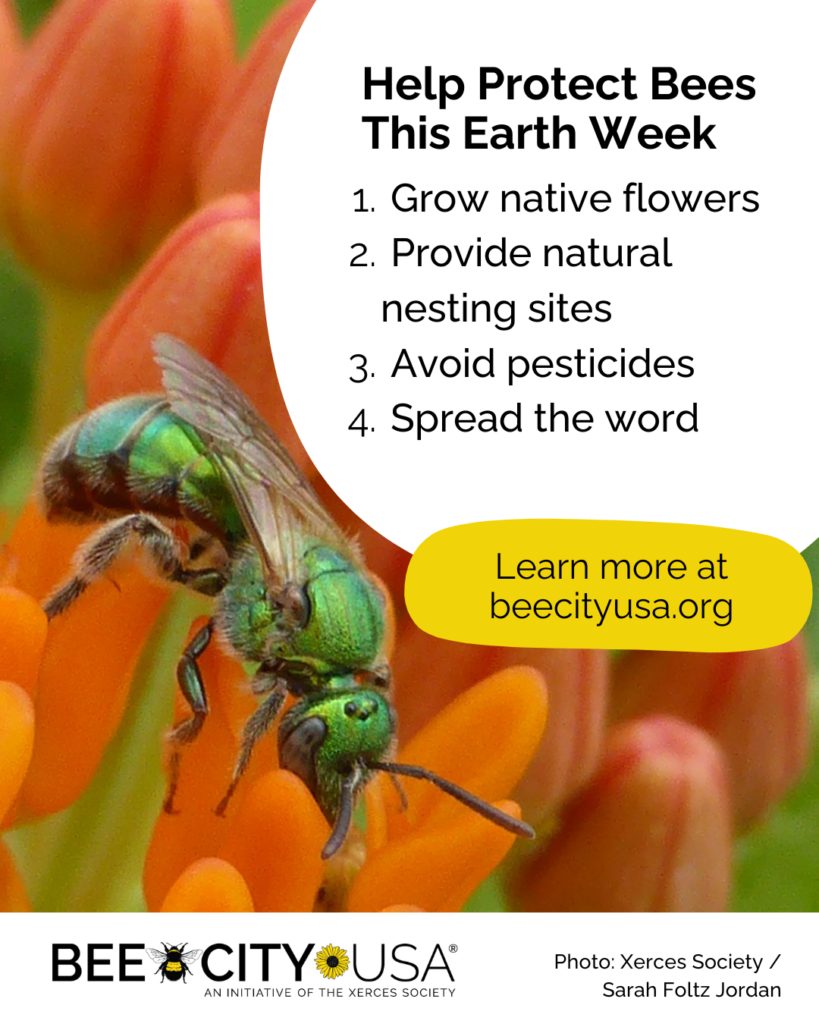

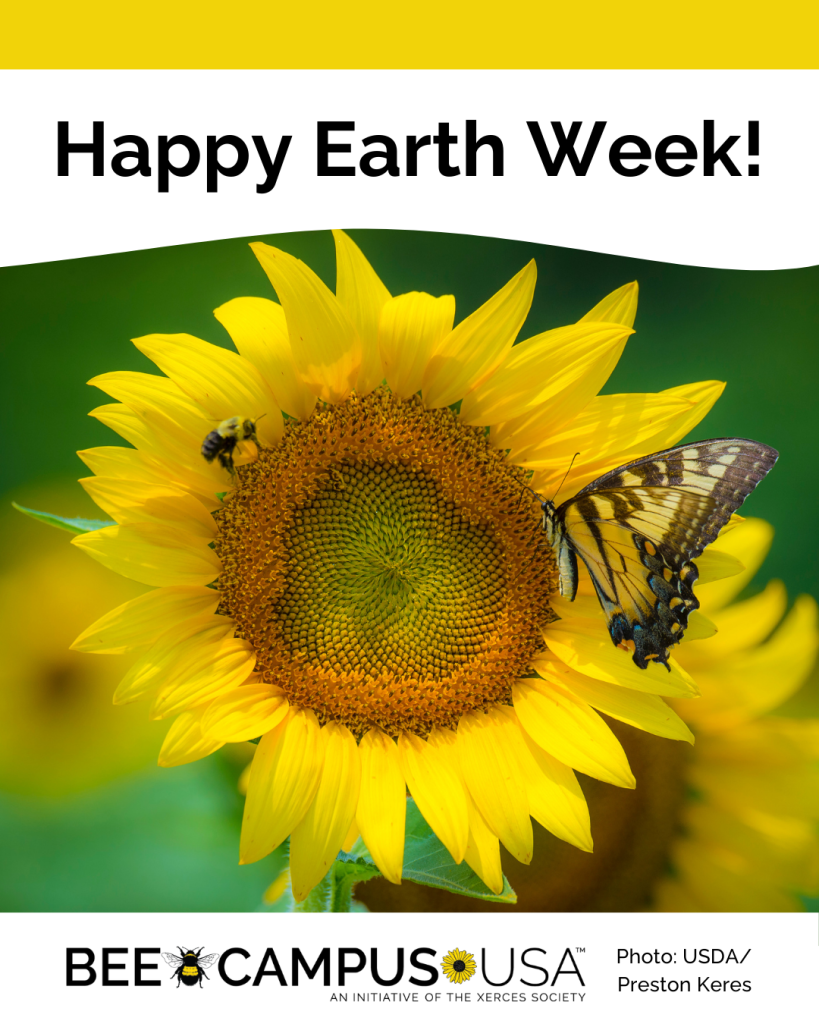
Social Media Posts
Text #1:
Help protect pollinators this Earth Week! There are 4 ways you can protect pollinating native bees, moths, butterflies, beetles, birds & more:
- Grow native flowers
- Provide natural nesting sites (leaves, bare soil, stems, and logs)
- Avoid pesticides
- Spread the word!
To learn more visit BeeCityUSA.org #bees #BeeCityUSA #BeeCampusUSA
Text #2:
[Share a pollinator conservation project your city/campus has accomplished] [link to your Bee City/Campus webpage]
More Resources
- Document: Template: Photo & Video Release Form (to grant permission to take photos and videos of people)
- Document: Bee City USA Event Accessibility Checklist
- Blog: Why Do Some Bees Dig?
- Blog: How To Maximize Benefits To Pollinators In Cities And Towns
- Xerces Webpage: Pollinator Conservation Resource Center
- Xerces Webpage: Bee-Friendly Nursery Plants